

Related: A just-published issue of Ariadne explores the opportunities for Europe to implement a military command structure appropriate to the Russian threat and long delayed in being implemented. With the prospect of a demotion of the four-star general designation of the Supreme Allied Commander Europe and the consolidation of the command with US CENTCOM, now is an ideal moment for NATO to take a closer look at reorganizing to directly address the threat posed by the Russian annexation of Crimea and invasion of Ukraine. Read:
➡️ For background on NATO’s shifting military posture and the emerging importance of Ukraine, read “The North is the New Center of NATO’s Military Command”.
The possible elimination of NATO’s Supreme Allied Commander Europe (SACEUR)—a post held exclusively by U.S. generals since 1949. It examines the command’s Cold War origins, current role, and declining relevance amid Europe’s growing push for strategic autonomy. Earlier this year the U.S. announced a significant disengagement from Europe in statements made by the Secretary of Defense at a NATO Ministers meeting and by the Vice President at the Munich Ssecurity Conference.1 Ariadne considers whether reforming or retiring the SACEUR could enable a more agile, balanced, and Euro-centric alliance. The war in Ukraine underscores the need for this shift, highlighting both Europe’s vulnerabilities and its emerging capacity for self-defense.2
Fading Command
When President Harry Truman dismissed General Douglas MacArthur for insubordination in 1951, the general gave a famous farewell to Congress, ending with the words: “Old soldiers never die, they just fade away.” Borrowed from a satirical British Army song, the line carried a mix of resignation and defiance.
Today, another once-dominant military figure—the Supreme Allied Commander Europe (SACEUR)— of whom there has been less than two dozen in the history of NATO— may be on the verge of fading away. Reportedly, the US Department of Defense (DoD) is reviewing its global command structure, and amongst which the position of SACEUR, NATO’s most senior military position is under scrutiny to be abolished.3 Since the Alliance’s founding in 1949, this post has been held by a succession of prominent if not legendary American generals, beginning with Dwight D. Eisenhower.
The Origins and Prestige of SACEUR
During the Cold War, SACEUR was central to NATO’s strategy. Tasked with defending Europe from a potential Soviet invasion, the role held immense military and political clout. Generals like Eisenhower and his successors wielded influence comparable to European heads of state. Their views on deterrence, nuclear posture, and conventional defense helped shape the entire transatlantic security order. While the United States provided the supreme commander, select European allies (British and German) were given a supporting role through a deputy to SACEUR but with limited influence.
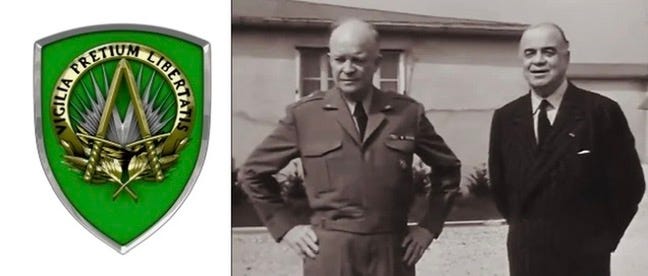
Established in 1951, SHAPE's initial location near Paris reflected France's pivotal role in post-war European security. However, the organization would soon relocate to Mons, Belgium, in 1967, following France's withdrawal from NATO's integrated military command under President Charles de Gaulle's independent foreign policy. This move not only altered the geographical center of NATO's command structure but also signaled shifting geopolitical dynamics.
The potential future scenario of a decentralized NATO command, with more prominent roles for the United Kingdom, France, and Germany, suggests an evolving strategic landscape where American influence might gradually diminish, reflecting the complex and dynamic nature of transatlantic security arrangements.
NATO’s Leadership Structure: Balancing Military Power and Political Consensus
NATO’s organizational structure reflects its dual identity as both a military alliance and a political coalition. Its leadership architecture balances American military dominance with European political oversight—a model shaped by historical compromises, national interests, and evolving strategic realities.
Military Command Structure
SACEUR is at the pinnacle of NATO’s military hierarchy, overseeing all NATO military operations in Europe from north to south. Regional commanders for the north and south are regarded as subordinate to SACEUR. The southern commander is also Commander-in-Chief of the Sixth Fleet in the Mediterranean, whose responsibilities include but are not confined to NATO’s southern flank.
SACEUR is a Senate-confirmed senior American military officer reflecting the US’s importance as NATO’s principal military power and nuclear guarantor. He reports directly to the North Atlantic Council (NAC), which is the principal political decision-making body, composed of representatives from all member states. The NAC is intended to provide strategic direction, oversee policy implementation, and operate by consensus to ensure unified decisions on issues related to collective defense and alliance operations.4
Reaching consensus within the NAC has become increasingly difficult. In recent years, two member states have pursued national agendas that have significantly diverged from the alliance’s core strategic priorities. Hungary, for example, has frequently echoed Russian talking points and delayed key decisions, including support for Ukraine, while Turkey has adopted a transactional approach to NATO policy—balancing its relations with Russia and leveraging its position within the alliance for domestic or regional gains. Turkey’s initial resistance to Sweden’s NATO membership exemplifies how a single member can stall critical collective action.
As NATO adapts to new strategic realities—including the possible abolition of the position of SACEUR—it must also modernize its political decision-making structures to ensure cohesion among a broader and more diverse membership. Neither Hungary nor Turkey, despite their recent obstructionist behavior, can afford independent security policies. Hungary is deeply integrated into the European economy and politically dependent on EU structures, while Turkey—though outside the EU—relies heavily on its NATO membership for security guarantees and strategic leverage. Alignment with Russia is not a viable alternative for either state in the long term.
In this context, a reformed North Atlantic Council (NAC) must be capable of managing internal dissent without paralyzing the alliance’s decision-making. While consensus ensures unity, the current unanimity requirement allows individual states to obstruct the alliance’s ability to respond decisively to security threats. There is an urgent need to reform the NAC’s decision-making process—potentially by introducing qualified majority voting on certain issues—to prevent actors like Hungary and Turkey from consistently undermining NATO’s strategic cohesion and operational effectiveness.
Streamlined decision-making mechanisms—such as issue-specific qualified majority voting or tiered consensus thresholds—could preserve unity while preventing a small number of members from derailing urgent collective actions. As NATO moves toward a more balanced and decentralized military structure, it will require a more agile political framework that can integrate divergent member interests without sacrificing strategic clarity or operational speed. Managing allies like Hungary and Turkey will not require marginalization but a more sophisticated structure that reinforces alliance discipline while acknowledging political complexity.
Presently, SACEUR serves concurrently as head of U.S. European Command (EUCOM), reinforcing U.S. integration into the alliance’s command framework. supported by a deputy senior European officer (typically British or German) largely without influence or public profile. If the position of SACEUR is abolished, it would be hard to see an equivalently senior European military officer being attached to EUCOM in whatever capacity, losing EUCOM’s access to a frequently critical European military ear to the American SACEUR.
Even today, with France’s partial reintegration into NATO’s military command structure in 2009, the DSACEUR cannot be French. Clearly, in the absence of American leadership, France and the UK are the most prominent and only European nuclear weapons powers that are ready to take up SACEUR’s role. The UK’s nuclear deterrent has long been closely integrated with the American, but the combined independent French and British nuclear forces are a more than sufficient deterrent against Russia separate from American theater nuclear forces in Europe.
SACEUR commands EU-led operations under the “Berlin Plus” arrangements when NATO assets are used but the U.S. chooses not to participate directly. While the position has long symbolized American leadership in NATO, it has also been a focal point of calls for greater strategic autonomy and more equitable command authority dating back to President Charles de Gaulle’s disagreements with Truman in the 1960s.
Political Leadership Structure
On the political side, NATO’s political policy direction is chaired by a secretary general who is appointed for an extendable four-year term.
The Secretary General is always a retired European politician. France has historically been ineligible for the post when not fully integrated into NATO’s military structure. The Secretary General chairs the NAC—NATO’s principal political decision-making body -and represents NATO in diplomatic and public affairs. A consensus builder and public face of the alliance.
• Comprised of representatives (ambassadors, ministers, or heads of state) from all member nations.
• Makes decisions by consensus, requiring unanimous agreement—an approach that underscores unity but can also slow or block action.
Historical Tensions and Structural Evolution
NATO’s leadership structure has evolved alongside major internal debates and shifting global dynamics:
France and NATO: France left NATO’s military command in 1966 under President Charles de Gaulle, protesting U.S. dominance. Though it rejoined in 2009, it continues to retain control over its nuclear forces and has limits on command integration, affecting its eligibility for top military roles. France did return to NATO's integrated military command structure in 2009 under President Nicolas Sarkozy. This marked a significant shift in France's relationship with NATO after having withdrawn from the military structure in 1966 under President Charles de Gaulle.
The 2009 reintegration was a major policy change that allowed France to take a more active role in NATO military planning and operations. However, even after rejoining, France has maintained some degree of autonomy, particularly regarding its nuclear forces, which remain under strict national control rather than NATO command.
This reintegration did increase France's eligibility for senior command positions within the alliance, though there are still certain historical patterns and balances of power that influence the distribution of top NATO leadership roles. - it's an important detail in understanding NATO's evolving command structure and French participation in the alliance.
Burden Sharing: The U.S. has long pressed European allies to increase defense spending. Although all members pledged to spend 2% of GDP on defense, many fall short, constantly fueling transatlantic tensions over who carries the military burden.
European Defense Ambitions: Initiatives like the European Security and Defense Identity (ESDI) and the EU’s Common Security and Defense Policy (CSDP) reflect European desires for greater autonomy. These efforts sometimes create friction with NATO structures, especially when they overlap with alliance roles.
Historically, European efforts to establish collective security frameworks outside NATO—such as the Conventional Armed Forces in Europe (CFE) Treaty, the European Security and Defense Identity (ESDI), and the Common Security and Defense Policy (CSDP)—have struggled to gain traction. These initiatives often faltered due to overlapping responsibilities with NATO, lack of U.S. engagement, institutional fragmentation, and divergent threat perceptions among European states.
However, the strategic environment has fundamentally changed over the past fifteen years. Since Vladimir Putin’s rise, Russia has pursued a clear course of aggression: the 2008 war in Georgia, the 2014 annexation of Crimea, the invasion of Ukraine in 2022, and ongoing hybrid operations targeting European infrastructure and political systems. These developments have shaken assumptions about post–Cold War peace and forced Europe to reexamine its defense posture.
At the same time, NATO has undergone unprecedented expansion and transformation. The accession of Finland and Sweden, increased defense spending across Europe, and the reactivation of territorial defense missions have elevated the urgency—and feasibility—of more cohesive European military planning.
In this new context, the prospects for meaningful progress in European defense integration are stronger for several reasons:
Strategic Clarity: Russia’s actions have provided a unifying threat that was previously absent. This shared focus reduces political divergence and lends urgency to collaborative defense initiatives.
Operational Momentum: European militaries have become more active and interoperable through support for Ukraine, boosting confidence in joint planning, logistics, and procurement.
NATO-EU Complementarity: Rather than duplicating NATO, newer EU efforts increasingly aim to fill capability gaps and strengthen resilience—especially in areas like military mobility, cyber defense, and industrial coordination—creating opportunities for synergy rather than competition.
Expanded Membership, Broader Mandate: With a larger NATO and a more security-conscious EU, the institutional and geographic breadth now exists to support regionally tailored approaches to deterrence and defense.
Shifting U.S. Priorities: As the U.S. pivots toward the Indo-Pacific, European leaders recognize that long-term security will require greater self-reliance. This understanding is driving renewed interest in joint capability development, burden sharing, and strategic autonomy.
While past European defense initiatives struggled in NATO’s shadow or lacked political will, the war in Ukraine and Russia’s ongoing belligerence have fundamentally reshaped the conditions for progress. A more expansive and motivated Europe—aligned by shared threat perceptions and supported by overlapping NATO and EU mechanisms—has a real opportunity to build an integrated, resilient defense framework. The challenge now is less about institutional overlap and more about political resolve.5
Post-Cold War Expansion and Missions: After 1991, NATO expanded to include Eastern European nations and began conducting operations outside traditional territory—in the Balkans, Afghanistan, and elsewhere. This transformation raised questions about command authority and the alliance’s scope.
Consensus Rule: NATO’s consensus model ensures unity but can also lead to deadlock. Divergent national interests—especially during crises—can hinder rapid political or military responses.
NATO’s leadership system is a careful balance of American military command and European political consensus. The enduring U.S. monopoly over SACEUR has anchored the alliance’s military power, while European-led political structures like the Secretary General and NAC manage diplomacy and decision-making.
In the wake of the recent NATO defense ministerial meeting and the pointed message delivered at the Munich Security Conference—that Europe can no longer take the U.S. security guarantee for granted—the need to reform NATO’s command structure has become urgent. This shift in tone has been reinforced by credible reporting that the alliance’s most significant military role, the Supreme Allied Commander Europe (SACEUR), is under serious review for possible elimination. For Europe’s political and military leadership, it would be shortsighted to ignore these signals; the writing is on the wall. A more autonomous, balanced, and modern transatlantic security architecture is no longer just desirable—it is becoming a strategic necessity.
The Post-Cold War Decline
The collapse of the Soviet Union in 1991 reshaped NATO’s mission. With the Warsaw Pact dissolved and Eastern European nations rushing to join Western institutions, the original rationale for SACEUR diminished. The Cold War-era image of a U.S. general commanding forces to repel a Soviet advance through Central Europe gave way to a more fragmented strategic environment.
As NATO expanded to include former Warsaw Pact states—and, more recently, Finland and Sweden—the Alliance’s political center of gravity began shifting. Increasingly, the NATO Secretary General, a European civilian, became the public voice and political coordinator of the Alliance, while SACEUR’s role grew less visible.
At the same time, SACEUR’s portfolio extended into “out-of-area” operations, including the Balkans, Afghanistan, the Middle East, and Africa—regions often overlapping with the responsibilities of other U.S. regional commands. This further diluted the clarity and necessity of the SACEUR role as originally conceived.
Restructuring NATO’s Military Command: An Opportunity in Disguise?
The potential restructuring—or even elimination—of the SACEUR post may seem, at first glance, like a signal of waning American commitment to Europe. But in practice, it could mark a pivot toward a more balanced and strategically autonomous European role within NATO.
Historically, France has resisted the American monopoly over NATO’s military command, leading to its 1966 withdrawal from the Alliance’s integrated military structure under Charles de Gaulle. France’s reintegration in 2009 was partial; full return has remained elusive, largely due to continued U.S. dominance symbolized by SACEUR. A revised command structure—one that distributes authority more evenly—could remove this barrier and encourage deeper European ownership of NATO’s defense planning.
Lessons from the Cold War: Nuclear Deterrence and Tactical Reality
Throughout the Cold War, NATO depended heavily on U.S. nuclear weapons to offset the Soviet Union’s conventional superiority. Thousands of tactical nuclear weapons were deployed in Europe, intended to halt Soviet advances while avoiding escalation to strategic nuclear war. Yet these weapons often had yields comparable to the bombs dropped on Hiroshima and Nagasaki, and their use posed the risk of uncontrollable escalation.
The 1987 Intermediate-Range Nuclear Forces (INF) Treaty marked a turning point, eliminating an entire class of nuclear weapons from Europe. Following the Soviet Union’s collapse, the perceived need for forward-deployed nuclear weapons declined, and the U.S. withdrew most of them from Europe. NATO shifted its focus to crisis management, peacekeeping, and counterterrorism.
The Return of State-on-State Conflict
Russia’s aggression since 2008—and especially its full-scale invasion of Ukraine in 2022—upended NATO’s prior strategic assumptions. The war has re-centered NATO’s mission on territorial defense and exposed serious deficiencies in Russia’s conventional military power. It has also reignited debate over NATO’s command structures, which until then still reflected a largely Cold War-era U.S.-led hierarchy.6
Meanwhile, Washington’s strategic focus is shifting toward China, perceived as the primary long-term rival. Simultaneously pursuing closer friendly ties with Russia and urging Europe towards a more self-reliant security direction. With American attention and resources shifting towards the Pacific, Europe is being urged to rely less on the US for its own defense.
A New Model for NATO Leadership
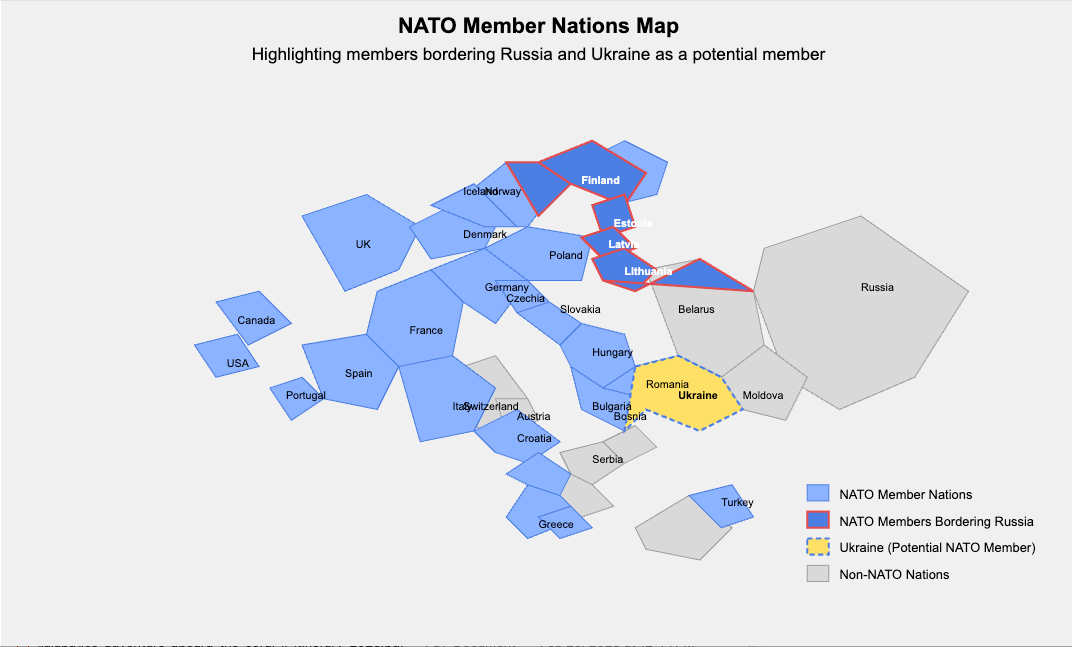
This changing landscape calls for a new model—one where leadership within NATO is more distributed and reflective of Europe’s growing need to be less dependent on the US. France and the United Kingdom, as Europe’s independent nuclear weapons powers, can help provide strategic deterrence. Poland, the Baltic states, and Ukraine (in partnership with NATO) have proven their conventional strength, resilience, and frontline experience. Germany, together with the UK and France, with their military-industrial capacity and increased defense spending, can serve as an engine to drive down the present overreliance on the US for the supply of advanced weapons systems. Nordic countries, particularly Norway, Finland and Sweden, enhance NATO’s Arctic and maritime posture. These nations, combined with NATO’s new Baltic member nations, offer an impressive defense posture for that region - one that has traditionally been poorly represented by SACEUR, focused as he has been on Central Germany. For the past few years, Russia has been increasingly aggressive in using proxy ships to sabotage undersea cables in the North Sea, including the reckless interference of commercial shipping.
Russia’s position in the Black Sea is increasingly constrained, despite its larger naval presence. Ukraine’s much smaller navy—already diminished by the loss of vessels during Russia’s 2014 annexation of Crimea—has nevertheless managed to significantly disrupt Russian operations, particularly through the use of innovative asymmetric tactics.
With the exception of occupied Georgia, the Black Sea is now almost entirely bordered by NATO members, including Romania, Bulgaria, and Turkey. Russia’s access to the Mediterranean is geographically and logistically restricted: warships must be pre-positioned before a crisis, as passage through the Turkish-controlled Bosporus and Dardanelles Straits can be limited under the Montreux Convention. Further maritime chokepoints—Gibraltar at the western end and the Suez Canal to the south—reinforce NATO’s ability to monitor and restrict Russian naval movement.
Russia’s sole significant naval base in the Mediterranean, located in Syria, has also become more precarious due to the erosion of the Assad regime’s stability and Moscow’s diminished influence in the region.
Taken together, these factors leave Russia’s naval posture on NATO’s southern flank, never particularly strong, at its weakest point in decades.
A decentralized command structure, led by European officers and supported by U.S. strategic coordination, could make NATO more adaptable, responsive, and politically cohesive. The U.S. would remain a vital ally and backstop, but not the sole driver of the Alliance’s military posture.
Will SACEUR fade away?
As with other once-crucial military roles—such as the U.S. Strategic Air Command or the Warsaw Pact’s Supreme Commander—SACEUR may be reaching the end of its strategic relevance. If the role fades, it won’t be due to lack of importance, but because the world it was built to serve no longer exists.
By embracing a restructured command model, NATO can better align itself with 21st-century security needs—balancing American support with growing European responsibility. As NATO adapts, what might appear to be the fading of an old institution may instead mark the rise of a more flexible, resilient alliance fit for the new geopolitical era.
Ukraine’s Sacrifice, Europe’s Responsibility
Ukraine’s defense against Russian aggression has achieved what decades of NATO war games and strategic planning failed to demonstrate (perhaps by design): that a determined, democratic nation can withstand and repel a larger, authoritarian adversary through courage, unity, and resolve. In doing so, Ukraine has not only safeguarded its sovereignty but also exposed the enduring vulnerability of Europe and the fragility of assumptions about long-term peace on the continent.
This is not merely Ukraine’s war. It is a war for European security, democratic legitimacy, and the credibility of the rules-based international order. Yet too often, the scale and significance of this conflict have been underappreciated, especially by political actors who continue to view Europe as dependent on American leadership for its defense. The continued emphasis on preserving Cold War-era structures—such as the Supreme Allied Commander Europe—risks obscuring the growing capacity and cohesion of NATO’s European members.
The alliance now faces a choice: to evolve or to entrench. Rather than modify SACEUR’s role to fit a changed landscape, NATO should consider retiring it altogether as a clear step toward rebalancing its command structure. This would not in the short to medium term lessen European dependence on US weapon systems and logistics but acknowledges that European states—equipped with modern capabilities, integrated economies, and a shared strategic interest—are capable of taking greater responsibility for their own security.
What Ukraine has begun through sacrifice, Europe must now complete through strategic maturity. The future of European security will not be dictated from Washington but shaped by Europeans themselves, in partnership with allies, guided by realism, gratitude, and a recognition that the cost of hesitation is far higher than the risk of change.
Bunde, Tobias, Eisenrtaut, Sophie, Westlessness Reloaded: Key Takeaways from Munich Security Conference 2025, Münchner Sicherheitskonferenz, February 16, 2025
Cook, Lorne, The EU Wants to Break Its Security Dependency on the US and Buy More European Weapons, Associated Press, March 19, 2025 - outlines the European Union’s “Readiness 2030” strategy aimed at reducing dependency on U.S. defense companies by encouraging EU countries to purchase military equipment from European suppliers, reflecting a shift toward greater self-reliance in defense.
Walker, Jackson, Trump considers pulling a US general from NATO command, sparking defense concerns. ABC News, March 25, 2025
Mark Hertling in a recent The Bulwark post, argues for the retention of the position of SACEUR, also asserting that the position should be kept as an American central military command authority in Europe.
Graham-Harrison, Emma, After America: Can Europe Learn to Go It Alone Without the US? The Guardian, March 25, 2025, examines Europe’s economic and defense challenges amid a diminished American role in global politics, highlighting the urgency for Europe to bolster its defense and economic strategies independently
Hooker, Jr., Richard D., A New NATO Command Structure, Atlantic Council, Issue Brief, June, 2024 - analyzes the existing NATO Command Structure following Russian aggression in Europe and the expansion of NATO, including Finland and Sweden. He argues that the current structure, designed for a different era, is no longer suited for defense and credible deterrence against Russia. Consequently, he proposes a revised NCS, detailing specific adjustments to the roles, responsibilities, and geographic focus of various NATO commands to better address contemporary threats and the new geopolitical landscape.