

The plugs that kept the fusing systems of the world’s first nuclear weapons safe during their journey to be dropped on Hiroshima and Nagasaki 80 years ago were kept as personal mementos by the minders of the bombs. Now treasured as relics of the event, here is their story.
Where did the bombs get those names?
According to Robert Serber, the Los Alamos physicist who gave the introductory lectures on how the bomb worked to all recruits arriving at the laboratory, the names of the bombs were taken from characters in Dashiell Hammett’s detective mysteries. The Thin Man stories even became a series of popular movies in the late 1930s. But the other two—Fat Man and Little Boy—are characters from *The Maltese Falcon*. They are very identifiable in the iconic movie version of the story as the characters played by Sidney Greenstreet and Peter Lorre. The design for Thin Man was found to be unworkable, so it never made it to “weaponization”—the term given to developing a deliverable bomb from a proof of concept.


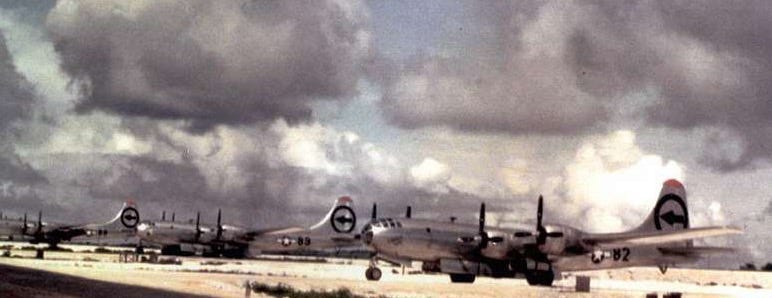
The components, including the uranium for Little Boy and the plutonium for Fat Man, were delivered to Tinian Island in the Mariana Islands, about 1,500 miles south of Japan. A rapidly constructed air base, Tinian by 1945 was the largest, busiest airport in the world, filled with B-29 bombers. The 509th Composite Group, specially created to drop the atomic bombs, was secretively tucked away in an inconspicuous corner of North Field. The two bombs, very different in design, were assembled by a team of scientists and ordnance experts from Los Alamos who had been involved with the bombs’ creation from the beginning. They worked in shifts around the clock, their skills every bit as essential as those of the crews that would fly the bombs to their targets. Perhaps due to the secrecy associated with their work—even greater than the general obsessive secrecy of the Manhattan Project itself—this team, while acknowledged as important, is much less well described in accounts about the making of the bomb. Once completed, each bomb had two minders who would fly with them to attend to any needs that might arise along the roughly six-hour flight, as well as attend to the special individual needs of each bomb along the way. For Little Boy these were William “Deke” Parsons and Morris “Dick” Jeppson, and for Fat Man it would be Frederick Ashworth and Philip Barnes.
The Weight of Small Things
The distinction between the green and red plugs was profound in its simplicity. The green plugs were designed for testing and safety, insurance against the unthinkable possibility of premature detonation during transport. The red plugs completed the electrical connections necessary for detonation. In the language of nuclear weapons, they were the difference between a very expensive piece of metal and uranium, and a force that could level a city.
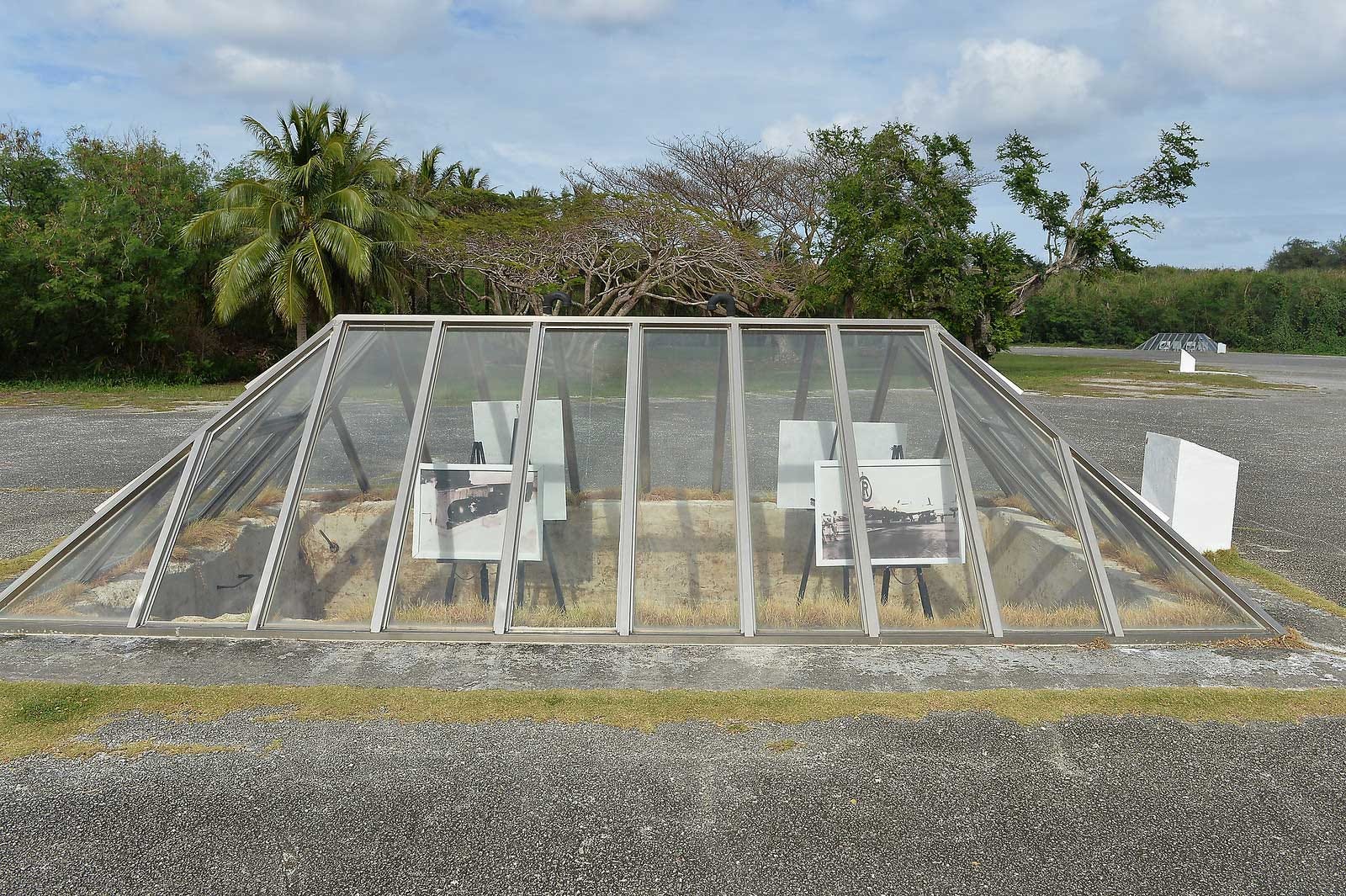
Both bombs were awkwardly large and heavy, between 8,000 to 10,000 pounds, with Fat Man significantly heavier. The bomb bays of the specially built B-29s for the 509th had been custom-designed to carry these bombs. Even so, at Tinian it was found necessary to construct special loading pits for the bombs—ones that the bombers could be moved over to allow the bombs to be lifted using chains into the bomb bays and secured for flight.


In the pre-dawn darkness of August 6, 1945, twenty-three-year-old Morris “Dick” Jeppson found himself crawling into the bomb bay of the *Enola Gay*, thirty thousand feet above the Pacific Ocean. In his hands were three small red electrical plugs that would help seal the fate of Hiroshima—and change the world. The task before him was as simple as it was momentous: remove three green safety plugs from the “Little Boy” atomic bomb and replace them with red arming plugs. It was a job that transformed a dormant weapon into humanity’s first deployed nuclear device. What Jeppson couldn’t have known at that time was that those small components would become some of the most controversial and valuable artifacts of the nuclear age. He kept the three green safety plugs in his pocket, and after the flight, his superior officer, Parsons, consented to his request that he keep them as mementos of the mission.
Three days later, on August 9, 1945, Phil Barnes faced a much more challenging flight. Soon after *Bockscar* had climbed to cruising altitude, Fat Man’s status monitor’s slow flashing red light began to blink rapidly, indicating that the bomb’s barometric fuse was armed. The fuse was set to detonate at a lower altitude of 1,700 feet, but all the same, Frederick Ashworth, the senior weaponeer, went off to the cockpit to give the news to Sweeney. The rapidly blinking light from the bomb bay had already caught the attention of the crew, except the tail gunner, whose only view was out the back of the aircraft. The guns were radar-directed, and he was free to wander the aircraft at this point in the flight and was soon an equal participant in the suddenly raised level of tension as Barnes set to work on the problem.
An extraordinarily talented ordnance electronics technician before being recruited by Los Alamos, Barnes had attended Yale and MIT, specifically directed by the Army to further hone his skills. At this point, there was very little accessible on the bomb, but it occurred to Barnes that the monitor itself might be at fault. He had brought—with incredible foresight when viewed retrospectively—the circuit diagram for the monitor and was soon logged in the bomb bay checking each circuit on the monitor against his reference diagram. It may not have taken more than ten or twenty minutes for him to isolate the problem, but within an hour the young man had removed the monitor, found an incorrectly set switch, corrected it, and reinstalled the monitor, which returned to its slow steady state indicating everything was as it should be for Fat Man’s in-flight status.
*Bockscar* made three bomb runs on its primary target, Kokura, but was unable to find a gap in the cloud cover to use the Norden bombsight, which required a visual aiming point. Though the aircraft had the leading ground mapping radar for this mission, the use of radar to aim the bomb was excluded. Barnes may have switched the bomb to the safe green plug as they pressed on to the secondary target of Nagasaki. The city was equally obscured by cloud, but there was not enough fuel in the aircraft to make multiple bomb runs, so Ashworth had ruled that they would make a single run using radar. Barnes must have switched from the green to the red plug on the bomb before *Bockscar* began its run. Into the bomb run, the bombardier found a gap in the clouds and, forty-five seconds had taken control of the plane’s approach, visually fixed an aimpoint for the Norden bombsight, and released the bomb. The rest is history, as they say, and the second nuclear weapon to be used in war detonated over the city of Nagasaki around 11:00 a.m. After the aircraft’s return to their base on Tinian Island, Barnes asked Ashworth if he could keep the safety plug, and Ashworth consented. Around the 50th anniversary of the bomb, Barnes donated it to the Truman Presidential Library, where it can be viewed in an exhibit about the atomic bombing of Japan.
The Collector’s Instinct
What happened to these plugs after the war reveals something fascinating about how we preserve and commodify history. Both Jeppson and Barnes, perhaps sensing the magnitude of what they had witnessed, kept their plugs as souvenirs. But these weren’t ordinary keepsakes—they were components of the weapons that had ended World War II and ushered in the atomic age.
Dr. Edward B. Doll, Head of the Fusing Team and Jeppson’s civilian boss, recognized their historical significance immediately. On August 7, 1945—just one day after Hiroshima—he wrote a certification on the back of an inspection tag for one of the green plugs: “one of the three green safety plugs used on L-11 at Hiroshima, Japan. This was the first atomic bomb used in the history of mankind.” Jeppson signed it as well, creating what may be the most immediate documentation of a nuclear weapon’s deployment.
For decades, these artifacts lived quiet lives. Jeppson kept his plugs in a safe deposit box, ordinary objects carrying extraordinary weight. Barnes eventually contacted the Harry S. Truman Library and Museum, offering to donate his “Fat Man” plug. The museum’s curator, Clay Bauske, was initially skeptical—until he confirmed Barnes’ story and accepted the donation in 1988.
The $167,000 Question
The story took a dramatic turn around 2002, when Jeppson decided to auction his plugs. His motivation was touchingly mundane: he wanted to raise money for his grandchildren’s college education. But the objects themselves were anything but ordinary.


When the plugs appeared at Butterfield’s Auctioneers in San Francisco, they caught the attention of Clay Perkins, a retired physicist and military collector from Rancho Santa Fe, California. Perkins had been fascinated by the Manhattan Project since childhood and had even learned to design atomic bombs in college. When he saw the auction listing, he described himself as “going crazy” because he considered it “the grandest thing possible.”
Perkins bid $167,000 for the two plugs—a green safety plug and a red arming plug from “Little Boy.” It was a price that reflected not just their historical significance, but their unique status as functional components of the first atomic weapon used in warfare.

Secrets in the Public Domain
The sale didn’t proceed without controversy. The US Justice Department attempted to block it, arguing that the internal mechanisms of the plugs were still classified military secrets. It was a fascinating legal question: Could components of a weapon used in 1945 still pose a national security risk in 2002?
District Court Judge Susan Illston rejected the government’s request with reasoning that was both practical and pointed. Since the plugs had been in Jeppson’s possession for 57 years and the government had only recently shown interest, they could hardly be considered a security risk if sold. Her ruling effectively declared that “all of the Little Boy artifacts, details, etc., are effectively, now, in the public domain and free to be sold at will.”
The decision highlighted the strange liminal space these objects occupied—simultaneously mundane electrical components and icons of the nuclear age, both declassified by time and controversy, and still somehow dangerous enough to warrant government intervention.
The Dispersal of History
Today, these plugs are scattered across museums and private collections, each one a small anchor to one of history’s most consequential moments. The National Museum of Nuclear Science & History in Albuquerque displays Perkins’ authentic plugs alongside a full-scale replica of “Little Boy.” The Bradbury Science Museum in Los Alamos has featured them alongside their replica bomb. The Naval Museum in Washington, D.C. houses a set that belonged to DekeParsons, an assistant director under J. Robert Oppenheimer.
In private hands, their stories continue to evolve. Leon Smith, one of the three Tinian weaponeers, treasured the safety plug Jeppson gave him upon their return from the mission, using it as a teaching tool during his lectures. The purchase forged a lasting friendship between Perkins and Jeppson, two men connected by their shared fascination with the most powerful weapons ever created.
The Persistence of the Particular
What makes the story of these plugs so compelling is how they embody the tension between the cosmic and the quotidian that defines the nuclear age. They are, in the end, just electrical components—small, functional objects that could fit in your palm. Yet they are also artifacts of a moment when humanity crossed a threshold from which there was no return.
In their simplicity, they remind us that history often turns on the smallest of hinges. The difference between war and peace, between a test and a detonation, between safety and catastrophe—sometimes it comes down to the simple act of replacing a green plug with a red one.
As we mark the 80th anniversary of Hiroshima and Nagasaki, these plugs serve as tangible reminders of the human hands that operated the machinery of nuclear warfare. They are souvenirs of a moment when individuals—young men like Jeppson and Barnes—found themselves at the controls of weapons that would reshape the world.
In their dispersal across museums and private collections, they also tell us something about how we preserve and commodify our most difficult histories. They are simultaneously priceless artifacts and objects with a very specific market value, sacred relics and electrical components, symbols of human achievement and human catastrophe.
Perhaps most importantly, they remind us that behind every great historical moment are ordinary people performing extraordinary tasks with tools that might seem unremarkable until we understand their purpose. In the case of these plugs, that purpose was nothing less than the dawn of the atomic age
This post is excerpted from my forthcoming book: Nuclear Weapons: A Cultural History—a comprehensive exploration of humanity’s most destructive creation and its profound impact on our world. From the blinding flash over Trinity to the tense standoffs of the Cold War, the book chronicles the weapons and the crises, accidents, near misses, and human stories that have shaped the nuclear age.
Here are the frequently neglected stories of those individuals who single-handedly prevented nuclear war between the US and Russia: the Soviet submarine commander who refused to fire a nuclear torpedo during the Cuban Missile Crisis despite depth charges exploding around him; the Russian officer who held back from launching ballistic missiles when a faulty electronic component triggered a false alarm; the emergency crews who risked their lives when a Titan missile exploded in its Kansas silo. Discover how popular culture—from the novel “On the Beach” to the documentary “The Day After”—shaped public perception of nuclear war, and explore the countless accidents, malfunctions, and split-second decisions that could have changed history.
Through declassified documents, eyewitness accounts, and recently uncovered stories, Nuclear Weapons: A Cultural History examines how these weapons transformed politics, culture, and the very nature of human existence from 1945 through the collapse of the Soviet Union and into the early 21st century.