

The most controversial of the Nobel prizes, the peace prize has both infuriated and pleased since its founder first set it up.
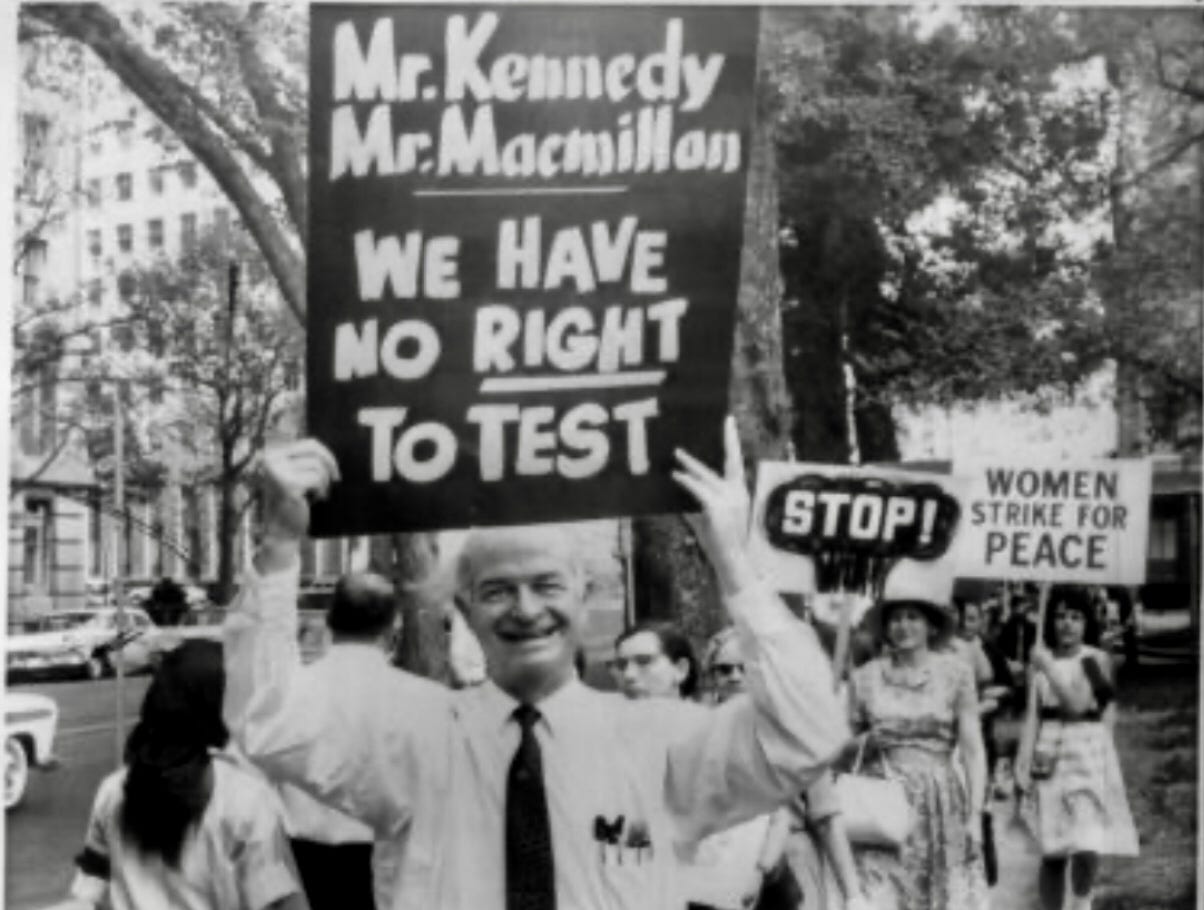
In April 1962, months before the Cuban Missile Crisis brought the world to the brink of nuclear war, President Kennedy hosted a White House dinner for Nobel laureates. Among the distinguished guests arriving in perfect black tie was Linus Pauling—the only person to win two unshared Nobel Prizes. But Pauling had spent the entire afternoon before the dinner picketing outside the White House with protest signs against atmospheric nuclear testing. The President and First Lady, hosting with all the charm they could muster, found themselves dining with a man who had been protesting their policies just hours earlier.
This scene captures something essential about what the Nobel Peace Prize once rewarded: the willingness to make powerful people profoundly uncomfortable in service of a greater cause.
The Last Inconvenient Laureate
In the mid-1970s, I was introduced to Linus Pauling by his son Peter with the idea of writing a biography of his father—this most polarizing laureate in the controversial history of the peace prize. Pauling’s 1963 Peace Prize for campaigning against atmospheric nuclear testing complemented his 1954 Chemistry Prize, but Life magazine described the peace award on its cover as “a weird insult from Norway.” The prize was more favorably received internationally than within the United States, where feelings were sharply divided.
Pauling’s path to the Peace Prize exemplified a different era’s approach to recognizing peace work. After that memorable White House dinner, he continued his campaign undeterred through the Cuban Missile Crisis. He conducted public correspondence with Soviet Premier Khrushchev, endured FBI scrutiny, had his passport revoked, and created a polarizing effect on the international scientific community—though mostly in his favor. The government generated false information refuting the damaging effects of radioactive fallout from atmospheric tests, and J. Edgar Hoover declared Pauling “the most dangerous person in the United States,” though unable to find any formal connections to the Communist Party.
Then, in August 1963, the United States, Soviet Union, and United Kingdom signed the Partial Test Ban Treaty, banning nuclear tests in the atmosphere, outer space, and underwater. This was precisely the outcome Pauling had been pressing for—and one that the US establishment, including his nemesis Edward Teller, “father of the H-bomb,” had spent years vociferously resisting.
On October 10, when the treaty came into force, the Norwegian Nobel Committee announced Pauling’s Peace Prize for 1962. The timing was impossible to ignore, even if the committee never formally linked the award to the treaty. It was called “a slap in the face of the United States” by American newspapers.
The US government’s response revealed the cost of Pauling’s principled stance. The US Embassy ignored the arrival of Linus and his wife, Ava Helen, in Oslo. In an even more pointed snub, the ambassador declined to attend the award ceremony that included Norwegian royalty. The laureate who had helped push the world toward a safer path bathed in the international spotlight alone, shunned by his own government.
Continuing Patterns of Diplomatic Pettiness
Some things haven't changed. In August 2024, Rahm Emanuel, the US Ambassador to Japan, boycotted Nagasaki's annual atomic bomb memorial ceremony because the city's mayor had not invited Israel due to concerns about protests over Gaza. Emanuel coordinated with other G7 ambassadors in this diplomatic rebuke of Nagasaki's decision. Yet months later, it was the very survivors Emanuel had effectively snubbed—the Hibakusha of Hiroshima and Nagasaki—who would be honored with the world's most prestigious peace award. In December 2024, Nihon Hidankyo, the organization representing these atomic bomb survivors, was awarded the Nobel Peace Prize for their tireless advocacy against nuclear weapons. The organization has spent decades bearing witness to the human cost of nuclear warfare, with survivors sharing their personal testimonies. Today, approximately 100,000 survivors of the atomic bombings remain alive, carrying forward their message that nuclear weapons must never be used again.
The Prize’s Evolution: From Agitators to Moral Exemplars
Pauling could confront the most powerful man in the world in the afternoon and dine with him in the evening because he cared more about stopping nuclear war than about making anyone comfortable. The Nobel Committee honored him for this approach, announcing his prize on the very day the Partial Test Ban Treaty came into force. It was a rare case where the award aligned with tangible, world-changing achievement.
Today’s prize has shifted from rewarding inconvenient agitators to celebrating moral integrity. The 2024 award to Nihon Hidankyo, the organization representing the survivors of Hiroshima and Nagasaki, exemplifies this evolution—recognizing the moral authority of victims rather than the disruptive work of political actors. While such recognition is an important shift, it represents a fundamental change in what the committee considers worthy of the world’s most prestigious peace award.
Consider the patterns among US presidents who have won: Theodore Roosevelt mediated a war and still loved battleships. Woodrow Wilson founded the League of Nations while ignoring the Senate. Barack Obama won for “extraordinary efforts” before accomplishing much substantively. While Barack Obama’s 2009 Nobel Peace Prize was widely criticized as premature, he subsequently delivered on disarmament efforts through strategic arms reduction treaties with Russia and his landmark 2009 Prague speech—arguably the most comprehensive nuclear disarmament plea ever made by a sitting U.S. president. Looking ahead the committee now seems to prefer moral exemplars who won’t make governments and the public too uncomfortable, avoiding people too easily associated with controversy.
This shift has practical implications for current conflicts. Ending the Ukraine war, for instance, will demand painful compromises on territory, NATO status, and war crimes accountability. Such negotiations will prove ugly enough to kill any Nobel acceptance speech and will require leaders willing to alienate their own supporters. The committee now prefers moral simplicity over messy results—precisely the opposite of what negotiating the conclusion of conflicts often requires.
Personal Disillusionment and Scientific Integrity
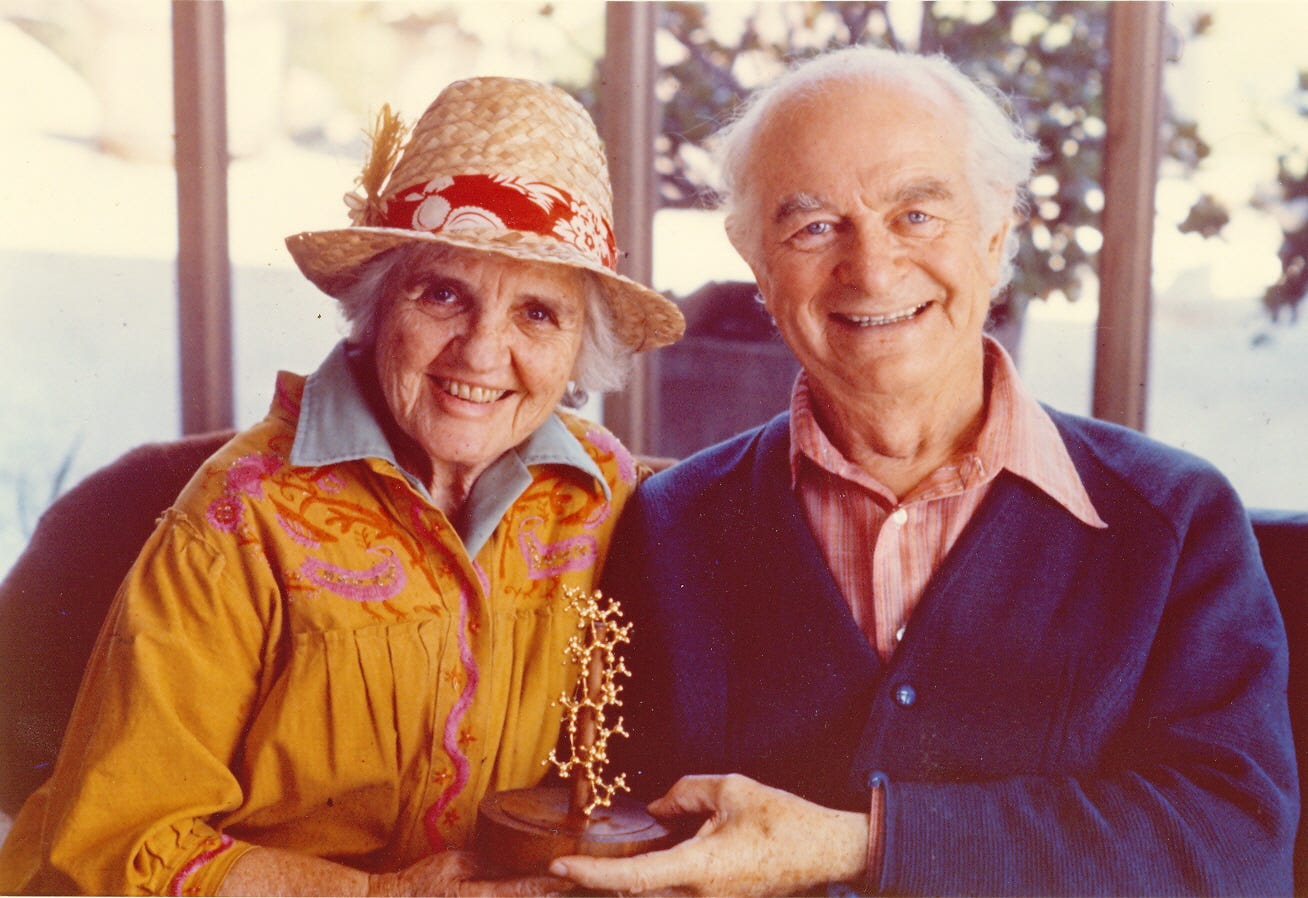
My own relationship with Pauling became complicated after his Peace Prize triumph. Never finding another cause so suited to his passions and intellectual strengths as atmospheric nuclear testing, his expansive curiosity turned toward human health. This shift was deeply rooted in personal experience—Pauling had contracted glomerulonephritis, a potentially fatal kidney disease, in 1941. Dr. Thomas Addis, a Scottish communist at Stanford University Hospital, successfully treated him, becoming a close lifelong friend.
Later, Pauling began promoting vitamin C, first as a cure for the common cold, then as a treatment for cancer. Working with his protégé Arthur Robinson on high-dose vitamin C studies with mice, and collaborating with Dr. Ewan Cameron at a Scottish hospital treating terminal cancer patients, Pauling ventured into territory that alarmed the medical establishment.
As someone who had long admired Pauling, I found myself in the difficult position of having to write a critical article for New Scientist magazine about the unsound science emerging from his Palo Alto institute. The piece, guided by editor Bernard Dixon’s rigorous journalistic standards, exposed serious methodological flaws in the vitamin C and cancer research. This was unprecedented—no one close to Pauling had ever written anything critical about him.
The fallout was predictable: Pauling sued New Scientist and lost. He staunchly defended Robinson, though their relationship was already strained and would end bitterly. Most tragically, when Ava Helen was diagnosed with cancer, postoperative care they chose vitamin C therapy over conventional treatment available at Stanford Medical School. The cancer recurred and she died later, leaving Linus to fight his final battles alone.
The Paradox of Peace
Pauling’s scientific legacy is vast but not unflawed, much like the institution that honored his peace work. He and Ava Helen worked as a team in pursuing a world without nuclear weapons—a genuine and noble goal worth pursuing until achieved. But his later years revealed the danger of extending moral authority beyond one’s expertise.
I once helped Pauling lay out molecular models on the grass at his Big Sur ranch—structures he had determined through decades of X-ray crystallography and electron microscopy. When I asked how he first conceived a molecule’s structure before building models to test his ideas, he replied that he had ideas all the time and simply kept throwing them away until he found good ones.
This approach served him brilliantly in chemistry and peace activism but proved problematic when applied to medical research without proper safeguards. It’s a reminder that moral authority, even when hard-won through principled stands, doesn’t automatically transfer across domains.
Nobel’s Unintended Legacy
Alfred Nobel, the “Merchant of Death” who made his fortune selling dynamite and arms, established the Peace Prize after a French newspaper prematurely published his obituary with that unflattering epithet. He sought to rewrite his legacy by funding a prize for peace—creating one of history’s great ironies.
Today’s Nobel Peace Prize faces its own irony. In moving away from the Pauling standard of rewarding inconvenient truth-tellers who achieve concrete results, it has become an institution that often rewards everything except the hard, ugly, necessary work of actually making peace. The committee’s preference for moral comfort over political effectiveness means that the kind of leadership capable of ending current conflicts—messy, compromised, willing to antagonize supporters—wouldn’t make today’s shortlist.
If Pauling were alive now, conducting his brand of confrontational peace activism, he might receive polite applause but quiet dismissal as “too political,” “too divisive,” or simply representing “not the right optics.” And perhaps that represents Alfred Nobel’s final, unintentional twist: in creating a prize to honor peace, he inadvertently created an institution that increasingly avoids honoring those most capable of achieving it.
The world still needs leaders willing to picket in the afternoon and dine with power in the evening, caring more about preventing catastrophe than about making anyone comfortable. Whether the Nobel Committee will recognize such leadership again remains an open question—one with implications far beyond the prestige of a single award.
Coming up:
Next month we pay tribute to Sid Drell physicist, If you haven’t had a chance to take a look at our story about James Cameron’s next movie project and our survey of all the movies and major documentaries about nuclear war since 1945 - do try we appreciate your opinion.
In October, Ardiadne takes a more detailed look at the complicated and enigmatic Linus Pauling.
Future Aridane’s will be continuing to look at the future of strategic arms control as the February 2026 expiration date of the present US Russia agreement draws closer,
Nearer the winter holidays we plan to wrap up the year with Part II of Living Underwater looking at the nations leading the study of the Oceans now that the US has vacated that seat. Staying with the Oceans will take a look back in 20th century history at the fate of the ex-British minesweeper built in Washington State though never seeing military service she was bought for Jacques Cousteau by Lord Guinness and given to him for a penny. From there she became Calypso, a legend finding a corner in even the most skeptical of hearts - for she should not be held accountably for the follies of her captain and crew - she sadly was sunk in an accident in Singapore harbor, January, 1996.
If you’ve enjoyed reading this issue of Ariadne please consider sharing it
updated: 18 August 2025