

Deep in the sea
All molecules repeat
the patterns of one another
till complex new ones are formed.
They make others like themselves
And a new dance starts.
— from the poem Wonder by Richard Feynman (1918-1988), Nobel Prize in Physics in 1965.
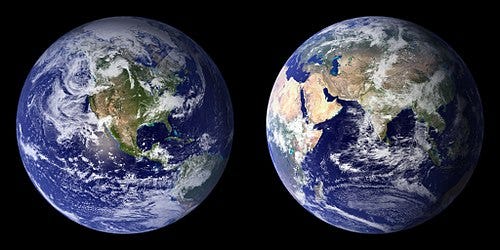
Richard Feynman understood something profound when he wrote those lines: the oceans are not merely where life began, but the crucible that made life possible at all. That “new dance”—molecules copying themselves, building complexity from simplicity—started in salt water some 3.8 billion years ago and has never stopped. Every breath we take, every thought we think, traces back to that primordial choreography.
For most of human history, however, the oceans remained unknowable. They were routes for trade and conquest, sources of food and fear—but not objects of systematic understanding. The deep sea might as well have been another planet.
That changed in December 1872, when HMS Challenger departed Portsmouth on the first truly scientific expedition to study the global ocean. Over nearly four years, her crew circumnavigated the globe, taking depth soundings, temperature measurements, and biological samples from waters that had not been studied before. They discovered the Mariana Trench, catalogued more than 4,000 new species, collected some 77,000 samples, and produced 50 volumes of reports that established oceanography as a modern science.
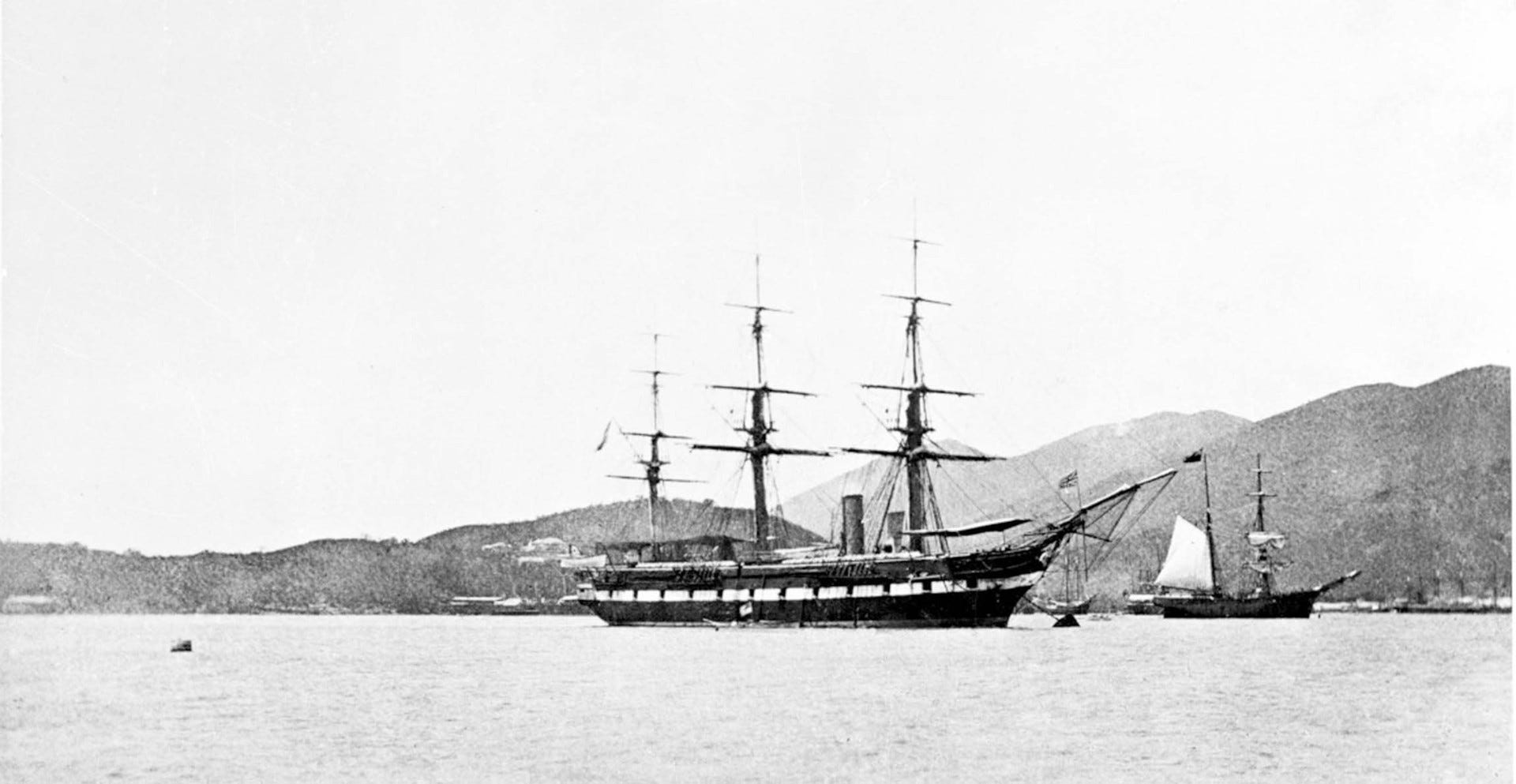
The Challenger Expedition deserves to stand alongside Darwin’s voyage on the Beagle. Darwin revealed life’s evolutionary logic across land and time; Challenger revealed the oceans not as a uniform abyss but as a layered, dynamic system teeming with life—from sunlit surface waters to crushing depths of seven miles. Together, they reshaped our understanding of Earth as an integrated living system.
That insight later crystallized in what James Lovelock called the Gaia hypothesis: the idea that life and its physical environment form a self-regulating planetary system. The oceans are central to that metabolism. They absorb carbon dioxide, regulate climate, distribute heat, and generate more than half the oxygen we breathe—largely through phytoplankton, whose collective mass exceeds that of all terrestrial plants. They are Earth’s thermostat, chemical buffer, and largest habitat.
Recognizing the fragility of these closed systems, Buckminster Fuller described our planet as “Spaceship Earth”—a vessel whose life-support systems require careful stewardship, not reckless extraction.
Nowhere is that fragility more visible than in coral reefs. Built by tiny polyps over millennia, reefs cover less than one percent of the ocean floor yet support roughly a quarter of all marine species. They protect coastlines, sustain fisheries for hundreds of millions of people, and represent extraordinary evolutionary complexity compressed into living architecture.
They are also disappearing. Rising temperatures trigger coral bleaching; ocean acidification makes it harder for reefs to build skeletons; pollution and destructive fishing add further stress. We’ve lost roughly half the world’s coral reefs since 1950, and at current rates, most remaining reefs will vanish by mid-century.
In The Blue Machine, Helen Czerski describes the ocean as a vast, interconnected engine—currents, chemistry, biology, and physics working together to make Earth habitable. It is a finely tuned system, evolved over billions of years, whose parameters we are now altering at unprecedented speed.
The scientific warnings are unequivocal. Yet political responses lag dangerously behind. In 2023, after nearly two decades of negotiation, the United Nations adopted the High Seas Treaty to protect biodiversity in international waters—two-thirds of the ocean beyond national jurisdiction. As of this writing, the United States stands alone among major maritime powers in refusing to ratify the agreement, even as it enters into force internationally.
The dance that began in the deep sea billions of years ago continues—but we are stepping on our partners. As this post is published, the United States has initiated withdrawal not only from the High Seas Treaty but from the Paris Climate Agreement and a broader framework of international environmental commitments that took decades to negotiate. These actions represent more than policy disagreements; they constitute a retreat from scientific reality and collective responsibility at precisely the moment when both are most urgently needed. Future posts in this Blue Planet series will examine the consequences of this abandonment through the lens of scientific evidence regarding the planet and its oceans. What policy failures are costing us in real time, and what collaborative international action is still possible even with the absence of American participation? The rest of the world will not wait for American re-engagement; it will adapt, forge new partnerships, and address planetary crises with or without the US. How quickly that adjustment occurs, what forms it takes, and what costs the United States ultimately pays for its absence from these critical collaborations remains unpredictable—but the irony is inescapable: the nation whose satellite technology first revealed Earth as a single, interconnected system now insists it can stand apart from the collective effort required to preserve it.
© 2026 Farooq Hussain
“Wonder” (also known as “I, a universe of atoms”) was written by Richard Feynman in 1955, shortly after experiments appeared to support J.B.S. Haldane’s hypothesis that life originated on Earth’s primordial oceans. A participant in both the Manhattan Project and biology’s molecular revolution, Feynman captured—simply and precisely—the wonder and fragility of life’s oceanic origins.