

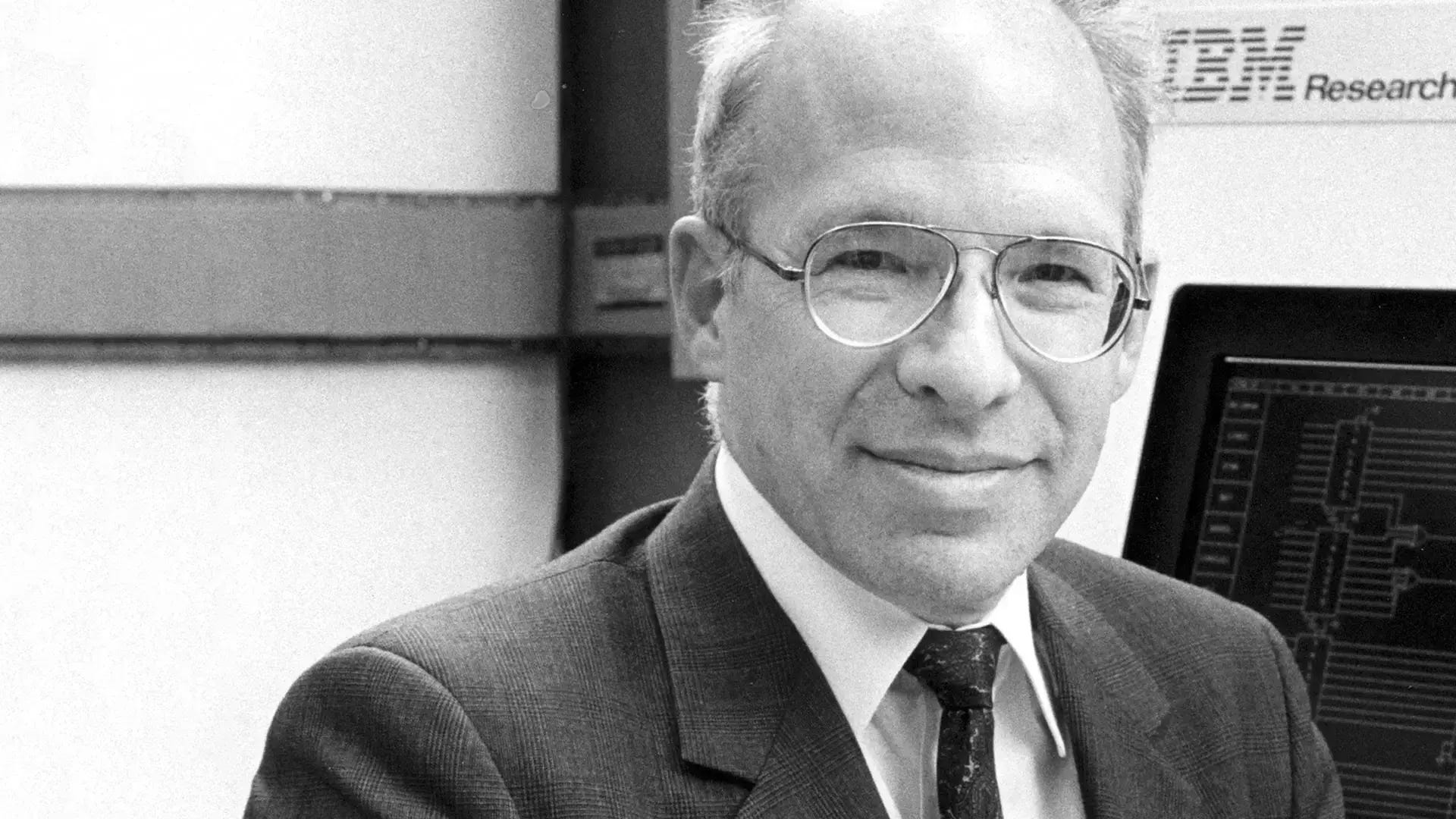
I first encountered Dick Garwin in the late 1970s during my PhD studies at the Department of War Studies, King’s College London, under the mentorship of the late Sir Laurence Martin. Garwin, a member of the JASON advisory group1, was closely associated with Sidney Drell, another JASON member who later became my postdoctoral sponsor at Stanford. Being guided by these two eminent scientists and ardent advocates for arms control was both a privilege and a gift.
Garwin was known for his direct engagement with the pressing nuclear issues of the Cold War. Beyond his scientific achievements, he inspired countless young individuals committed to reducing and eliminating the nuclear threat. His influence was vast, and he always found time for those who sought his guidance. I recall the astonishment of my colleagues at a NATO scientific center when I announced that Richard Garwin would be visiting to encourage our collective efforts.
After the Cold War, my career path diverged. Yet, a chance encounter at Rome’s airport—where Garwin recognized me after years—led to a heartfelt conversation urging me back into arms control work. His unwavering commitment and persuasive presence left an indelible mark. In recent times I’ve been drawn me back to this critical field.
Richard Garwin was not only a brilliant scientist but also a passionate advocate for peace. His humility about his numerous accomplishments and his relentless pursuit of arms control initiatives set him apart. He possessed a unique ability to connect with people, profoundly influencing those like me who were fortunate to cross his path.
Amongst the many memorable obituaries I would particularly recommend the New York Times, IBM Thomas Watson Laboratory2 The Federation of American Scientists maintains the Garwin Archive in Washington DC, Notable in this collection is a letter written by Garwin, Norris Bradbury and Carson Mark3three of the United States most influential nuclear weapons physicists, Bradbury took over the leadership of Los Alamos following Robert Oppenheimer’s resignation after the atomic bombing of Hiroshima and Nagasaki and managed to to staunch the exodus of
scientists from the lab at the end of War II. He is one of the Laboratories iconic leaders and its single longest serving. Carson Mark’s leadership of the nuclear weapons design team at Los Alamos is legendary. A foundational figure he was also frequently at odds with Edward Teller. Historians widely concur that while Edward Teller is appropriately credited with the original advocacy for a fusion-based nuclear weapon and for the evangelical pursuit of it’s creation, the development was rendered feasible by Stanislav Ulam and translated into a successful test by Dick Garwin who went decades without acknowledgement because of classification restrictions over his contribution. It’s also acknowledged that Teller’s incessant interference in the work of Los Alamos only served to delay likely by a couple years the laboratory’s development of a successful test. 4
© 2025 Farooq Hussain
The JASONS were a secretive Cold War scientific advisory group many of whom were or later became Nobel prize winners
Notable obituary and related biographcal material:
Richard Garwin, a creator of the Hydrogen Bomb dies at 97 New York Times, May, 15, 2025
Remembering Dick Garwin Renoown Scientist and Advisor, IBM Thomas Watson Laboratories, May 15, 2025
Atomic Heritage Foundation's interview with Richard Garwin, . September 2018. Also, there are a number of interesting interviews with Garwin on YouTube, search Richard Garwin
Finkbeiner, Ann, Richard Garwin obituary: designer of the hydrogen bomb who advocated for arms control: The particle physicist and inventor advised 13 US presidents — whether they asked him to or not. Nature, May, 2025
François Diaz-Maurin, Experts and former colleagues share their appreciations of Dick Garwin, H-bomb designer and government advisor, Bulletin of Atomic Scientists, May 23, 2025
Shurman, Joel N., True Genius, life and work of Richard Garwin, The most influential scientist you’d never heard of.
Charpak, Georges, Garwin, Richard L., Feux follets et Champignons nucléaires, Odillie Jacob, 1997
Garwin, Richard, Bradbury, Norris, Mark, Carson, Letter to President Carter on Nuclear Weapons Testing Related to Stockpile Reliability The Garwin Archives 1970s , FAS.
The development of the Hydrogen Bomb has for too long been largely an in my opinion, misattributed to Edward Teller as can be seen in part by the revelation of Garwin and Ulam’s work. Garwin’s contribution being revealed by NYT reporting nearly fifty years after the successful Ivy-Mike test.
The role of Richard Garwin in the development of the hydrogen bomb—specifically his authorship of the design used in the first full-scale test, Ivy Mike (1952)—became more publicly recognized in 2001, nearly 49 years after 1952 and 2 years before Teller’s death.
Although Garwin’s contribution was known in scientific and policy circles, broader public acknowledgment came with publications like the New York Times article by William Broad (October 2001) and subsequent coverage, which revealed that Teller had asked the young physicist Garwin to design the actual device based on the Teller-Ulam concept.
Although Garwin’s contribution was well known in scientific and policy circles, broader public acknowledgment came with publications like the New York Times article by William Broad (October 2001) and subsequent coverage, which revealed that Teller had asked the young physicist Garwin to design the actual device based on the Teller-Ulam concept.
For readers interested in a firsthand perspective on the development of the hydrogen bomb, I highly recommend Kenneth Ford’s account, which offers a vivid, technically grounded narrative from someone directly involved in the work. It provides a valuable complement to more widely known histories—such as Richard Rhodes’s Dark Sun —by offering an alternative view of Edward Teller’s role, one that recent archival research increasingly supports. Both accounts are important; read together, they enrich our understanding of a complex and consequential moment in history.
Ford, Kenneth W, Building The H Bomb: A Personal History, March 2015
Rhodes, Richard, Dark Sun: The Making of the Hydrogen Bomb, August, 1996