

My interview for citizenship of the United States was canceled on the morning of the day it had been scheduled: September 11, 2001.
I had first come to America in the early 1970s, hooked by the Americans themselves — their nation, President Kennedy, the race to the Moon, Bell Labs, the Grand Canyon. The whole enchilada. When a post-doctoral fellowship at Stanford University came through, I collected my visa from the US Embassy — the old one in Grosvenor Square, now a super-posh hotel — and noticed it was valid until the expiration of my passport: roughly twenty years. I mentioned this to an American colleague at the IISS, where we were both based. He wasn’t up on the pro forma either. “I guess we want to keep you over there,” he said with a wry smile.
They would, though not before an eventful journey. After a couple of years I joined the technical staff of NATO, and four years later returned to London, my home town, to work in Whitehall — a short walk from King’s College, where I had taken my doctorate. An old friend I ran into on the street observed that I had taken the longest route from King’s to Whitehall one could possibly imagine. “But I doubt we’ll keep you,” he added. “You’ll be back in America before long.” The Soviet Union collapsed, the Berlin Wall came down, and I made a career change. A short six-month assignment in 1990, helping countries connect to the NSFNET, and I have lived in the United States ever since.
By then I had married a Daughter of the American Revolution from Connecticut. Our two daughters were born Londoners but, thanks to their mother, held American citizenship alongside their British nationality.
After a decade of hesitating over whether to apply for citizenship myself, I finally admitted that I would not be returning to the UK. My daughters were becoming young Americans: they played lacrosse and made only token efforts to support Premier League football clubs. My citizenship interview was, of course, rescheduled. The immigration officer asked me to name the nine Supreme Court justices. I don’t know whether she meant it as a gotcha, but she remained expressionless as I rattled them off. Then she said: “Look, these are very difficult times. Give me one good reason why I should approve your application for citizenship.” I told her I had daughters who played lacrosse for their high school and were applying to American colleges, and that I saw my life here with them. She approved it.
At the swearing-in ceremony in Baltimore my family met so many people with more wonderful stories than mine. I remarked on the sheer diversity of the gathering — people literally from all over the planet. One of my daughters shot back: “Dad, this is America!”
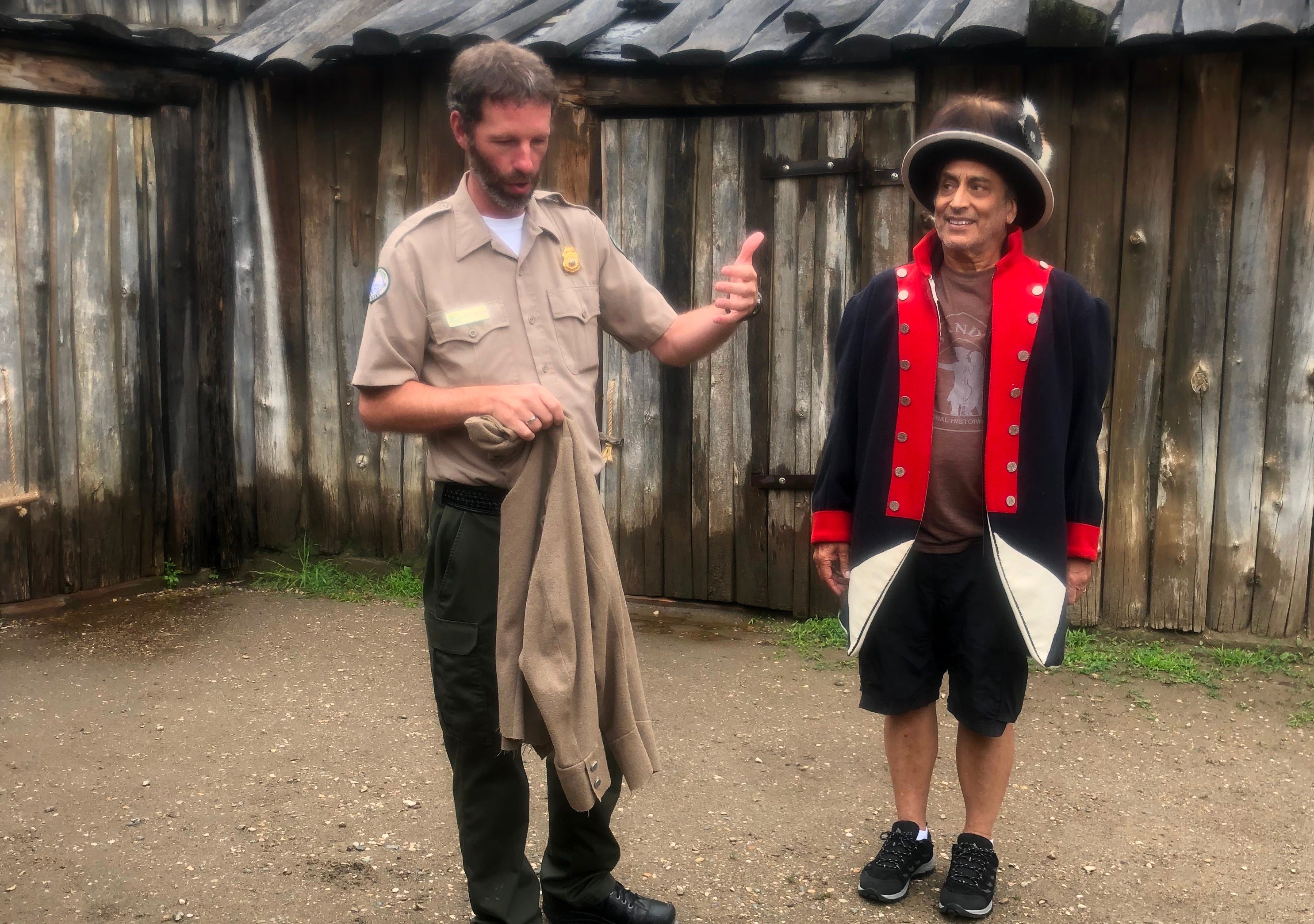
Some years ago I persuaded my brother to part with the serenity of the Cotswolds and let me show him the America I love. We drove across the country following the route of Lewis and Clark. Somewhere along the trail — hence the photograph — I was pressed into service as a clothes horse, modeling Captain Lewis’s uniform at one of the orientations. My brother, a tough nut to crack, was impressed.
Happy July 4th
Farooq Hussain