

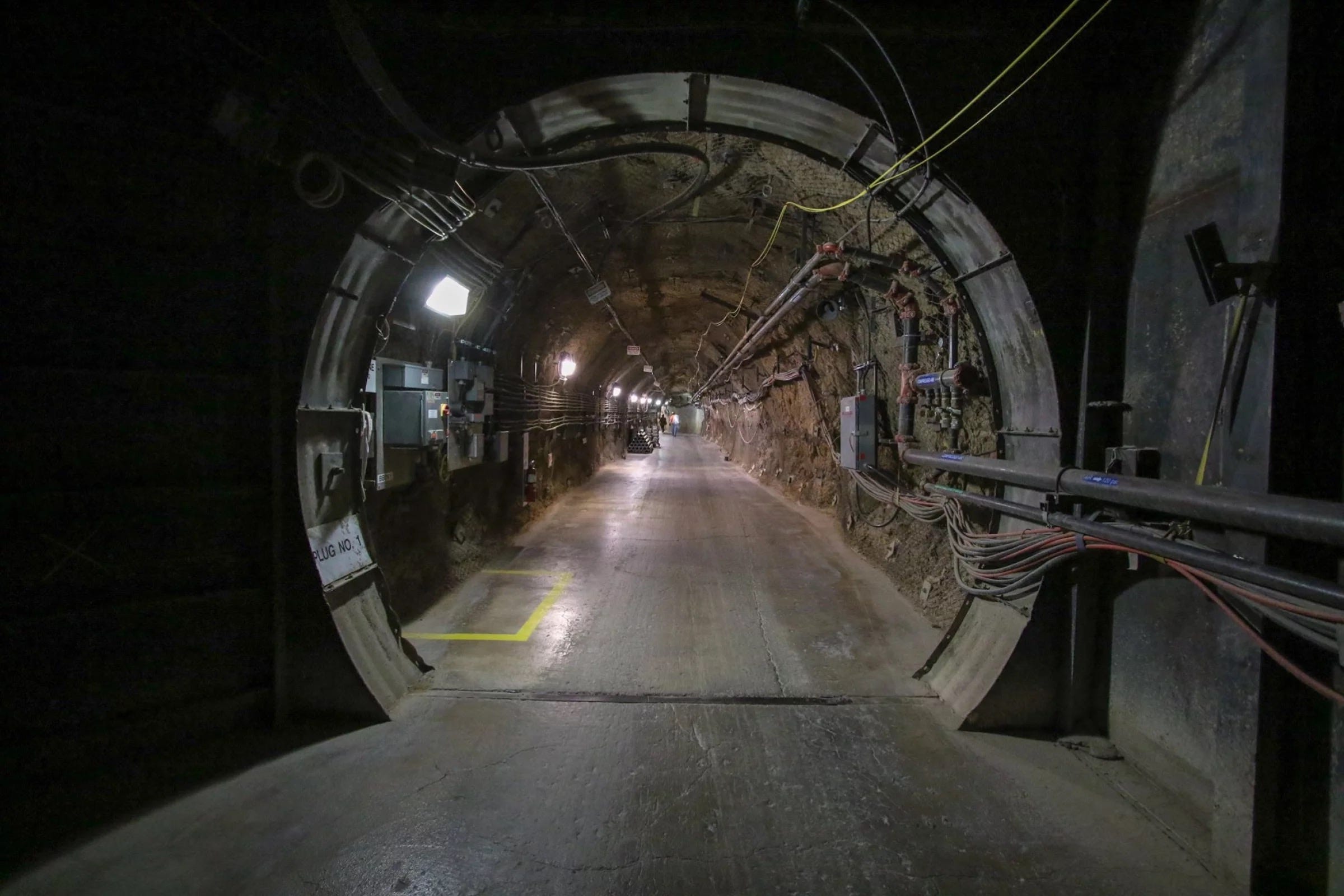
President Trump’s October 2025 declaration - apparently at the urging of Senator Tom Cotton - that he’d ordered the Department of War (as Trump renamed the Department of Defense) to resume US nuclear testing “on an equal basis” with Russia and China was widely received with puzzlement and alarm. All parties to the Comprehensive Test Ban Treaty, including the United States, Russia, and China, remain free to conduct subcritical testing—experiments that stop short of achieving a self-sustaining nuclear chain reaction. All three nations have continued such testing throughout the post-Cold War era.
When the President called for resuming testing “on an equal basis,” it was unclear what inequality he was addressing. The remark was widely interpreted as signaling a return to full-scale nuclear weapons testing—the kind restricted to underground sites after the 1963 Partial Test Ban Treaty and prohibited entirely under the Comprehensive Test Ban Treaty (CTBT). The Nevada state legislature certainly understood it that way: alarmed by the prospect, they passed emergency legislation to prohibit use of the Nevada Test Site for full-yield nuclear weapons testing.
The confusion extended beyond semantics. There is no technical case for full-scale nuclear explosive testing by the United States. The strategic case is worse than weak—it actively undermines American security interests at precisely the moment when the architecture of nuclear restraint has collapsed. With the last US-Russia strategic arms limitation treaty, New START, now expired, and the Nuclear Non-Proliferation Treaty (NPT) Review Conference approaching, a US return to full-scale testing would obliterate any remaining prospect of renewed arms control while handing Beijing and Moscow a propaganda windfall ahead of international negotiations where Washington desperately needs credibility.
The declaration stands in stark contrast to the President’s stated goals in February 2025 of achieving substantial nuclear weapons reductions and broadening strategic arms control agreements to include China. How did this disruptive policy reversal come about? And who stands to gain from abandoning the last constraints on nuclear competition just as the US begins its most extensive nuclear weapons modernization program in history—a $1.37 trillion investment over the decade ending in 2035? While Russia, China, the UK, and France all have modernization programs underway, none approach the scale of America’s.
The Revival of Nuclear Testing: From Policy Paper to Presidential Pronouncement
The current threat to the global nuclear testing moratorium didn’t emerge in a vacuum. In the July/August 2024 issue of Foreign Affairs, Robert O’Brien, Trump’s former national security advisor, argued that “the United States has to maintain technical and numerical superiority to the combined Chinese and Russian nuclear stockpiles” and recommended that “Washington must test new nuclear weapons for reliability and safety in the real world for the first time since 1992—not just by using computer models” (O’Brien). This position found support in the Heritage Foundation’s Project 2025, which, on page 431, calls for the United States to “reject ratification of the Comprehensive Test Ban Treaty and indicate a willingness to conduct nuclear tests in response to adversary nuclear developments if necessary” while also recommending a reduction of test readiness from 36 months to six months or less (Armbruster).
Trump’s October 30, 2025, social media announcement—declaring he had “instructed the Department of War to start testing our Nuclear Weapons on an equal basis” because of “other countries’ testing programs”—appears to have been influenced directly by Senator Tom Cotton, Chairman of the Senate Select Committee on Intelligence (Trump). Cotton welcomed the announcement and clarified in a Fox News interview that the tests would be “very small, controlled, probably underground detonations” to “test older weapons to make sure they’re still in the state we believe they are” and to “test new weapons and new designs” (Cotton qtd. in Nava).
The proposal has encountered significant internal resistance. The Department of Energy and the National Nuclear Security Administration have both publicly stated and privately briefed the White House that nuclear explosive tests are unnecessary to maintain the U.S. nuclear arsenal and would be counterproductive (Kimball, “Trump’s Nuclear Test Rhetoric”). NNSA Administrator Brandon Williams testified to Congress that “we collected more [nuclear test] data than anyone else. And it is precisely that data that has underpinned our scientific basis for confirming the stockpile. I would not advise testing” (Williams qtd. in Kimball, “The CTBT” 7). Energy Secretary Christopher Wright attempted to walk back Trump’s comments, suggesting on Fox News that the president was referring to “non-critical tests” or subcritical experiments—an interpretation the White House has not confirmed (Wright qtd. in Kimball, “Trump’s Nuclear Test Rhetoric”).
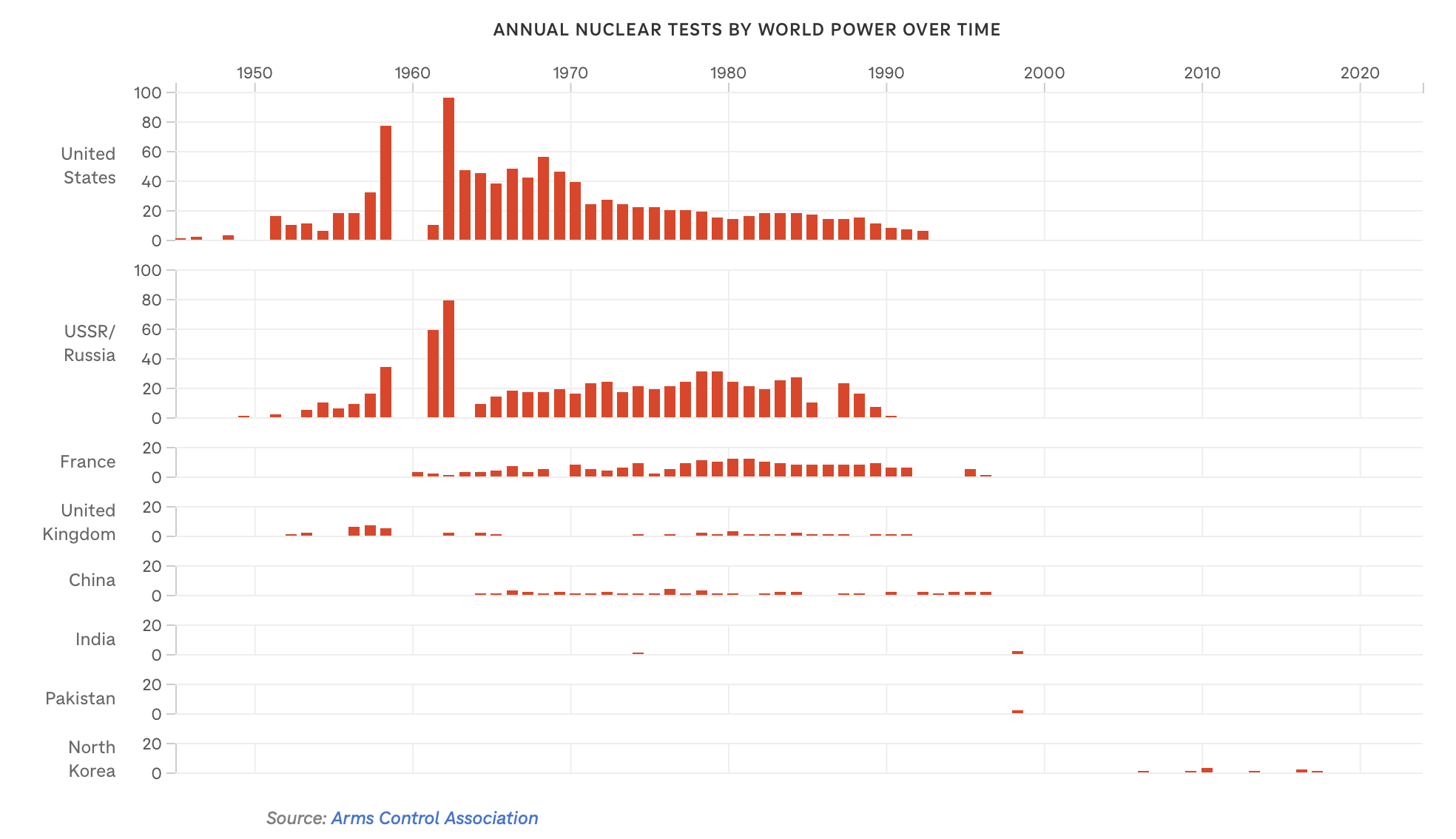
International reactions have been measured, but are concerned. The United Kingdom and France, both nuclear weapons states that have not tested since the 1990s and strongly support the CTBT, oppose a U.S. resumption of testing. On October 31, 2025, the United States became the only “no” vote on an annual UN First Committee resolution supporting the global moratorium on nuclear testing and the CTBT—a historic break with decades of U.S. policy (Kimball, “Trump’s Nuclear Test Rhetoric”). Neither China nor Russia has issued substantive public statements about Trump’s announcement, though their silence speaks volumes given the potential for a resumed arms-testing race. CTBT and NPT signatory nations have expressed strong opposition, with Arms Control Association Executive Director Daryl G. Kimball warning that “by foolishly announcing his intention [to] resume nuclear testing, Trump will trigger strong public opposition in Nevada, from all U.S. allies, and it could trigger a chain reaction of nuclear testing by U.S. adversaries, and blow apart the nuclear Nonproliferation Treaty” (Kimball qtd. in Phillips).
This convergence of advocacy from Heritage Foundation policy documents, former Trump advisors, and key senators created the conditions for Trump’s announcement—prompting urgent responses from the Union of Concerned Scientists, the Arms Control Association, and the Federation of American Scientists, all warning that a return to nuclear testing would undermine decades of nonproliferation efforts at precisely the moment when the regime faces its gravest challenges.
The United States signed the Comprehensive Nuclear Test Ban Treaty in 1996 but has never ratified it, remaining bound as a signatory not to act in a way that would undermine the treaty’s purpose while maintaining the option to withdraw. Russia, which had ratified the treaty, withdrew its ratification in 2023 but stated that it had no plans to resume testing. China signed but has not ratified, yet maintains its commitment to the testing moratorium. For nearly three decades, this arrangement has held: a de facto global norm against nuclear explosive testing backed by all major nuclear powers, even absent formal treaty obligations for some.
This fragile but functional equilibrium now faces its most serious threat. And the irony is stark: the nation that conducted more than half of all nuclear tests in history—1,030 of the global total of 2,056—is considering breaking a moratorium it doesn’t technically need to maintain, to solve problems that don’t actually exist. This testing dominance gave the United States an unparalleled technical foundation that renders further explosive tests unnecessary for any foreseeable modernization requirement.
The Technical Reality
The National Nuclear Security Administration’s own leadership has been unambiguous on this point. Brandon Williams, the current NNSA administrator, told Congress earlier this year that the United States has “collected more [nuclear test] data than anyone else. And it is precisely that data that has underpinned our scientific basis for confirming the stockpile. I would not advise testing.” In written responses, he confirmed: “The United States continues to observe its 1992 nuclear test moratorium; and, since 1992, has assessed that the deployed nuclear stockpile remains safe, secure, and effective without nuclear explosive testing.”
This is not diplomatic hedging. It reflects the Stockpile Stewardship Program’s demonstrated success, which has proven more effective than initially anticipated, despite skepticism about its viability in the 1990s. The program combines sophisticated computer modeling, subcritical hydrodynamic experiments, and advanced materials science to maintain and extend the service life of existing warheads without explosive testing.
For developing new weapons within the design envelope of existing experience—which describes all current U.S. modernization plans—subcritical assembly testing provides sufficient validation. Modern nuclear weapons development by established nuclear powers does not require anything more. The 2012 National Academy of Sciences study on CTBT technical issues confirmed that advanced nuclear states are “unlikely to be able to deploy new types of strategic nuclear weapons that fall outside the design range of their nuclear-explosion test experience without several multi-kiloton tests”—tests that would be readily detectable by the CTBTO’s International Monitoring System and national technical means.
The Modernization Context
This technical reality makes the timing of Trump’s threat to test particularly revealing. The United States is currently executing the most extensive nuclear weapons modernization program in the nation’s history, encompassing new delivery systems, warhead life extensions, and production infrastructure. In early 2026, the NNSA and the Department of Energy will open a public comment period on their Programmatic Environmental Impact Statement for plutonium pit production, proposing to ramp up production to 80 pits annually at the Los Alamos and Savannah River Sites.

None of this modernization requires nuclear explosive testing. The warhead modifications planned under current programs—the W87-1, W93, and various life extension programs—all fall within the United States’ vast accumulated test experience. Pit production expansion is justified by claims about aging concerns, yet recent studies suggest that plutonium pits may remain reliable for a century or more, far exceeding the service life of the weapons systems that house them.
If the technical case for testing to support modernization existed, it would already be on the table. It isn’t, because it doesn’t exist.
The Strategic Calculus
Trump’s justification—that Russia and China are testing—requires careful examination. The claim appears to rest on misinformation, with Senator Cotton apparently conflating the development of new delivery systems and weapons with nuclear explosive testing. Let’s examine the evidence.
The 2019 allegations of Russian hydronuclear testing at Novaya Zemlya were never clarified or repeated in subsequent State Department compliance reports. Russia vigorously denied the charges. Even the initial accusation focused on Russian “capability” to conduct such tests rather than confirmed activity. The CTBTO’s monitoring system, now more than 90 percent complete, has detected no violations by any nation.
Regarding China, there is no credible evidence of nuclear explosive testing. The confusion seems to stem from China’s conventional military modernization and expansion of its nuclear arsenal—neither of which requires full explosive testing.
More fundamentally, very low-yield hydronuclear tests—even if they were occurring—would provide minimal technical or military value to advanced nuclear states. At most, such tests could validate designs for simple, unboosted fission devices in the tens-of-tons yield range—weapons none of the major powers have any plausible need for.
The argument that U.S. testing would trigger reciprocal testing by Russia and China deserves careful examination. It’s not inevitably true that they would immediately resume full-scale testing simply because the United States does. But it’s certainly possible, and more importantly, the absence of treaty-based restraints would fundamentally alter the landscape. The combination of resumed testing by any significant power and the collapse of formal monitoring mechanisms would severely degrade our ability to detect, attribute, and respond to future nuclear weapons development by any state.
2026: A Convergence of Decisions
The coming year presents a critical nexus: the pit production comment period, the NPT Review Conference, and Trump’s testing threat all converging. The nonproliferation regime faces its most severe stress since the end of the Cold War. China is expanding its arsenal, Russia has suspended arms control agreements, and the institutional framework built over decades is fraying.
This is precisely the moment when restraint matters most. The United States resuming nuclear testing would not strengthen deterrence—it would accelerate a competition already trending in dangerous directions. It would validate proliferation advocates’ arguments that the nuclear-weapon states have abandoned their NPT Article VI disarmament commitments. And it would do all this while providing zero technical benefit for maintaining the existing stockpile or developing weapons within established design parameters.
As scientists and policy analysts who understand both the technical realities and the institutional fragility of the nonproliferation regime, we have an obligation to speak clearly about what is at stake. The scientific community built these weapons. We bear particular responsibility for ensuring their management meets the highest standards of technical honesty. That means stating clearly: there is no technical necessity for nuclear explosive testing, it would not enhance the reliability or safety of the U.S. nuclear arsenal, and it would not enable any modernization that cannot be achieved through existing methods.
The door to nuclear testing should remain closed because opening it serves no legitimate purpose while guaranteeing serious harm. Sometimes the most sophisticated technical judgment is knowing when not to act.
© 2026 Farooq Hussain
The New START Treaty expires tomorrow. What happens next?
This week marks the end of an era. On February 5th, the New START treaty—the last remaining guardrail on U.S. and Russian strategic nuclear forces—will expire. For the first time in decades, there will be no treaty enforcing mutual constraint between the world’s two largest nuclear arsenals.
We are entering a new age of nuclear competition, driven not by diplomatic agreements but by the relentless pace of technological innovation.
My Amazon eBook, released for free download on Kindle Unlimited today,
The Last Treaty: Innovation, Nuclear Risk, and the End of Arms Control,
It is available for free to Kindle Unlimited subscribers. In it, I argue that the old arms-control model crafted between nuclear superpowers is dead. Strategic stability will not come from signing new treaties that take years to negotiate and leave technological innovation unregulated. It will depend on building practical, reciprocal limits that can actually keep pace with the innovation being implemented in nuclear weapons systems.
We cannot rely on the diplomatic frameworks of the past to solve future challenges. It is time to look at what comes next.
Get your $0 copy on Amazon today:
Amazon Kindle Unlimited
Notes and References
Armbruster, Tom. “Project 2025’s Stance on Nuclear Testing: A Dangerous Step Back.” Bulletin of the Atomic Scientists, 6 Sept. 2024, thebulletin.org/2024/09/project-2025s-stance-on-nuclear-testing-a-dangerous-step-back/.
Kimball, Daryl G. “The CTBT, the Global Nuclear Test Moratorium, and New U.S. Threats to Break the Norm.” Arms Control Association Policy White Paper, Dec. 2025.
—. “Trump’s Nuclear Test Rhetoric and Reality.” Arms Control Today, Dec. 2025, www.armscontrol.org/act/2025-12/focus/trumps-nuclear-test-rhetoric-and-reality.
Nava, Victor. “CIA Director, Senate Intel Chairman Say Trump ‘Is Right’ About Secret Russian and Chinese Nuclear Tests.” New York Post, 3 Nov. 2025, nypost.com/2025/11/03/us-news/cia-director-senate-intel-chairman-say-trump-is-right-.
O’Brien, Robert. “The Return of Peace Through Strength: Making the Case for Trump’s Foreign Policy.” Foreign Affairs, July/Aug. 2024, www.foreignaffairs.com/united-states/return-peace-strength-trump-obrien.
Phillips, Morgan. “Energy Secretary Reveals How US Nuclear Tests Will Work.” Fox News, 3 Nov. 2025, www.foxnews.com/politics/energy-secretary-reveals-how-us-nuclear-tests-work.
Trump, Donald J. Post. Truth Social, 30 Oct. 2025.
Titus, A. Costandina. Bombs in the Backyard: Atomic Testing and American Politics. University of Nevada Press, 2016.
NNSA PULSE Facility: https://nnss.gov/news/article/nnsa-successfully-executes-subcritical-experiment-at-nnss-pulse-facility/
https://nnss.gov/mission/stockpile-stewardship-program/u1a-complex/#:~:text=PULSE%20(formerly%20the%20U1a%20Complex,relevant%20quantities%20can%20be%20conducted.
https://www.npr.org/2025/01/29/nx-s1-5276315/atomic-bomb-nuclear-weapons-lab-nevada
https://www.wypr.org/2025-01-29/step-inside-the-secret-lab-where-america-tests-its-nukes
https://www.armscontrol.org/factsheets/nuclear-testing-and-comprehensive-test-ban-treaty-ctbt-timeline