

WASHINGTON, Feb 4 (Reuters) - The United States will host more than 50 countries on Wednesday for talks aimed at boosting their access to critical minerals, in a bid to loosen China’s grip over vital industrial inputs that have allowed it to control global supply chains.
The gathering comes after President Donald Trump on Monday launched a strategic stockpile of critical minerals, called Project Vault, backed by $10 billion in seed funding from the U.S. Export-Import Bank and $2 billion in private funding.
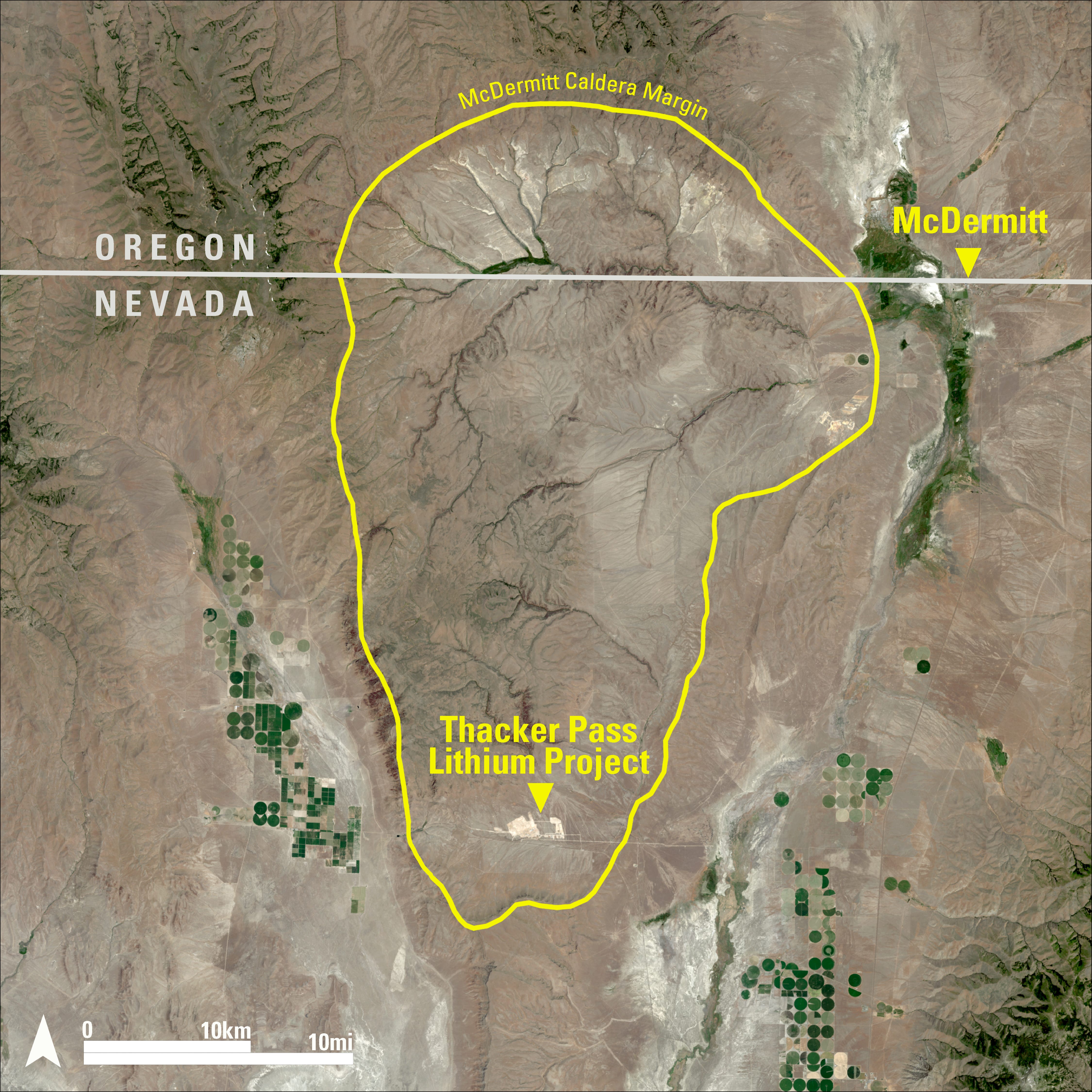
Lithium appears to be the new most valuable metal, white gold, and there’s a rush for it. In October 2025, two announcements exposed the fundamental flaw in how Western nations have approached critical mineral security. First, President Trump and Australian Prime Minister Anthony Albanese signed an $8.5 billion framework to build physical rare-earth processing capacity. Days later, renewed geological assessments confirmed that Nevada’s McDermitt Caldera holds potentially 20 to 40 million metric tons of lithium—the world’s largest known deposit.1
The timing is instructive. These developments come just as the futility of the stockpiling approach previously discussed by Ariadne becomes impossible to ignore. While politicians spent years proposing emergency reserves of rare earths and critical minerals—expensive, quickly depleted buffers that address symptoms rather than causes—China was exercising the processing dominance it spent decades building. Pre-empting the Australia-US agreement by a couple of weeks, Beijing imposed sweeping export controls on rare earths, requiring government approval for magnets containing as little as 0.1% Chinese content.
The stockpiling advocates got it backwards. They wanted to hoard materials we couldn’t process while ignoring the capacity to actually use them. Now, as serious efforts finally begin to build genuine processing infrastructure and develop domestic mineral sources, the stockpile strategy looks even more misguided than when Aridane first wrote about its Sisyphean nature.
The Stockpiling Trap: Paying Premium Prices for Temporary Relief
In our previous analysis of rare earth stockpiling, we argued that strategic reserves represent futile, repetitive effort—pushing the boulder uphill only to watch it roll back down. The core problems remain:
Technological obsolescence: Stockpiles built today become partially outdated before they’re even complete. The specific rare-earth compositions and purities required for cutting-edge semiconductors, high-performance magnets, and advanced materials are constantly evolving. By the time you’ve amassed reserves at today’s specifications, tomorrow’s applications need different formulations.
Scale mismatch: Even a massive stockpile provides only weeks or months of industrial consumption. Defense applications alone consume substantial rare earth quantities, but they’re dwarfed by electric vehicle production, wind turbine manufacturing, and electronics. A reserve sized for months of defense use translates to days of total industrial demand.
The premium price problem: Here’s where the stockpiling approach becomes particularly absurd. Building reserves requires purchasing vast quantities in global markets—markets that China can manipulate. The very act of stockpiling drives prices up, alerting competitors to strategic intent while enriching the dominant supplier you’re trying to reduce dependence on. You end up paying premium prices to the adversary you’re trying to protect against.
Processing bottlenecks persist: Perhaps most critically, raw rare earth concentrates, or even separated oxides, aren’t finished products. Without domestic magnet manufacturing and component production at scale, stockpiled materials still face the same processing bottlenecks that created vulnerability in the first place. It’s like stockpiling crude oil when you lack refineries.
The opportunity cost is staggering. The billions that could have been invested in building actual processing capacity—the $8.5 billion now committed to the US-Australia framework, for instance—were proposed for static reserves that provide no lasting capability.
What China Built While We Debated Stockpiles
China’s approach offers an instructive contrast. Rather than hoarding materials, China invested decades in building integrated supply chains. Beginning in the 1980s and accelerating through the 1990s and 2000s, Beijing made deliberate investments that accepted environmental costs Western nations were unwilling to bear, subsidized production to undercut competitors, and built capabilities from mines to magnets.
The result: China now controls approximately 85-90% of global rare earth processing and over 90% of high-performance magnet production. But here’s a crucial nuance often missed in breathless coverage: China doesn’t produce all the rare earths. As Gracelin Baskaran of the Center for Strategic and International Studies notes, “There’s a misconception that China produces all the minerals. The challenge is that China has supply chain control because most of these minerals ultimately go there for processing.”
This is a critical distinction. Many countries mine rare earths—Australia, the United States, and others have significant production. The vulnerability lies in processing capacity. For decades, it was economically rational to ship ore to China for the complex, environmentally challenging separation and refining processes. China built the infrastructure, faced no obstacles in accepting the environmental costs, and offered competitive prices. The rest of the world chose convenience.
The United States had Mountain Pass in California, once a leading producer of rare earths. But without processing capacity, it now exports over 95% of its ore, mainly to China. We chose to stockpile the symptom rather than cure the disease.
China’s Overreach: The Catalyst for Genuine Response?
China’s October export controls demonstrate the leverage this patient approach created—but they may also represent strategic overreach. By controlling processing rather than just mining, China can restrict the use of materials even when they are mined elsewhere. The 0.1% content threshold means magnets and semiconductors manufactured anywhere—Japan, South Korea, Europe—may require Chinese approval if they contain trace amounts of Chinese rare earths.
But Baskaran argues that China may have “overplayed its hand” with these sweeping controls, “unwittingly uniting many countries against it.” 1 The very comprehensiveness of the restrictions—their reach into downstream products far beyond Chinese borders—may have finally triggered the coordinated response that decades of warnings failed to produce.
The timing supports this view. The $8.5 billion US-Australia framework, the acceleration of McDermitt development, and what Baskaran describes as minerals becoming “really embedded into our foreign policy” through new alliances with Pakistan and revamped partnerships with Saudi Arabia and Ukraine—all represent a qualitative shift from previous half-measures.
“Even in an ‘America First’ era,” Baskaran notes, “we realized less than a month after Trump’s inauguration that we were not going to meet our minerals needs on our own.” The recognition that even the world’s largest economy cannot achieve critical mineral independence unilaterally marks a strategic maturity that was absent during the stockpiling debates.2
Whether this represents genuine awakening or merely another cycle of alarm, only to fall back into complacency, remains to be seen. But the scale of current commitments—measured in billions of dollars and multi-country coordination rather than emergency reserve proposals—suggests something different may be underway.
The Australia Agreement: Building Capacity Instead of Hoarding Materials
The US-Australia framework represents a fundamentally different approach—one that finally addresses root causes rather than symptoms.
The $8.5 billion commitment includes:
Pentagon-funded gallium refinery in Western Australia targeting 100 metric tons per year. Gallium is crucial for semiconductors and defense applications, with China currently controlling most production.
Lynas Rare Earths' expansion: Australia’s Kalgoorlie facility, already the largest rare-earth processing plant outside China, will receive support for further capacity.
Iluka Resources refinery: Under development at Eneabba, with projected capacity of 23,000 tonnes of rare earth oxides annually, including neodymium-praseodymium (critical for high-performance magnets) and heavy rare earth oxides.
Price floor mechanisms: Most tellingly, the agreement includes provisions protecting domestic markets from “unfair trade practices” through price floors. This acknowledges China’s historical tactic of strategic price manipulation—flooding markets to drive competitors out of business.
This last element exposes another fallacy of stockpiling. Advocates never explained how reserves would protect against China’s proven strategy of dumping excess materials to crater prices and eliminate competition. A stockpile is useless if the market price drops below your acquisition cost, making domestic producers uneconomical.
The price floors show understanding that supply chain security requires protecting production capacity, not just holding inventory.
But even this substantial commitment comes with realistic timelines: Australia might supply 20-25% of global rare earth production by 2030, significant progress from roughly 10% today, but still leaving China dominant through this decade.
McDermitt Caldera: The Promise and the Price
The lithium discovery at McDermitt Caldera represents a genuine strategic opportunity. The scale is remarkable: 20 to 40 million metric tons, potentially nearly doubling Bolivia’s salt flat reserves, previously considered the world’s largest.
The geology is favorable. Lithium concentrated in soft, shallow claystone layers (particularly the mineral illite) can be accessed via open-pit mining, potentially lowering extraction costs compared to deep hard-rock operations.
But here’s where we must confront the environmental reality that stockpiling advocates conveniently ignored: developing this resource requires colossal open-pit mining.
The Mining Footprint
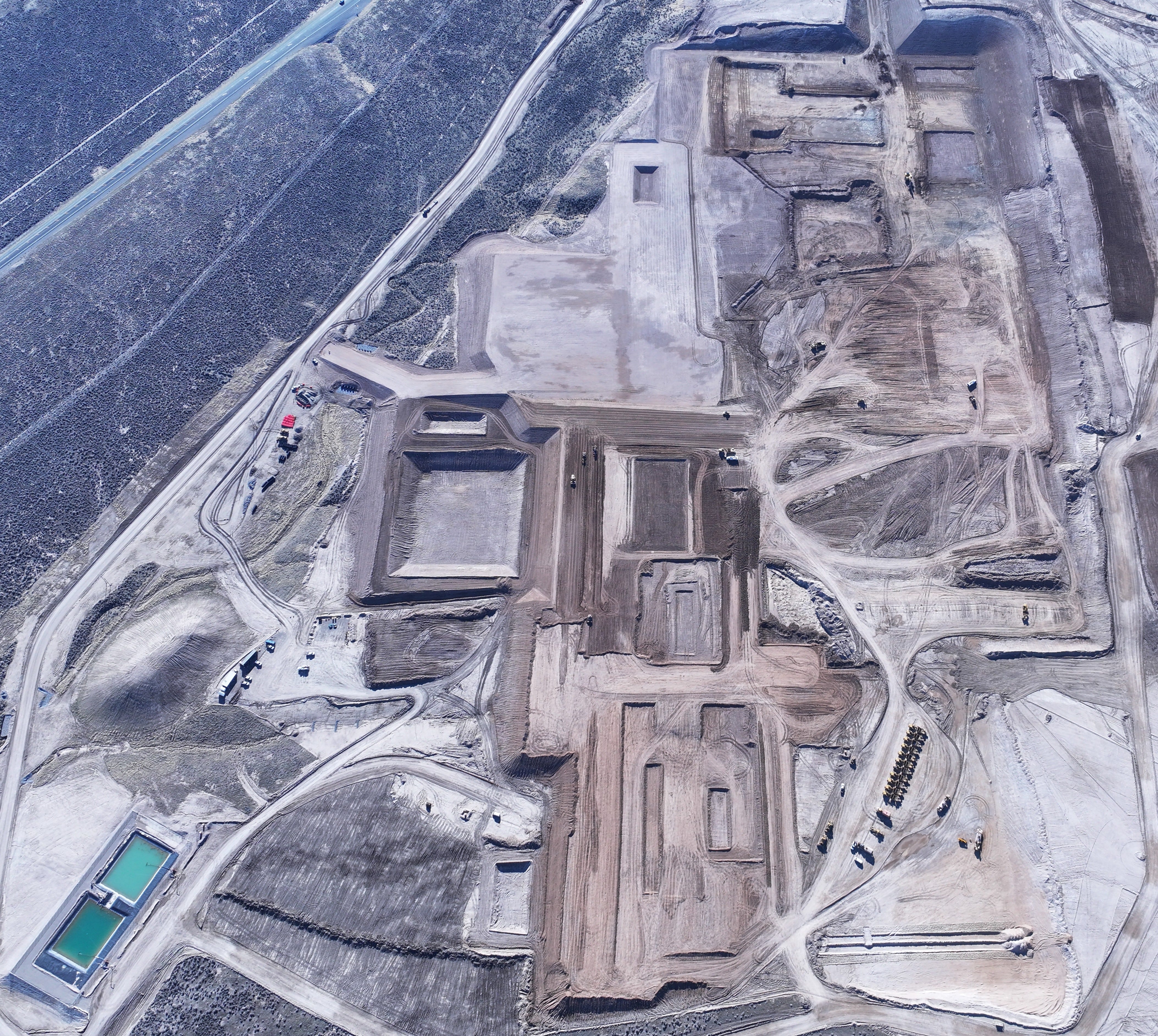
The Thacker Pass project within the McDermitt Caldera—backed by General Motors (a 38% equity stake) and the US Department of Energy (a 5% stake)—envisions a 17,933-acre mine. This is open-pit mining on an industrial scale. The “shallow, accessible” claystone that makes extraction economical also means removing vast quantities of overburden and processing enormous volumes of material.3
To produce enough lithium for approximately one million electric vehicles annually (Thacker Pass’s projected capacity), the operation will:
Extract millions of tons of lithium-bearing clay each year
Process this clay through chemical treatments to separate lithium
Generate substantial tailings and waste streams
Consume significant water resources in an arid region
Transform the landscape permanently
This isn’t hidden or unexpected—it’s inherent to the scale required. Meeting projected 2050 lithium demand (ten times current production levels) means multiple operations of this magnitude.
The stockpiling mindset allowed advocates to pretend critical minerals could be secured without environmental consequences. Buy reserves from elsewhere, problem solved. But genuine supply chain independence means accepting these costs domestically—the exact costs that made offshoring to China politically convenient for decades.
Indigenous Rights and Sacred Land
The Thacker Pass site, known as Peehee Mu’huh in Northern Paiute, sits on land considered sacred by multiple tribes, including the Fort McDermitt Paiute and Shoshone. Tribal members have stated that their tribe owes its existence to the shelter this area provided for their ancestors, helping them avoid forced relocation to distant reservations. They are descendants of families who hid at Thacker Pass to avoid being sent to more distant reservations.
The consultation process reveals deeper problems in how “green” mining is conducted. As one Fort McDermitt tribal councilmember told reporters, he didn’t learn about the mine’s approval until journalists contacted him for comment. The public comment period coincided with the pandemic, and virtual meetings led to communication lapses. The Bureau of Land Management’s permitting process—completed in less than a year when such reviews typically take multiple years—has been challenged as inadequate consultation.
But the issues extend beyond process. The mine itself will transform the landscape where the Fort McDermitt Paiute and Shoshone Tribe lives, an area of rolling sagebrush hills where greater sage-grouse dance, golden eagles fly above, and endangered Lahontan cutthroat trout and the King’s River pyrg (found nowhere else) depend on declining springs. The 24-hour, four-decade mining operation will create a two-square-mile open pit, use sulfuric acid extraction, pump 1.7 billion gallons of water annually in an already over-allocated water region, and generate 2.3 tons of carbon emissions for every ton of lithium produced.
While Lithium Americas claims the mine will quadruple the region’s average salary, the distribution of these benefits remains unclear. Plans include shuttle service to Winnemucca (a predominantly White town 60 miles south), while commitments to the Fort McDermitt Indian Reservation remain vague. As one conservationist noted, “The minerals that we use come from particular places, and it’s the people from those places that have to shoulder the impacts of mining for everybody else.”
These aren’t obstacles to minimize; they represent genuine conflicts among legitimate values: energy transition goals, Indigenous sovereignty, environmental stewardship, and economic development. The question isn’t whether these tensions exist, but whether communities bearing the costs have meaningful say in whether projects proceed.
The stockpiling approach let policymakers avoid these complex tensions entirely. Buying reserves from foreign suppliers meant never confronting the trade-offs that domestic production requires. The environmental and social costs were real—they were just borne by communities elsewhere. Now those trade-offs are unavoidable, and the fiction that “green” energy can be achieved without difficult choices is collapsing.
The “Green Premium” Nobody Wants to Pay
Here’s another dimension where stockpiling’s false simplicity becomes apparent: the competitiveness paradox of cleaner production.
Australia and Brazil are developing advanced extraction technologies that are significantly less energy-intensive and environmentally destructive than China’s coal-powered processing. Australian researchers have developed nanofiltration methods that extract lithium from brine in hours rather than months. Brazil’s Sigma Lithium pioneered “Quintuple Zero” processing: zero carbon, zero coal, zero tailings dams, zero potable water usage, zero hazardous chemicals.
These represent genuine technological advances. The problem? Markets don’t pay premiums for “green” minerals.
Western nations effectively exported environmental guilt for decades, allowing China to monopolize energy-intensive, toxic processing because it kept costs low and pollution offshore. Now Australia and Brazil face a competitiveness trap: their cleaner methods require higher capital expenditure. China’s approach—roasting rock with coal, conventional evaporation—is dirty but cheap and established.
Brazilian producers have explicitly complained that while their product is demonstrably greener, battery manufacturers prioritize price over environmental credentials.
The stockpiling advocates never addressed this economic reality. They proposed paying premium prices for reserves while ignoring that building competitive domestic production requires either:
Accepting higher costs for cleaner production
Replicating China’s environmentally destructive methods
Regulatory mandates (like EU battery passports) are forcing manufacturers to account for carbon footprints
The Australia-US agreement’s price-floor mechanisms suggest recognition of this challenge, but implementing them will be politically difficult if they result in higher battery costs for consumers.
Why Stockpiling Looks Even Worse Now
As serious efforts finally begin building actual capability, the stockpiling approach’s futility becomes clearer:
Wasted opportunity cost: Billions proposed for reserves could have been used to begin building processing capacity a decade ago. The timeline from initial investment to operational refinery is a minimum of 7-10 years. Money spent on stockpiles is money not spent closing that gap.
Premium prices paid to adversaries: Every dollar spent building rare earth reserves at market prices enriched the Chinese suppliers whose dominance we sought to reduce. It’s strategic self-sabotage—funding your opponent while claiming to reduce dependence.
False security: Stockpiles provided political cover for avoiding hard choices about the environmental costs of domestic production, conflicts over indigenous rights, and economic trade-offs. They let politicians claim action while deferring difficult decisions.
Processing bottleneck ignored: The fundamental vulnerability isn’t access to raw materials—it’s processing capacity. Stockpiling raw or partially processed materials without a downstream manufacturing capability is like hoarding ingredients without a kitchen.
China’s countermove: The October export controls targeting 0.1% Chinese content in finished products reveal how China’s processing dominance trumps any stockpiling strategy. Even materials mined and partially processed elsewhere often pass through Chinese facilities. Stockpiles can’t address systemic supply chain integration.
The Long Road Ahead: No Shortcuts
The US-Australia framework and McDermitt Caldera development represent more serious approaches than previous initiatives. The scale of investment, inclusion of price protections, and focus on processing capacity rather than just mining show an understanding of what genuine independence requires.
But political promises of abundance “in about a year” (as Trump suggested) mock the engineering reality:
Building rare earth processing capacity requires:
Environmental permitting: 3-5 years minimum
Construction and commissioning: 3-5 years
Scale-up to full production: 2-3 years
Downstream manufacturing (magnets, components): Another 3-5 years
Even in optimistic scenarios, Australia is projected to reach 20-25% of global rare earth production by 2030. China remains dominant through this decade and likely beyond.
Developing McDermitt lithium requires:
Final permitting and legal resolution: 1-3 years (ongoing challenges)
Mine construction: 3-4 years
Processing facility commissioning: 2-3 years
Scale-up to full capacity: 2-3 years
Thacker Pass might begin meaningful production around 2027-2029, with full capacity later still.
These timelines can’t be compressed by political will or emergency measures. They reflect the physical reality of building complex chemical processing infrastructure, developing specialized metallurgy, training workforces, and establishing integrated supply chains.
Stockpiling advocates promised quick fixes. Actual solutions require the patient, a decades-long effort China demonstrated while Western nations chose different paths.
Confronting Uncomfortable Truths
The transition to “clean energy” requires accepting that mining and processing are never entirely clean. The question is whether democracies can have honest conversations about trade-offs rather than pretending cost-free solutions exist.
The environmental costs that made offshoring processing to China politically convenient haven’t disappeared—we’re being asked to accept them domestically. Open-pit mining at McDermitt’s scale will transform landscapes. Rare earth processing generates hazardous waste streams. These are inherent, not incidental.
Indigenous sovereignty conflicts won’t be resolved through consultation processes designed to produce predetermined outcomes. Genuine consultation might result in projects being modified or even rejected—an outcome democratic processes must accommodate.
The economic competitiveness of cleaner production methods requires either accepting higher costs or implementing regulations to level the playing field. Platitudes about innovation won’t overcome China’s willingness to operate at a loss to maintain market dominance.
Technological dependence on Chinese processing expertise may persist even as physical supply chains diversify. Countries establishing new facilities may need to license Chinese technology, purchase Chinese equipment, or hire Chinese-trained engineers—a softer but still significant form of leverage.
Stockpiling lets politicians avoid these uncomfortable truths. Building genuine capability requires confronting them.
Beyond the Sisyphean Boulder
In Greek mythology, Sisyphus was condemned to push a boulder uphill eternally, only to watch it roll back down each time he neared the summit—effort without resolution. That’s what stockpiling critical minerals represents: immense labor that never reaches the summit because it addresses symptoms, not causes.
The US-Australia framework and McDermitt Caldera development represent something different: finally pushing a different boulder up a different hill. Instead of hoarding materials we lack the capacity to process, these initiatives build actual capability. Instead of paying premium prices for temporary buffers, they invest in lasting infrastructure.
But the hill remains steep and the summit distant. A decade or more of sustained effort, international coordination, environmental trade-offs, and economic commitment lies ahead. The vulnerabilities China created through strategic patience—the ones I’ve written about in the context of rare earths and supply chain dependencies—were built over thirty years. Undoing them requires similar patience.
The test isn’t whether America can declare independence in press conferences. It’s whether democratic political systems can sustain decade-long commitments through multiple election cycles, budget battles, and competing priorities.
The stockpiling approach failed this test before it began—it was always designed for political theater rather than strategic substance. The current initiatives at least acknowledge what genuine supply chain resilience requires, even if the path forward involves difficult choices that stockpiling advocates wanted to avoid.
For those who argued for emergency reserves and strategic stockpiles, the time and money spent on that dead end could have begun to close the processing gap a decade ago. The opportunity cost of that mistake compounds with each passing year.
For those now committed to building actual capacity, the raw materials beneath Australian soil and Nevada’s volcanic calderas represent opportunity, not solution. Converting geological potential into supply chain resilience requires honest recognition of timelines, costs, and trade-offs—precisely the kind of realism that stockpiling was designed to avoid.
The journey from geological discovery to a secure supply chain is long. At least, finally, we appear to have started walking it seriously. But we’d be further along if we hadn’t wasted years pushing the wrong boulder up the wrong hill.
© 2026 Farooq Hussain
The New START Treaty expires tomorrow. What happens next?
This week marks the end of an era. On February 5th, the New START treaty—the last remaining guardrail on U.S. and Russian strategic nuclear forces—will expire. For the first time in decades, there will be no treaty enforcing mutual constraint between the world’s two largest nuclear arsenals.
We are entering a new age of nuclear competition, driven not by diplomatic agreements but by the relentless pace of technological innovation.
My Amazon eBook, released for free download on Kindle Unlimited today,
The Last Treaty: Innovation, Nuclear Risk, and the End of Arms Control,
It is available for free to Kindle Unlimited subscribers. In it, I argue that the old arms-control model crafted between nuclear superpowers is dead. Strategic stability will not come from signing new treaties that take years to negotiate and leave technological innovation unregulated. It will depend on building practical, reciprocal limits that can actually keep pace with the innovation being implemented in nuclear weapons systems.
We cannot rely on the diplomatic frameworks of the past to solve future challenges. It is time to look at what comes next.
Get your $0 copy on Amazon today:
Amazon Kindle Unlimited
Check out previous Aridane Dispatches on this topic:
Has China Cornered The Periodic Table?


To be clear, the lithium deposits at McDermitt Caldera are not newly discovered. The caldera’s mineral wealth has been recognized for decades: uranium was found there in 1953 and mined at the Moonlight Mine through the 1950s-60s; mercury was extracted in large amounts from multiple mines (with the McDermitt Mine operating until it closed in 1992 as the last active mercury mine in the United States); and lithium occurrences were documented in scientific literature as early as 1978.2 Significant lithium exploration began in 2007, with a 2017 study identifying Thacker Pass as potentially among the most significant lithium sources ever found. What’s “new” in recent assessments (particularly the 2023 study published in Science Advances) is the recognition that the deposit may be significantly larger than previously estimated—potentially 20-40 million metric tons rather than earlier, more conservative figures—and a refined understanding of the geological processes that concentrated the lithium. The recent attention reflects both this upward revision in scale and the acceleration of actual mining development plans, with construction beginning in 2023 following a 2021 Bureau of Land Management approval. The distinction matters: this isn’t a sudden geological discovery but rather the belated decision to seriously develop a long-known resource. As one geologist noted about the visible waste piles from past uranium and mercury extraction: “We’ve paid that price before.”
See also, King, Anthony, Lithium discovery in US volcano could be biggest deposit ever found, Chemistry World, 6 September 2023
Ravi Agrawal, “How Critical Minerals Define Trump’s Foreign Policy,” Foreign Policy, December 2, 2025, https://foreignpolicy.com/2025/12/02/the-minerals-that-drive-trumps-global-agenda/. See also Gracelin Baskaran, “China’s New Rare Earth and Magnet Restrictions Threaten U.S. Defense Supply Chains,” Center for Strategic and International Studies Critical Questions, October 14, 2025, https://www.csis.org/analysis/chinas-new-rare-earth-and-magnet-restrictions-threaten-us-defense-supply-chains.
The Sisyphean Stockpile, Ariadne, June 16 2025
D.M. Burt, M.F. Sheridan, et al., “Relation of Mercury, Uranium, and Lithium Deposits to the McDermitt Caldera Complex, Nevada-Oregon,” USGS Open-File Report 78-926 (1978); J.J. Rytuba and R.K. Glanzman, “Relation of Mercury, Uranium and Lithium Deposits to the McDermitt Caldera Complex,” in Papers on Mineral Deposits of Western North America, Nevada Bureau of Mines and Geology Report 33 (1979); C.D. Henry et al., “Geology and Evolution of the McDermitt Caldera, Northern Nevada and Southeastern Oregon,” Geosphere 13:4 (2017); T.R. Benson, M.W. Coble, and J.H. Dilles, “Hydrothermal Enrichment of Lithium in Intracaldera Illite-Bearing Claystones,” Science Advances 9:35 (2023).