

"The fact is that no species has ever had such wholesale control over everything on Earth, living or dead, as we now have. That lays upon us, whether we like it or not, an awesome responsibility. In our hands now lies not only our own future but that of all other living creatures with whom we share the Earth." — David Attenborough
On March 31st, a little-known committee of Trump administration officials convened in Washington for the first time in more than thirty years. Its informal name is the God Squad. Its formal power is the ability to override the Endangered Species Act — to decide, in effect, that a species may be sacrificed. It has exercised that power twice in its history. Yesterday it exercised it again.1
US Secretary of War Pete Hegseth had requested the meeting, citing national security — specifically, that environmental lawsuits protecting endangered Gulf species were threatening domestic oil supplies as the United States wages war against Iran. The committee voted unanimously to exempt all oil and gas operations in the Gulf of Mexico from the Act’s requirements.
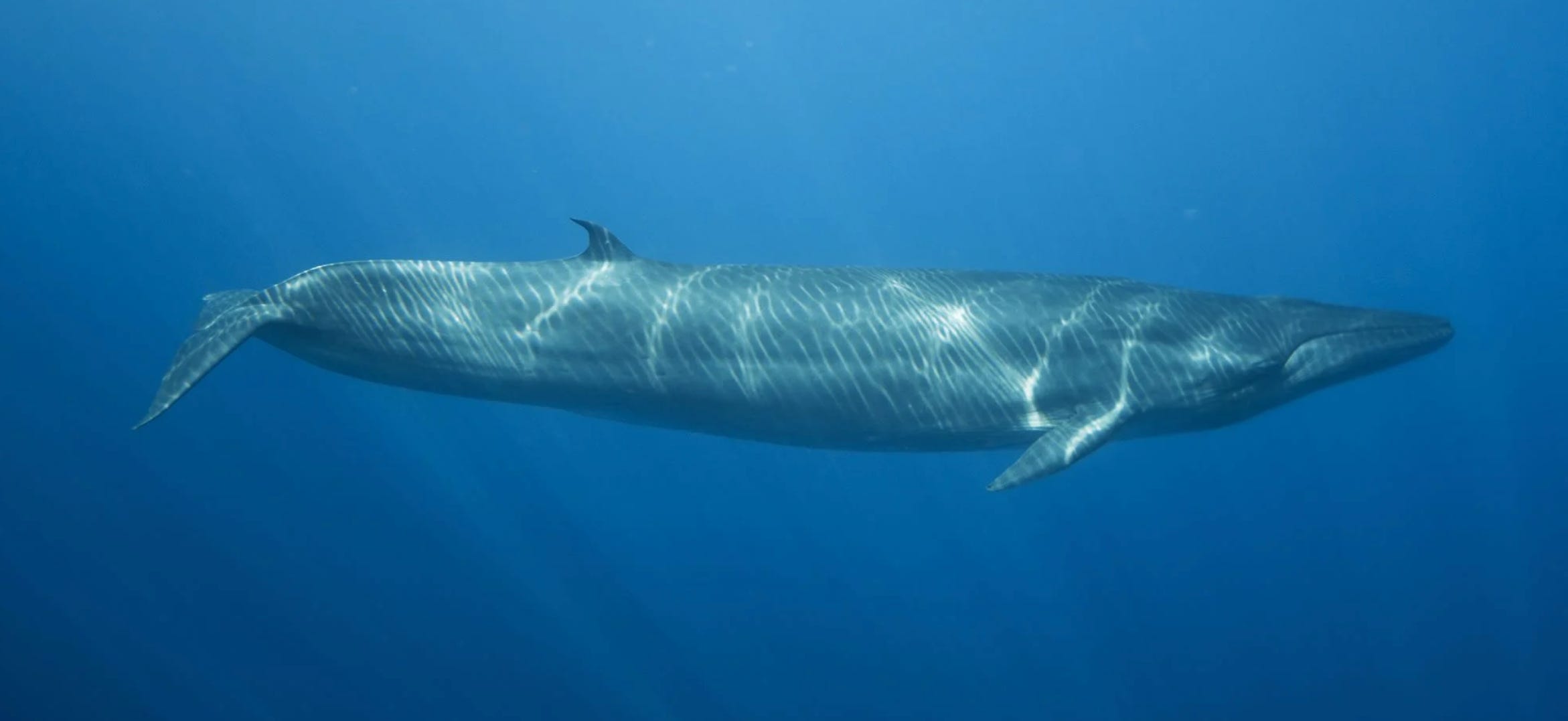
The most immediate casualty is the Rice’s whale — the only whale species found exclusively in United States waters around the Gulf of Mexico.
Government biologists estimate that approximately 50 remain. One legal scholar noted that if the administration succeeds, Trump could become the first person in history to knowingly extirpate a species from the face of the earth.
Roger Payne spent his life recording whale songs so that people might hear what was at stake. This is what was at stake.
In recent years, we have lost several people whose work I have long admired and whose absence makes the questions they spent their lives pursuing feel more urgent, not less. Roger Payne, whose recordings of the Songs of the Humpback Whale changed what ordinary people believed was possible in another species. Karen Bakker, whose book Sounds of Life revealed a hidden acoustic world now newly accessible through digital technologies that are transforming how we listen to nature. And most recently, Jane Goodall, whose decades of patient observation at Gombe permanently altered our understanding of what it means to be an animal — and, by implication, what it means to be human.
Their passing, spread across the past few years, has the feel of a closing chapter. I prefer to read them as an opening one.
The question of whether we might genuinely communicate with other animals is ancient. What is surprisingly recent is the scientific attempt to answer it — and that history is more contested, more personal, and more philosophically charged than most popular accounts suggest. For much of the twentieth century, the prevailing orthodoxy was clear: stimulus, response, no interior life required. The idea that other animals might possess something recognizable as feelings, consciousness, or mind was treated as sentimentalism at best and, at worst, as a category error that serious researchers should know better than to commit.
What eroded that certainty was not a single breakthrough but an accumulation of inconvenient evidence — gathered by scientists willing to sit with animals long enough to be surprised by them. Some of that work is now celebrated. Some of it remains genuinely controversial, touching territory that makes even sympathetic scientists uneasy: questions about language, about self-awareness, about the nature of mind itself. We will not be avoiding that territory.
This fall, Ariadne’s Dispatches launches a series under the title Listening to Animals — a look at the individuals and the science behind some of the most fascinating, and at times fiercely disputed, attempts to understand what other species are actually doing when they communicate, and what, if anything, they might be thinking. The cast includes celebrated field naturalists, determined laboratory researchers, and one or two figures whose work took them somewhere the scientific establishment was not prepared to follow. The questions they raised have not gone away.
If anything, after this week, they feel more necessary than ever.
© 2026 Farooq Hussain
The Listening to Animals series launches this fall on Ariadne’s Dispatches. If you are not yet a subscriber, this would be a good moment.
Trump’s Endangered Species Committee exempts oil and gas drilling in the Gulf from rules PBS Science, Mar 31, 2026 1:36 PM EDT
Whales and dolphins: Why are more of them beaching around the UK?
A report has found that cetacean strandings around the UK have increased by 15 per cent. What’s causing it?
https://www.sciencefocus.com/nature/whales-and-dolphins-why-are-more-of-them-beaching-around-the-uk
SightIng of Rare White Dolphins
https://www.yahoo.com/news/articles/researchers-thrilled-capturing-rare-images-040000101.html?guccounter=1&guce_referrer=aHR0cHM6Ly93d3cuZ29vZ2xlLmNvbQ&guce_referrer_sig=AQAAANgxOH0W4eJx56R-4cdKgkGK5vdnzE3PcorwtqXSVqUWMBR_uSIccam-y3ns87MXMF8OF1t94sWo5SmxLlinRDtXBbRwZkaJ1NasJRt5cpgECG3ICLbwAKKgJ0bDgp_5mNWcKJsdmk37YtzwqJxjgAQX2hH1HnP7Kj_V0dUTdV4n