

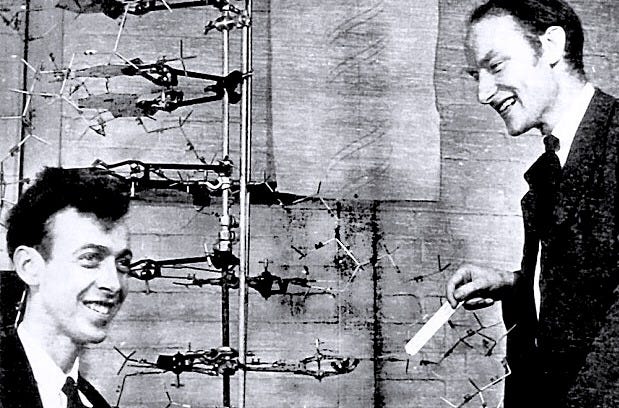
James Watson, who died on November 7th at age 96, leaves a legacy defined less by his co-discovery of DNA’s structure than by the memoir he wrote about it. While the determination of DNA’s double helix in 1953 was undeniably a historic milestone moment in molecular biology, Watson’s lasting contribution to science was not so much his part in the discovery itself, but rather The Double Helix1—the 1968 memoir that cemented his place at the center of the story, at the expense of historical accuracy and at the cost of those who worked alongside him.
C.P. Snow, the postwar historian of science and philosopher, observed that significant scientific breakthroughs are rarely the work of solitary geniuses. They emerge from collaborations among minds of varying character—some noble, others deeply flawed. Scientific achievement, he argued, does not require moral virtue. You don’t have to be a great human being to make essential contributions to science.2
James Watson proved Snow’s point perfectly. His scientific legacy is undeniable, but his personal conduct—marked by misogyny and racist views—has forever cast a shadow over his achievements. The deeper puzzle isn’t Watson’s character. The puzzle is why, nearly a decade after sharing the 1962 Nobel Prize with Francis Crick and Maurice Wilkins, Watson authored a self-serving, largely fictional account that inflated his own role, minimized others’ contributions, and particularly misrepresented Rosalind Franklin, who had died of ovarian cancer at age thirty-seven nearly a decade earlier and could not defend herself.
Despite substantial historical scholarship correcting the record3, Watson’s version has endured in popular culture and even in some scientific circles. It’s a case study in how a compelling, well-told narrative can overwhelm more accurate but less vivid accounts—especially when the myth flatters the storyteller.
A Perspective from King’s College
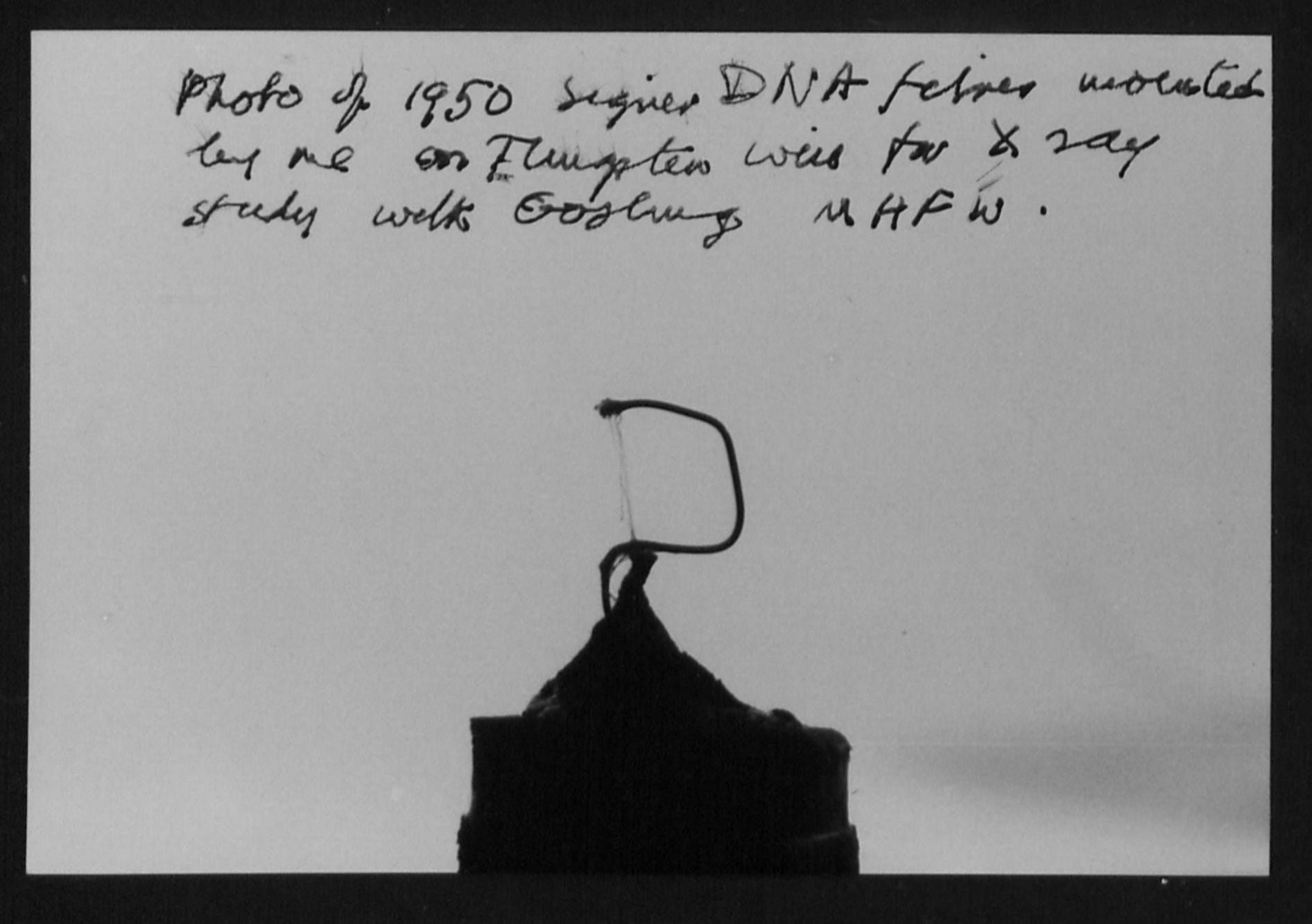
I write this remembrance with a perspective informed by my time at the Department of Biophysics, King’s College, London in the 1970s as a researcher for Maurice Wilkins, and by personal acquaintance with many principals in this drama: the Paulings father and son, Max Delbrück of Caltech, Wilkins himself, Alec Stokes, and Ray Gosling—the man who actually took the famous “Photograph 51,” which history, thanks mainly to Watson, often misattributes to Rosalind Franklin, who was Gosling’s doctoral thesis supervisor at the time.
The Timeline of a Narrative
The story’s timeline reveals much about Watson’s priorities. DNA’s structure was determined in 1953, when Watson was just 25. The discovery prompted three papers published together: Watson and Crick’s theoretical model, and two supporting papers from King’s College—one by Franklin and Gosling, another by Wilkins, Herbert Wilson, and Alec Stokes. This arrangement, possibly brokered with the journal Nature by Sir Lawrence Bragg of the Cavendish and Sir John Randall of King’s College London, appeared gentlemanly and fair, with credit shared among all participants.
In their Nobel Prize acceptance speeches in 1962, both Crick and Wilkins mentioned the importance of Franklin’s work. Watson made no mention of her contribution. Franklin had died four years earlier, before the Nobel Prize could recognize her.
Beginning around 1965—thirteen years after the discovery—Watson started drafting his “personal account.” He completed the manuscript in early 1967 and circulated it to key figures portrayed in its pages. The reaction was explosive.
Francis Crick and Maurice Wilkins were outraged. Both launched a campaign to prevent publication in its existing form. They objected not merely to details, but to Watson’s fundamental portrait—particularly his misogynistic depiction of Rosalind Franklin as a frumpy, difficult woman who possessed a “secret” X-ray diffraction photograph that Watson had illicitly viewed, providing the final piece needed to solve the structure.
The pressure from Crick and Wilkins was so intense that Harvard University Press withdrew its offer to publish. But Watson secured a commercial publisher, Atheneum, and The Double Helix appeared in February 19684. It was an instant sensation.
The Paradox of a Masterpiece
Here lies the incredible frustration that Wilkins later articulated in his own autobiography, The Third Man of the Double Helix.5 Despite all the time he and Crick spent wrestling with what they viewed as Watson’s historical distortions and vindictive character assassinations, they had missed the essential point: The Double Helix was a literary masterpiece. Wilkins acknowledged that Watson “had proven himself a truly gifted writer,” which neither he nor Crick recognized at the time.
For whatever reasons, neither Crick nor Wilkins sought to write their own account immediately, and science historians didn’t turn their attention to it until the late 1970s. Wilkins, though coaxed by friends and colleagues, did not manage to have his biography ready until 2003. The story of how DNA’s structure was discovered was thus forever shaped by Watson’s brilliant, though deeply flawed, first accounting.
I can still pick up The Double Helix today and read it with excitement. It crackles with energy, ambition, and the thrill of discovery. It is also profoundly unfair, particularly to Rosalind Franklin, who was safely dead and unable to defend herself when Watson chose to cast her as an obstacle rather than a contributor, a proprietor of secrets rather than a rigorous scientist whose work was essential to the breakthrough. Watson’s portrayal went beyond professional dismissal: he dwelt on Franklin’s appearance, criticizing her for not wearing lipstick or making herself attractive to men, as though her value in the laboratory was measured by her appeal to male colleagues rather than her scientific rigor.
The Misrepresentation of Rosalind Franklin
Watson’s portrayal of Franklin remains one of the iconic examples of misogyny in twentieth-century science. Though he knew, through Wilkins and Crick, that his depiction of her was cruel and unfair, he went ahead with it anyway, calling her secretive, unreasonably protective of her data, and oblivious to the significance of her own work. The truth, as subsequent historians have painstakingly documented, was far different.
Franklin was a meticulous and brilliant crystallographer whose “Photo 51”—actually taken by her PhD student, Ray Gosling—provided crucial evidence for the helical structure. From my interviews with people at King’s at the time, many in the lab had seen or been shown Photo 51. Franklin was not possessive of it; she simply wasn’t yet convinced, as Maurice was, that it provided clear evidence of a double helix that one could obtain from X-ray diffraction. The Watson-Crick model provided the elegant structural confirmation.
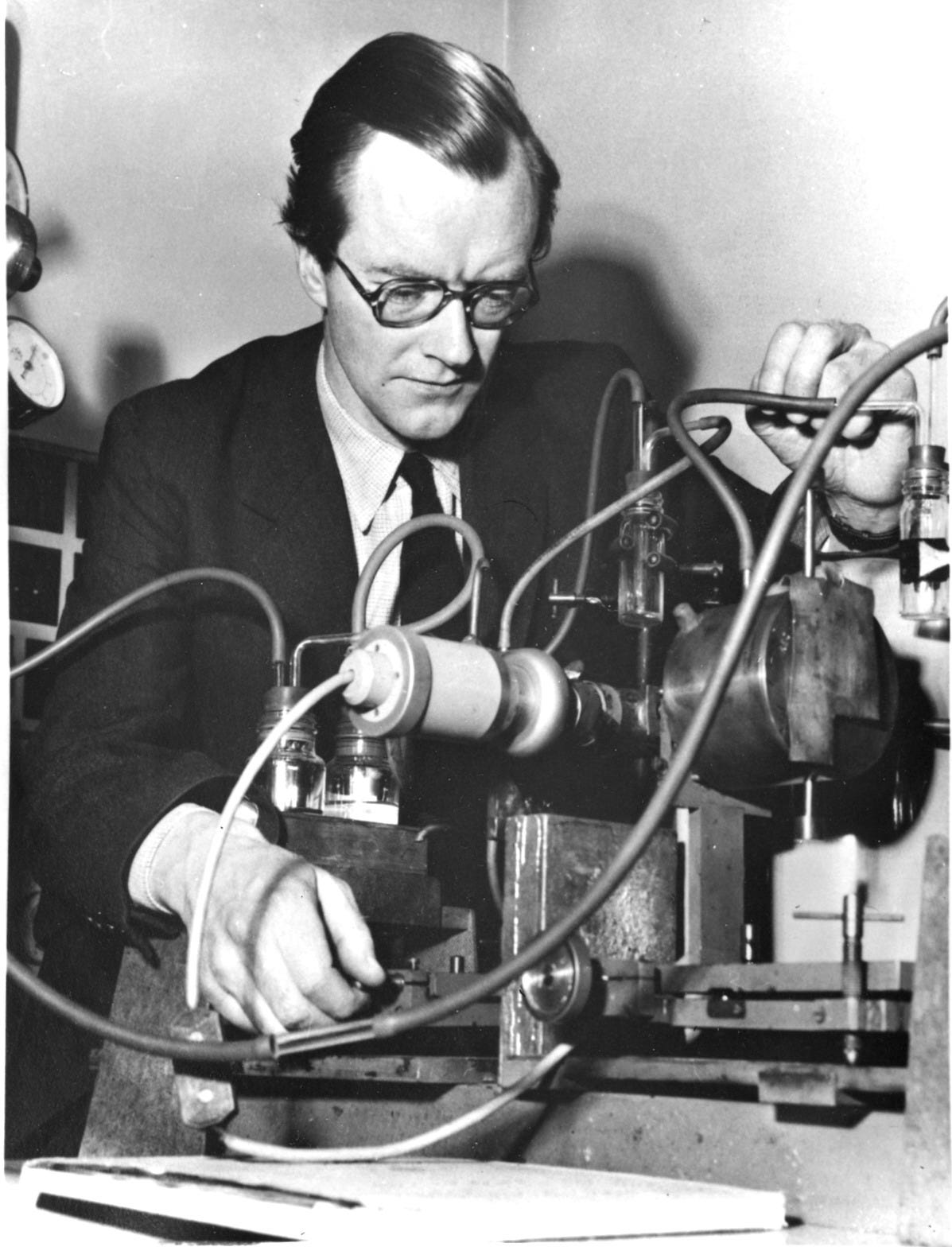
Franklin herself shared with Aaron Klug, her close confidante at Birkbeck, that she “could have kicked herself for not seeing the double helical confirmation earlier.” Wilkins, perhaps the earliest believer in a double-helical structure, was his own worst enemy when it came to taking the initiative. C.P. Snow called Wilkins “a plodder,” meticulous and completely unhurried. He was an adorable person; even his lab techs called him “uncle”—not behind his back, but because he was so kind and considerate. He was also exasperating. I gave up ever taking him a “final” draft of a paper; he would always think of one more thing we’d previously missed.
Nobody should be surprised that Watson and Crick arrived at the correct model first, and they deserve credit for the spectacular synthesis of diverse sources of information that made it possible. However, the whole story still lies chiefly buried in the scholarship on the history of twentieth-century science.
Watson’s narrative casts himself as the clever interloper who clandestinely obtained “Franklin’s data.” The reality was messier, more collaborative, and less heroic. But reality is not nearly as captivating a story as Watson’s version.
One consequence of Watson’s memoir was the justified anger from Franklin’s friends. Particularly Anne Sayre, whose husband had been Franklin’s colleague and who was with Franklin throughout the last year of her life. 6Sayre’s book appropriately identified sexism at King’s as one factor in the failure to properly recognize Franklin’s contribution. However, when I interviewed all the women scientists who were at King’s when Franklin worked there, their view was more nuanced. Franklin was unhappy at King’s from the beginning; she had left Paris and missed France. Maurice told me about an occasion when he and Franklin had lunch together at the Strand Hotel. Noting that he’d enjoyed the fresh fruit and cream dessert, Franklin responded that the cream was not fresh but made from powder. He told me that Rosalind was surprised by a London still lingering with wartime rationing, and being back in London was a comedown from Paris.
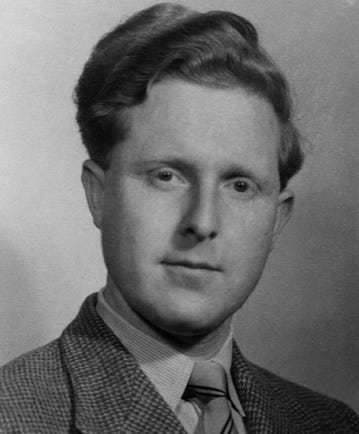
The women scientists at King’s who went on to extraordinarily successful careers did not single out sexism at King’s as notably worse than other institutions, so they were not entirely in agreement with Sayre’s emphasis. But the book took on its own momentum. Franklin’s family has stated they believe Rosalind would have been disturbed to be portrayed as the wronged woman in the DNA story.
Now, with buildings, postage stamps, Royal Society scholarships, specially minted coins, and a Time magazine cover story, it’s hard to imagine that Franklin would have approved. She did want to be elected to the Royal Society and, had she lived, would almost certainly have achieved that goal. But it’s hard to see how Franklin’s true legacy has benefited from the false portrayal in Watson’s book, even as it brought belated recognition of the injustice she suffered at Watson’s hands.
A Pattern of Misogyny
Watson’s misogyny was not confined to his posthumous treatment of Rosalind Franklin. It was a consistent feature of his professional life that created a toxic atmosphere throughout his career.
Throughout his tenure at Harvard in the 1950s and 60s, and later during his decades-long leadership of Cold Spring Harbor Laboratory, Watson fostered what can only be described as an “old boys’ club.” His views on women in science were extreme even by the standards of his era. In 1952, the year of the Hershey-Chase experiment, when Watson met Martha Chase—Alfred Hershey’s assistant who was crucial to the experiment’s success—he reportedly told others, “A good-looking woman shouldn’t be working in the laboratory; she should be married and have children.”
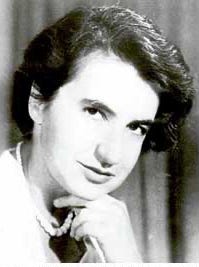
This was not idle talk or private prejudice. Multiple colleagues and biographies document Watson’s belief that women simply did not belong in the laboratory. One recurring theme was his view that women in the laboratory were “a distraction”—a sentiment that reduced female scientists to their appearance and presumed heterosexual male desire, rather than recognizing them as colleagues and contributors.
The institutional response reveals a peculiar irony. In 1990, Cold Spring Harbor Laboratory—still under Watson’s directorship—launched its “Women in Science Program,” with formal mentorship to encourage and support young female scientists. Here was an institution being forced to create formal programs to counteract the very biases exemplified by its own director. The laboratory was, in effect, working around him—establishing progressive institutional policies while its most powerful figure maintained regressive personal views.
The Franklin case in The Double Helix was not an isolated incident. It was part of a lifelong pattern. Watson’s false portrayal of Franklin as secretive and obstructive, his emphasis on her appearance and supposed lack of femininity, his erasure of her scientific contributions—these were entirely consistent with his documented views that women were fundamentally out of place in the laboratory.
What makes Watson’s treatment of Franklin particularly egregious is that he committed these offenses in print, for posterity, against a woman who had died and could not defend herself. It was misogyny with a permanent record, embedded in what became one of the most widely read accounts of twentieth-century science.
The Genome Wars and Later Career
If The Double Helix demonstrated Watson’s gifts as a writer and self-promoter, his later career revealed his limitations as a leader and collaborator. His tenure overseeing the National Institutes of Health’s Human Genome Project in the early 1990s was marked by the same abrasive, combative style that had characterized his entire career—but this time, the consequences were more severe.
Watson was consistently nasty and abrasive. These qualities, combined with political missteps and conflicts over gene patenting, led to his removal from the genome project in 1992, just two years after he had helped launch it. His departure created a leadership vacuum at a critical moment.
The Human Genome Project had adopted “hierarchical shotgun sequencing”—careful, systematic, accurate, reliable, and slow. In 1998, Craig Venter founded Celera Genomics. He announced his intention to sequence the entire human genome using whole-genome shotgun sequencing—shredding the genome into millions of tiny, randomly generated fragments, sequencing them simultaneously, and using supercomputers to reassemble the sequence by finding overlaps.
Venter had several advantages. His method was faster. He had access to the latest sequencing technology. And crucially, he used the publicly available data from the Human Genome Project—data Watson’s successors were committed to releasing immediately—to scaffold and accelerate Celera’s own assemblies. This tactic was controversial, even viewed as parasitic, but it was devastatingly effective.
By early 2000, it became clear that Celera would complete a working draft at roughly the same time as the public project, despite the NIH having started eight years earlier. Fearing Venter would patent key genes and lock the human genome behind a paywall, the public project accelerated its timeline. In June 2000, under political pressure orchestrated by the White House, the two rivals stood together for a joint announcement. President Bill Clinton declared both had completed working drafts of the human genome.
It was officially a tie, but strategically a victory for Venter. He had forced the world’s largest biology project to a draw. Watson, whose early mismanagement had contributed to this outcome, watched from the sidelines as a guest at the White House press conference.7
The Final Unraveling
After his removal from the Human Genome Project in 1992, Watson held essentially honorary leadership roles at Cold Spring Harbor Laboratory, his power gradually diminishing even as his public pronouncements grew more outrageous.
In 2007, Watson ignited an uproar by suggesting in an interview with The Sunday Times in London that Black people, overall, were not as intelligent as white people. The incident occurred during what should have been a triumphant book tour for his memoir Avoid Boring People. Watson had invited Charlotte Hunt-Grubbe, a British science journalist and former intern who had lived with the Watsons, to visit the lab. There was a high level of familiarity between the interviewer and the subject; it’s not clear whether Watson believed he was off the record during their tennis games and walks to the lab. He appears to have felt he could say anything and was in safe hands with someone he knew well. It was a horrible mistake.
When Watson’s views on race appeared in Hunt-Grubbe’s published story, a furor erupted. The journalist defended herself, stating that she had no intention of ruining Watson’s career, that he was well known for holding these views, and that she had not broken any off-the-record confidences, as there had been none. In other words: Watson had said exactly what everyone knew he believed, and he had said it on the record.
Watson and his wife had arrived in London and were staying at Claridges when the news broke. The Science Museum cancelled his sold-out lecture, and Cold Spring Harbor Laboratory announced they were stripping Watson of his Chancellorship. Instead of the Science Museum lecture, he organized a short presentation for a small group at the Royal Society. Visibly shaken, he announced his book tour was cancelled and he would return to the United States to try to save his job. He was not successful.
One might have thought this would lead Watson to greater discretion in his statements about race and intelligence in particular. It did not. He later agreed to participate in an American Masters documentary. Though he knew he would be asked about racial superiority, he chose to reassert the same unfounded views. He seemed not to care at all, almost compelled to repeat his racist beliefs, as though silence would constitute a betrayal of his convictions.
When the program aired in 2018, Cold Spring Harbor Laboratory revoked the honorary titles Watson had retained. In 2019, they stripped him of all remaining honors. The institution that had tolerated, worked around, and made excuses for him for decades finally severed the connection entirely. He was, at last, the “unperson” he had claimed to be for years.
Between these two incidents, in 2014, Watson became the first living Nobel laureate to auction his medal, claiming he needed money to support his family and research. There was speculation that the sale was more a gesture of defiance directed at a scientific community that had abandoned him. The medal sold at Christie’s for $4.1 million to Alisher Usmanov, a Russian oligarch, who purchased it with the stated intention of returning it to Watson. In June 2015, at a ceremony at the Russian Academy of Sciences in Moscow, Usmanov did precisely that, declaring that Watson’s contributions to science were too significant to be overshadowed by controversy. Watson said he planned to buy a David Hockney painting with part of the money and wasn’t sure what he would do with the rest.
The episode perfectly captured Watson’s final years: professionally isolated because of his inability to stop making racist statements, yet still protected by admirers willing to rescue him from the consequences of his own behavior.
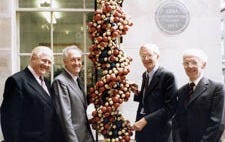
He Could Say Anything
The evolutionary biologist E.O. Wilson, who knew Watson for decades, once observed that Watson “was allowed to say anything, no matter how outrageous, and get away with it, and he never restrained himself from doing so.”
It was a perceptive diagnosis. Watson had spent a lifetime discovering that there were no real consequences for his behavior—not just for his treatment of Rosalind Franklin, nor for his misogyny toward women scientists. Instead, Anne Sayre’s book created a misplaced movement focused on Franklin’s treatment at King’s, casting Wilkins as a co-conspirator with Watson, who, in effect, “stole” Franklin’s Nobel Prize—a narrative that obscured Watson’s real offenses while unfairly maligning Wilkins. Watson faced no consequences for his racist pronouncements either. He had been rewarded with a Nobel Prize, celebrated as a scientific icon, enriched, and honored. Institutions had accommodated him, colleagues had made excuses for him, and admirers had literally repurchased his Nobel medal and returned it to him.
The tolerance extended well beyond personal interactions into historical scholarship. Walter Isaacson’s biography of Jennifer Doudna8 offers a telling example: it presents a hagiographic portrayal of Watson, uncritically accepting his version of the DNA story while glossing over the racist and misogynistic behavior that had been documented for decades. This pattern of scholarly deference—treating Watson’s scientific achievements as sufficient reason to minimize or excuse his conduct—enabled him to maintain his status even as the evidence of his character became widely known.
And so he never stopped. He kept talking, kept offending, kept insisting on his right to diminish others. Only at the very end, when he was an old man and the culture had finally shifted enough to make his views genuinely unacceptable, did the reckoning come. By then, the damage was done—to Franklin’s reputation, to the women who might have pursued science but might have encountered hostility, to the public understanding of how science actually works, and ultimately to his own legacy.
E.O. Wilson wrote:
“Watson, having risen to historic fame at an early age, became the Caligula of biology. He was given license to say anything that came to mind and expected to be taken seriously. He played the role of the resident atheist in the church and was widely tolerated because of his reputation. He came and went as he pleased, often not showing up for weeks at a time, a practice that would have been impossible for anyone else. His presence and manner were, at the time, considered the proper accoutrements of the scientist of the future. The very name molecular biology conveyed a special authority, as though it were the only true science, with the natural sciences obsolete. The feeling was intensified by the popular media, which was rapidly turning him into a science hero. Few dared call him openly to account.”9
A Legacy Written in His Own Hand
Watson’s true legacy is not the scientific discovery that earned him the Nobel Prize. That discovery was, as most historians of science now acknowledge, a collaborative achievement built on the work of many researchers—from Chargaff to Linus Pauling’s early structural models to Franklin’s and Wilkins’s crystallographic data to Crick’s theoretical insights. Watson’s contribution was real but not singular, crucial but not sufficient.
No, Watson’s legacy is The Double Helix itself—a book that demonstrates the power of narrative to shape historical memory, even when that narrative is self-serving and unfair. It shows how a compelling story, well told, can overwhelm more accurate but less vivid accounts. And it stands as a cautionary tale about scientific credit, gender bias, and how history is written not by the most deserving, but by the most determined to claim the glory.
Numerous meticulous histories have since been written about the discovery of DNA’s structure, works that portray a much broader and more collaborative development—an accumulation of incremental insights from multiple researchers that combined to make the Watson-Crick model possible. These careful reconstructions are more accurate, fairer, and more complete.10 Yet none has had remotely the cultural impact of Watson’s own account.
James Watson co-discovered the structure of DNA, then spent the rest of his life proving that brilliance in one domain guarantees neither wisdom nor decency in any other. To the very end, he remained what Wilkins had identified him as decades earlier: an unpleasant human being who happened to be an iconic raconteur of the story of one of the most important scientific discoveries of the past century.
© 2025 Farooq Hussain
James D. Watson’s The Double Helix: A Personal Account of the Discovery of the Structure of DNA (1968) was selected as one of 100 books that shaped America for its groundbreaking narrative of scientific discovery. The book presents the author’s personal view of the race to unravel DNA’s structure and helped popularize molecular biology for a general audience.
Library of Congress. Books That Shaped America. The Library of Congress, https://www.loc.gov/exhibits/books-that-shaped-america/overview.html
Watson, James D. The Double Helix: A Personal Account of the Discovery of the Structure of DNA. Atheneum, 1968.
Watson’s book was also made into a dramatization documentary. Life Story. Directed by Mick Jackson, written by William Nicholson, performances by Jeff Goldblum, Tim Pigott-Smith, Alan Howard, and Juliet Stevenson, BBC Horizon, 14 Sept. 1987. Broadcast in the U.S. as The Race for the Double Helix. Viewable in the UK: https://www.bbc.co.uk/iplayer/episode/m0025xxc/horizon-life-story-a-horizon-special
C.P. Snow (1905–1980) was a British scientist, civil servant, and novelist whose work examined the intersection of science, government, and society in postwar Britain.1 His most famous contribution to intellectual history is the concept of “The Two Cultures.”
In his 1959 BBC Reith Lecture, The Two Cultures and the Scientific Revolution, Snow argued that Western society had split into two polarized groups with little to no communication between them:2
Literary Intellectuals: Who represented the humanities and traditional culture.
Scientists: Who represented the applied sciences.
Snow lamented this schism, asserting that it crippled the ability of society to solve modern problems, particularly those affecting the developing world.3 He believed that the Literary Intellectuals were often scientifically illiterate and held a morally superior, anti-industrial view, while the Scientists were too narrow in their focus.
The context in your text, which discusses the moral character of scientists and the nature of scientific progress, directly reflects Snow’s concern that the humanities fail to understand the actual workings and real-world importance of the scientific community.
Snow, C. P. The Two Cultures and the Scientific Revolution: The Rede Lecture, 1959. Cambridge University Press, 1959.4
Snow, C. P. The Two Cultures: And a Second Look; an Expanded Version of the Two Cultures and the Scientific Revolution . 5 Cambridge University Press, 1964.
Multiple historians of science have thoroughly documented the collaborative and incremental nature of the discovery of DNA. Robert Olby’s The Path to the Double Helix (University of Washington Press, 1974), Horace Freeland Judson’s The Eighth Day of Creation: Makers of the Revolution in Biology (Simon & Schuster, 1979), and Gunther S. Stent’s “Prematurity and Uniqueness in Scientific Discovery” (Scientific American, December 1972) all confirm that the successful solution depended on critical contributions from numerous individuals. As Crick himself acknowledged, their success “was partly a matter of luck, of being in the right place at the right time,” combined with their ability to synthesize relevant findings ahead of both the King’s College group and Linus Pauling—whose own interest in DNA structure was largely stimulated by communications from his son Peter, who was working at the Cavendish Laboratory in daily contact with Watson and Crick.
James D. Watson’s The Double Helix was first published in serialized form in two parts in The Atlantic Monthly, appearing in the January and February 1968 issues, before its official release by Atheneum Press later that year.
Wilkins, Maurice. The Third Man of the Double Helix: The Autobiography of Maurice Wilkins. Oxford University Press, 2003
Sayre, Anne. Rosalind Franklin and DNA. W. W. Norton & Company, 1978. Sayre, a friend of Franklin, wrote this book in response to James Watson’s portrayal of her in The Double Helix, aiming to correct misconceptions and highlight Franklin’s scientific contributions.
The most balanced biography of Rosalind Franklin is Brenda Maddox’s book. It is a comprehensive and critically acclaimed biography that explores Franklin’s life, her scientific achievements, and her pivotal role in the discovery of DNA’s structure. Maddox’s book helped reshape public understanding of Franklin’s contributions, which had long been overshadowed. It also spotlit the mean misogynistic portrayal of her in Watson’s book. Maddox, Brenda. Rosalind Franklin: The Dark Lady of DNA. HarperCollins, 2002.
As director of the National Human Genome Research Institute, Francis Collins played a central role in negotiating the 2000 joint announcement between the publicly funded Human Genome Project and Celera Genomics. The agreement, which culminated in a White House press conference with President Bill Clinton, marked a symbolic truce in the race to sequence the human genome and underscored the importance of collaboration between public and private science initiatives.
Collins, Francis S. “Medical and Societal Consequences of the Human Genome Project.” New England Journal of Medicine, vol. 341, no. 1, 1999, pp. 28–37. doi:10.1056/NEJM199907013410106.
Nobel laureate Jennifer Doudna’s early inspiration to pursue science came from reading The Double Helix as a teenager, a book she found thrilling despite its controversial tone. Years later, she framed a letter from Watson inviting her to speak at Cold Spring Harbor Laboratory—a gesture that reflected his enduring influence. Biographer Walter Isaacson recounts how he persuaded Doudna to leave the CSH campus to meet Watson, who had become persona non grata by then, and how she complied out of respect. The episode underscores the complicated reverence many scientists still hold for Watson, even as they grapple with his troubling behavior and legacy.
Isaacson, Walter. The Code Breaker: Jennifer Doudna, Gene Editing, and the Future of the Human Race. Simon & Schuster, 2021.
Wilson, Edward O. Naturalist. Island Press, 1994
Robert Olby’s The Path to the Double Helix, University of Washington Press, 1974; Horace Freeland Judson’s The Eighth Day of Creation: Makers of the Revolution in Biology, Simon & Schuster, 1979; Gunther S. Stent’s “Prematurity and Uniqueness in Scientific Discovery,” Scientific American, December 1972