

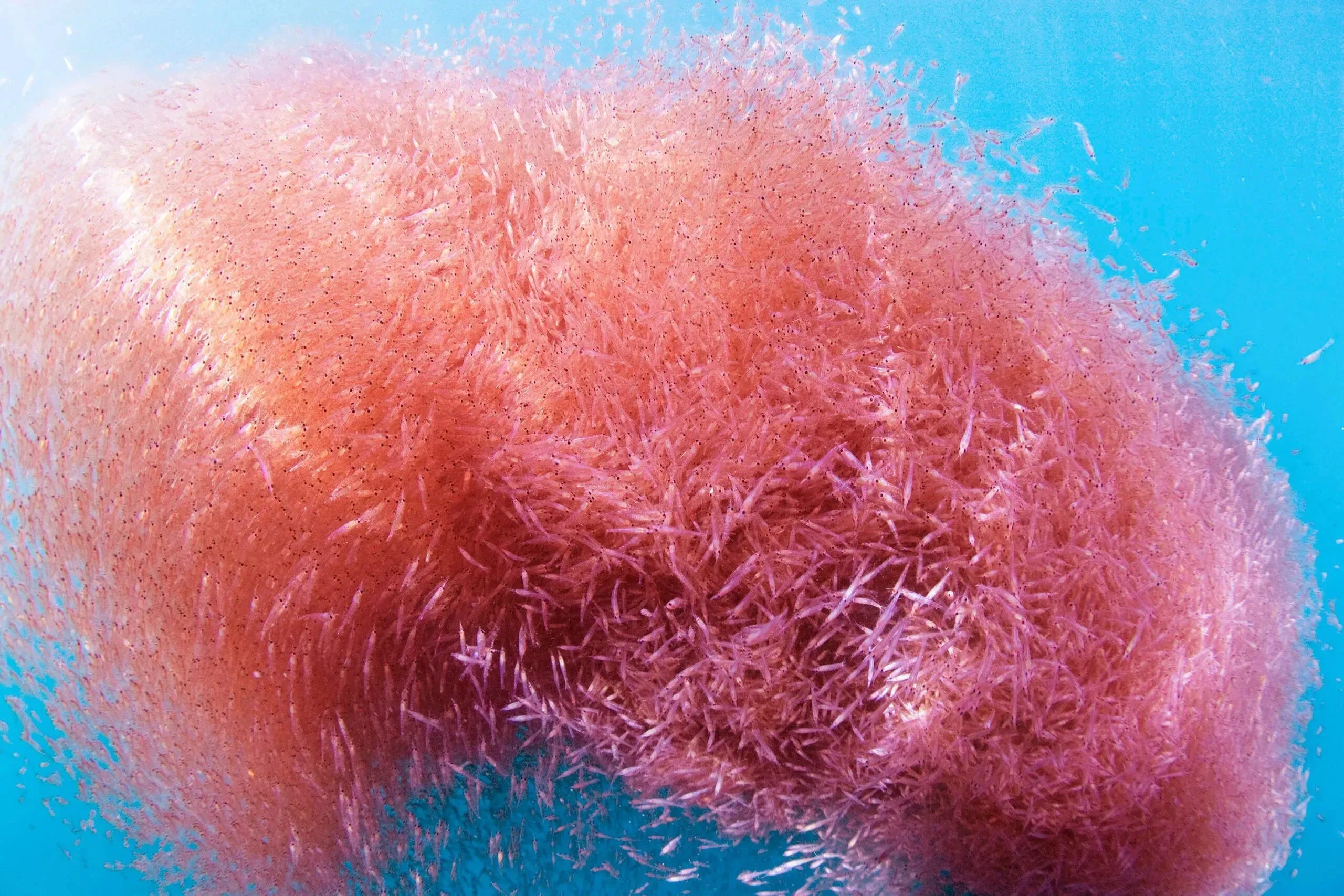
Something extraordinary occurred this week that barely made headlines. Morocco became the 60th country to ratify the High Seas Treaty, triggering its entry into force in January 2026. With that single signature, nearly two-thirds of our planet—the vast “high seas” beyond any nation’s borders—finally got its first comprehensive legal framework for protection.
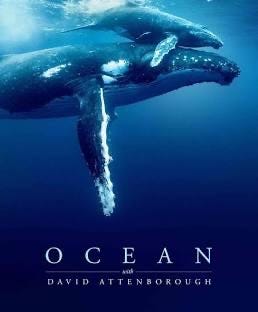
Britain’s 99-year-old Sir David Attenborough could be described as the Ken Burns of natural history documentary filmmaking. His film Ocean was released in May 2025, coinciding with the UN Conference in Nice, France. To explore the essential role oceans play in keeping our planet healthy, refer to the notes section for a description and links to several accessible streaming options.1
For background, refer to the June issue of Ariadne, linked below.

The UN High Seas Treaty and the Price of American Absence
Something extraordinary happened last week that barely made headlines. Morocco became the 60th country to ratify the High Seas Treaty, triggering its entry into force in January 2026. With that single act, nearly two-thirds of our planet—the vast “high seas” beyond any nation’s borders—finally gained its first comprehensive legal framework for protection.
The speed is striking. After two decades of negotiations, the treaty reached the ratification threshold in less than two years. That pace is almost unheard of for a global environmental agreement.
But what makes this moment historic is not just the achievement itself. It is that the world managed to deliver one of the most comprehensive environmental treaties in history, not only without American leadership, but against explicit U.S. opposition. To appreciate the cascading effects of industrial overfishing on marine ecosystems, readers should examine recent investigative reporting on Antarctic krill harvesting, particularly The Krill Catastrophe: A Crucial Antarctic Creature Doomed by Geopolitics and Overfishing.2
The Superpower That Said No
The United States, once the driving force behind the Antarctic Treaty and the Montreal Protocol, among other landmark agreements, has chosen to sit on the sidelines.
American scientists and diplomats played a crucial role in shaping the treaty’s science and drafting its terms. Yet when the time came to act, Washington walked away. The treaty was transmitted to the Senate in December 2024 for ratification by a two-thirds majority, where it will almost certainly languish in a familiar graveyard, a sea of political negligence that already holds the Comprehensive Nuclear-Test-Ban Treaty (CTBT) and the UN Convention on the Law of the Sea (UNCLOS).3
The break became unmistakable last May when the U.S. refused to send a delegation to preparatory meetings and even barred its government scientists from attending the UN Ocean Conference in France. The conference was timed to coincide with the release of Sir David Attenborough’s documentary "Ocean," which vividly depicts the threats to marine life that the treaty is designed to address.
The message was unmistakable: the administration does not merely disagree with this treaty, it opposes the very idea of multilateral conservation.
What the World Accomplished
The High Seas Treaty fills a critical governance void. Half of the Earth’s surface lies in international waters, yet only 1% of it is currently protected. The treaty provides:
Marine Protected Areas — a mechanism to safeguard ecosystems at scale, essential for the “30 by 30” global target.
Equity in Ocean Resources — rules to share benefits from marine genetic materials used in medicine and biotechnology.
Environmental Safeguards — binding reviews for activities such as deep-sea mining and offshore energy projects.
Technology Transfer — commitments to help developing nations conduct and benefit from high seas research.
As UN Secretary-General António Guterres declared, the treaty is “a lifeline for the ocean and humanity.”
What America Is Losing
This is not just about symbolism. The U.S. is cutting itself out of the very system it helped design. By staying outside, it loses:
Influence over research priorities, marine protected area design, and conservation rules.
Access to treaty-governed data, research collaborations, and benefit-sharing frameworks.
Leadership in shaping the ocean sciences for the next generation.
Already, American oceanographers report being excluded from key planning meetings. Meanwhile, Europe, Asia, Africa, and Latin America are building a new ecosystem of marine research institutes and treaty-funded projects. The U.S. is left watching from the shore.
This is not an accident. It reflects a deliberate political posture that sees climate action and renewable energy not as opportunities but as threats.
The Deeper Failure
The administration’s hostility to multilateral environmental action is not blocking progress internationally — it is only isolating the United States. Far from halting global momentum, U.S. opposition has revealed how little the world now depends on American approval to move forward.
This is not just a climate policy failure; it is a strategic one as well. The U.S. is losing standing on issues central to global security, prosperity, and science.
The Dangers of Non-Participation
There is, however, a darker side to America’s refusal. While the treaty strengthens protections for those inside it, non-parties remain free to exploit the gaps. Deep-sea mining is the clearest example.4
On his first day in office, President Trump signed an Executive Order promoting expanded deep-sea resource extraction — precisely the kind of activity the treaty is designed to regulate. The damage inflicted by such ventures is starkly documented in Attenborough’s Ocean, where viewers see coral reefs, whale nurseries, and deep-sea ecosystems under threat.
Without binding commitments, non-parties can undermine collective gains — tearing holes in the global safety net.
The World’s New Ocean Order
On January 19, 2026, the treaty becomes law. Its institutions, funding streams, and scientific bodies will shape the governance of two-thirds of the planet. America may attend as an observer, but only as an observer.
The irony could not be sharper. U.S. science made much of this treaty possible, yet America will have little say in how its knowledge is applied.
The high seas have been called humanity’s last frontier. For the first time, we have rules to protect this shared inheritance. It is a triumph of international cooperation in an era of fragmentation.
It is also a warning: when the United States turns its back on the future, the future moves on without it.
Looking Ahead
The treaty will take effect on January 19, 2026, establishing new institutions and rules that will operate independently of American participation. The first Conference of the Parties will convene later that year to begin the detailed work of governing two-thirds of the Earth’s surface.
American observers are welcome, but only as observers, not as decision-makers. The irony is acute: America helped create the scientific knowledge that made this treaty possible, yet it will have little say in how that knowledge is applied.
The high seas have been called humanity’s last frontier—a vast commons that belongs to all of us. For the first time, the world has agreed on rules for protecting this shared inheritance. It’s a historic achievement that demonstrates the enduring possibility of international cooperation.
It’s also a stark reminder of what America loses when it chooses isolation over leadership. The ocean doesn’t care about American politics, but it does need protection. The world has decided to move forward with that protection, with or without the U.S. The question now is whether America will eventually join this new ocean order or watch from the sidelines as other nations shape its future.
© 2025 Farooq Hussain
For viewers interested in exploring ocean documentaries that complement Attenborough’s latest work, several excellent options are readily available on streaming platforms:
Pre-dating Ocean (2025):
The Blue Planet (2001) - Available on Netflix and Amazon Prime Video, this landmark BBC series narrated by Attenborough was “the first ever comprehensive series on the natural history of the world’s oceans,” Arms Control AssociationLieber Institute West Point
Blue Planet II (2017) - Available on various streaming platforms and free at ihavenotv.com
Our Planet (2019) - Netflix’s ambitious documentary examining “how climate change impacts all living creatures” Russia’s Withdrawal From Ratification Of The Comprehensive Nuclear-Test-Ban Treaty (CTBT) In Context | Institute of International Relations Prague - Expertise to impact with significant ocean content
A Life on Our Planet (2020) - Attenborough’s personal reflection on environmental change, available on Netflix Russia revokes ratification of nuclear test ban treaty (CTBT) - ICAN
Current availability of Ocean (2025): The film premiered on National Geographic on June 7, 2025, and is now streaming on Disney+, Hulu, fuboTV, and YouTube TV ConsiliumMinistry of Foreign Affairs of Japan
Free educational resources:
PBS NOVA ocean documentaries - available free on pbs.org and the PBS App Ocean with David AttenboroughSilverback Films
Archive.org hosts a collection of PBS NOVA documentaries Ocean with David Attenborough | Rotten Tomatoes including ocean-related episodes
YouTube offers numerous BBC Earth and National Geographic ocean clips and shorter documentaries
These documentaries collectively span over two decades of ocean exploration, showcasing both the evolution of underwater filming technology and our growing understanding of the critical role marine ecosystems play in climate regulation.
Gercama, Ingrid, Niels Bertrams, and Tristen Taylor. “The Krill Catastrophe: A Crucial Antarctic Creature Doomed by Geopolitics and Overfishing.” Pulitzer Center on Crisis Reporting, 2024, pulitzercenter.org/stories/krill-catastrophe-crucial-antarctic-creature-doomed-geopolitics-and-overfishing
This investigative report represents crucial journalism on one of the planet’s most critical yet underreported environmental crises. Antarctic krill—tiny shrimp-like creatures that form the foundation of the Southern Ocean’s food web—face unprecedented threats from industrial overfishing and geopolitical maneuvering. In 2024, approximately half a million tonnes of krill were harvested from the Antarctic, with Norwegian, Chinese, and South Korean boats accounting for the vast majority of the catch. The story examines how Norwegian and South Korean boats are fishing hard for Antarctic krill for fishmeal and omega-3. Russia and China are pushing to expand the krill quota. This comprehensive investigation reveals the complex intersection of climate change, international politics, and marine ecosystem collapse, making it essential reading for understanding how geopolitical tensions are accelerating the destruction of Antarctica’s foundational species.
It is essential to emphasize that support for these treaties extends beyond environmental groups and disarmament activists. They are recognized globally as crucial frameworks for stability, cooperation, and the rule of law. The United States is the outlier. For example, when Russia’s parliament withdrew its ratification of the CTBT in late 2023, it maintained cooperation with the treaty’s verification mechanisms while explicitly citing the need to match America’s non-ratified status—highlighting the diplomatic costs of the U.S. position. For decades, U.S. diplomacy has followed this pattern: helping to design and negotiate treaties that shape global norms, while refusing to ratify them at home even when the majority of its objectives have been met. This paradox—of leading in negotiation but abstaining in ratification—has become a defining feature of American diplomacy over the past fifty years.
Recent scientific investigations have intensified concerns about deep-sea mining for manganese nodules, with groundbreaking research published in Nature in March 2025 examining “long-term effects on deep-sea ecosystems” and the recovery potential from mining disturbances. As of March 2025, negotiators continue “hammering out rules to govern mining on the ocean floor, where critical metals are found in deposits called polymetallic nodules,” while companies prepare for commercial operations.
However, in a significant policy reversal that contradicts the global scientific consensus, on April 24, 2025, President Trump issued an Executive Order entitled “Unleashing America’s Offshore Critical Minerals and Resources,” aimed at accelerating the development of deep-sea mining for critical minerals beneath both United States and international waters. The order instructs federal agencies to expedite the process for reviewing and issuing permits for mining on the seafloor in both U.S. and international territory, utilizing the 1980 “Deep Seabed Hard Mineral Resources Act”. Scientists and environmental groups condemned the order, arguing that opening the deep seabed for mining could disrupt important marine ecosystems and damage the fishing industry, with one expert noting, “This is being planned on some of the least resilient ecosystems on the planet.”
This policy shift occurs despite mounting scientific evidence of environmental risks. The environmental impacts are not fully understood, and as of 2024, 32 countries have called for a moratorium on seabed mining, including Canada, the United Kingdom, France, Germany, Mexico, and Austria. Environmental threats have become increasingly complex with recent discoveries. Research published in 2024 revealed that polymetallic nodules “might already be a kind of battery--one that might be playing a vital role in the deep-sea ecosystem” through a process creating “dark oxygen” where “electric currents from polymetallic nodules” generate oxygen without sunlight. This finding, while facing some scientific skepticism with critics saying “evidence is weak,” has profound implications for ecosystem function in mining zones like the Clarion-Clipperton Zone.
New USGS research in 2025 investigated “the geochemical implications of mining waste discharge into oxygen-deficient zones, offering one of the first geochemical perspectives on mining waste discharge in the open ocean,” focused on nodule-rich areas. Laboratory studies demonstrate that manganese nodules undergo “reductive dissolution... leading to the release of associated metals in the order manganese > nickel > copper > cobalt > cadmium > lead” when exposed to anoxic conditions during processing.
The U.S. executive action represents a dramatic departure from the precautionary approach advocated by the international scientific community, positioning America as an outlier in global efforts to protect deep-sea ecosystems until comprehensive environmental safeguards can be established.