


Death's Shadows
When a nuclear weapon explodes high above a city, it forms an incandescent fireball so large as to envelop the entire area below, destroying everything for miles. The savage intensity of the heat and radiation is such that the bodies of those people are vaporized—people caught in the open, their very existence vanished by the flash heat and colossal energy of a nuclear explosion. The event leaves no trace of flesh or bone in the blast zone.
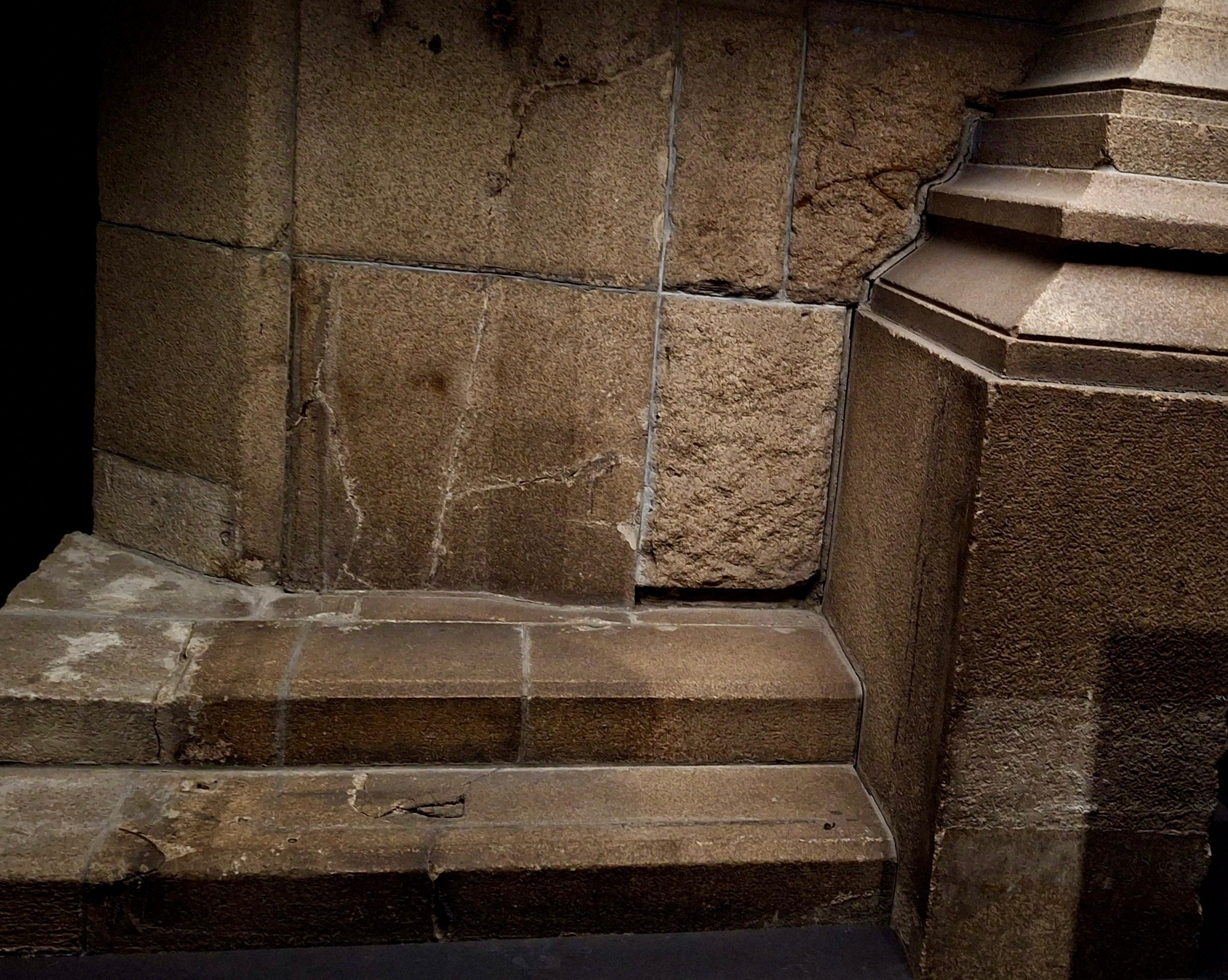
But before complete disintegration occurs, a chilling phenomenon takes place. The pulse of intense thermal radiation—a wave of energy and light more brilliant than the sun—scorches and bleaches everything in its path. Any object or person directly exposed to this blinding flash absorbs the energy, shielding the surface immediately behind them. Where a human being once stood, walked, or waited, their form briefly blocked the bleaching blast, creating an unexposed outline on the ground, a wall, or stone steps.
These are not shadows in the conventional sense—not darkness cast by blocked light—but rather spectral scars, like etchings where the bomb's radiant force was interrupted for a micro-fraction of a second. They are dark and somber memories of a once vibrant human presence reduced to ghostly impressions.
The science behind these shadows lies in the immense thermal radiation released during detonation. Surfaces like concrete and stone, when directly exposed to the atomic flash, undergo rapid chemical changes that cause them to lighten dramatically. The area where a person was present, however, remains in its original, darker shade, creating the stark contrast we interpret as a human shadow. This flash of heat and light is so powerful that it instantly carbonizes surfaces or bleaches away colors, but only where unobstructed.
After the bombing of Hiroshima and Nagasaki, these haunting imprints proved temporary. Rain, wind, and the relentless erosion of weather slowly diminished their stark definition. One by one, these poignant remnants of human life were lost to the passage of time. Of the countless spectral scars left by the bombs, only one has been meticulously preserved: the silhouette of a person seated on the steps of Sumitomo Bank in Hiroshima, which visitors to the memorial museum can view today.
While most others succumbed to the elements, a precious few were captured in photographs before they faded—archived as stark evidence of a moment when human life was reduced to spectral scars on stone and concrete. These preserved images and the single enduring shadow stand as silent witnesses to the cataclysmic power and human cost of nuclear warfare, short-lived memories of lives that became, quite literally, shadows of their former selves.
In the immediate, apocalyptic aftermath of the atomic bombing of Hiroshima, and extending far beyond ground zero, the city lay not just destroyed, but erased. The initial shock waves flattened an urban landscape into an unimaginable expanse of splintered wood and pulverized rubble, a testament to a force previously unknown to humanity. Amidst this flattened desolation, where concrete structures had melted and human beings vaporized, stories of horrifying survival began to emerge, recounted by those like the German Jesuit priest, Father Wilhelm Kleinsorge, who moved through the devastation, offering what little aid and comfort he could. The truly peculiar horror, however, unfolded in the days, weeks, and months that followed: victims walked, some with their skin peeling in sheets from their bodies, others cradling their eyeballs that had burst from their sockets, while countless more, seemingly uninjured at first, slowly succumbed to a mysterious, unseen malady. This was the insidious onset of radiation sickness, manifesting as severe burns, hair loss, internal hemorrhaging, and a prolonged, agonizing decay of the body, creating a new class of sufferers, the Hibakusha, whose peculiar ailments bore chilling witness to a weapon that not only obliterated but also poisoned. Yet, just weeks after Japan's surrender and the American occupation, General Douglas MacArthur imposed an absolute embargo on any independent reporting from Hiroshima or Nagasaki. The press was granted access only under direct supervision by the occupying forces, and all information, whether Japanese or foreign, was subjected to rigorous American censorship, coupled with a concerted campaign to promote false narratives about the nature and peculiar, hideously prolonged effects of radiation-induced injuries. This official obfuscation directly countered the brave initial reports from independent journalists, including those from France and Australia, who had managed to reach the bombed cities and report on the devastation and the "atomic plague" before the full force of the occupation's censorship took hold, only to have their findings vehemently discredited by American authorities.
Triumph and Disaster
Following the successful atomic bombing of Hiroshima, President Truman swiftly announced the city's destruction to the world, a clear signal of a new and devastating American power. This declaration was swiftly followed by B-29 bombers scattering leaflets over Tokyo and other Japanese cities, starkly illustrated with the mushroom cloud over Hiroshima, a final, chilling demand for Japan's unconditional surrender. The mission to deliver the second bomb, however, was thrust into an incredibly tight timeframe, necessitated by a fleeting clear weather window—the only one forecast for several weeks—just three days after Hiroshima. Smoke from earlier firebombing and intentional smoke camouflage eventually obscured the primary target, Kokura, leading to the ultimate strike on Nagasaki, a secondary target. Mishaps and challenges plagued Bockscar’s mission, and it was only through the exceptional skill of the bombardier, who spotted a crucial gap in the cloud cover over Nagasaki, that a visual aimpoint was achieved, preventing the mission's failure. The aircraft, having exhausted its fuel on the return leg, made an emergency landing on Okinawa, returning to Tinian without fanfare or a celebratory welcome. Japan formally announced its surrender on August 15, 1945, six days after the bombing of Nagasaki, and the official Instrument of Surrender was signed on September 2, 1945. Immediately following this, General Douglas MacArthur assumed command as the Supreme Commander for the Allied Powers (SCAP) and, in a critical move to control the narrative, imposed a complete and absolute embargo on any independent reporting from either Hiroshima or Nagasaki. The press was heavily limited in accessing the cities, only allowed in with direct American oversight, and all reports, whether from Japan or other countries, faced strict censorship, along with a planned effort to spread false information about the serious and unusual effects of radiation injuries experienced by the Hibakusha. This orchestration of the atomic bombings extended beyond mere military objectives, serving as a powerful demonstration of American technological and strategic dominance, intended to reshape global dynamics in the nascent post-war era. The press could only enter with direct supervision from the occupying forces, and all information, whether from Japan or other countries, faced strict American censorship, along with a strong effort to spread false stories about the strange and terrible long-term effects of radiation injuries. This official obfuscation for a while suppressed the courageous initial reports from independent journalists, including those from France and Australia, who had managed to reach the bombed cities and report on the devastation and the "atomic plague" before the full force of the occupation's censorship took hold, only to have their findings vehemently discredited by American authorities.1
The profound silence that had shrouded the human reality of Hiroshima and Nagasaki was shattered in August 1946 when John Hersey’s “Hiroshima” consumed the entire issue of The New Yorker. Hersey had managed to circumvent the strict military censorship and reporting embargo that had kept American audiences largely ignorant of the bombs’ true human toll, traveling to Japan to interview survivors whose stories had been systematically suppressed. The magazine’s unprecedented decision to dedicate all editorial space to a single 31,000-word article proved prophetic—the issue sold out immediately, requiring multiple reprints, and within days the piece was being read aloud on radio stations across the nation. The public's response was profoundly impactful. For the first time, Americans confronted the intimate horror of nuclear warfare through the eyes of six survivors, learning of radiation sickness, keloid scars, and the agonizing deaths of children—details that had been sanitized from official accounts. The revelation provoked such intense national soul-searching that high-ranking officials, including Secretary of State James Byrnes, were forced into defensive public statements attempting to justify the bombings. Hersey’s groundbreaking reportage, along with subsequent investigations by other journalists who had witnessed the aftermath firsthand, created a groundswell of moral reckoning that extended far beyond the American public. The scientists who had birthed the atomic age—many of whom had been kept in the dark about the bombs’ intended use on civilian populations—found themselves grappling with the ethical implications of their creation. This mounting scientific conscience, combined with the public awakening sparked by Hersey’s revelations, would ultimately coalesce into one of the most significant moral declarations of the nuclear age: the Einstein-Russell Manifesto.
The Philosopher and the Physicist Mobilize Minds
The Einstein-Russell Manifesto, released in July 1955, carried unprecedented moral authority precisely because its signatories represented the intellectual elite of the world. Beyond Einstein and Russell themselves, the document bore the names of nine other Nobel laureates and distinguished scientists, including Max Born, Linus Pauling, and Hideki Yukawa—figures whose contributions to physics, chemistry, and our understanding of the natural world commanded global respect. This constellation of scientific luminaries lending their voices to nuclear disarmament created a seismic shift in public perception, transforming the atomic debate from a matter of military
strategy to one of the fundamental human survival. World political leaders found themselves confronting not the protests of peace activists, but the considered judgment of the very minds that had unlocked the secrets of the atom. The manifesto’s stark warning—that humanity faced a choice between “putting an end to the human race” or “renouncing war”—resonated far beyond academic circles, sparking the formation of popular nuclear disarmament movements across the globe. These grassroots organizations, while often differing in their specific approaches and political orientations, served a crucial function in keeping the ominous specter of nuclear annihilation at the forefront of public consciousness during a time when the nuclear arms race was accelerating at an unprecedented pace, with both superpowers racing to develop ever more devastating weapons of mass destruction.
Decades later, another manifestation of elite intellectual advocacy would emerge with comparable impact. In 2007, four distinguished American statesmen—former Secretaries of State George Shultz and Henry Kissinger, former Secretary of Defense William Perry, and former Senator Sam Nunn—published their clarion call for nuclear abolition. Dubbed the “Four Horsemen of the Apocalypse” by critics, these architects of Cold War strategy shocked the foreign policy establishment by declaring that nuclear weapons had become more of a liability than an asset in the post-9/11 world. Their bipartisan credentials and deep experience in nuclear strategy lent unprecedented credibility to the disarmament cause, drawing substantial international attention and providing political cover for leaders who had long harbored similar concerns. Among those inspired by their vision was Barack Obama, who adopted their nuclear-free world framework and delivered his landmark Prague speech in April 2009, committing the United States to “seek the peace and security of a world without nuclear weapons.” Yet Obama’s noble aspirations would soon collide with the harsh realities of American political division. Congressional Republicans, viewing his disarmament agenda as naive idealism that would weaken American power, mounted fierce resistance to his nuclear initiatives. In a desperate attempt to secure their support, Obama agreed to a massive nuclear weapons modernization program projected to cost over $1 trillion over thirty years—a devil’s bargain that would paradoxically strengthen the very arsenal he sought to eliminate. Even this extraordinary concession proved insufficient; Republicans ultimately reneged on their promises and blocked ratification of the Comprehensive Test Ban Treaty, leaving Obama’s nuclear legacy incomplete. This bitter political battle exemplified the profound ideological chasm that has defined American nuclear policy since the atomic age began—a divide between those who view nuclear weapons as essential deterrents and those who see them as existential threats to human survival.
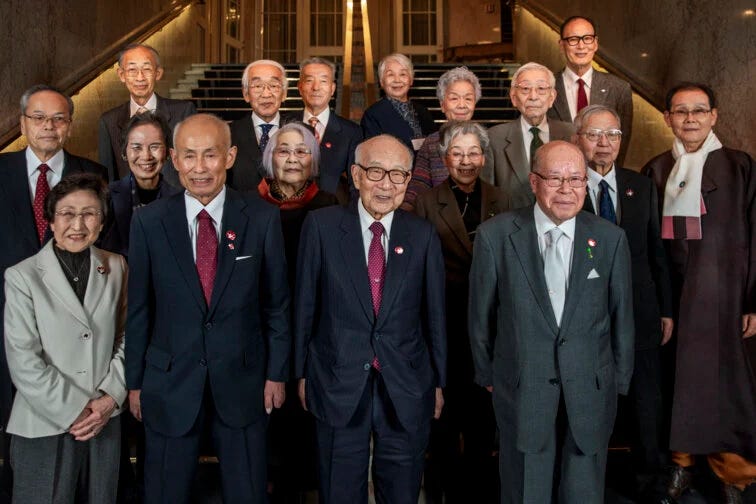
The Nobel Peace Prize Committee has repeatedly recognized that the most enduring progress toward nuclear disarmament has come not from elite declarations or political promises, but from sustained grassroots advocacy rooted in moral authority. In 1995, the committee honored both the Pugwash Conferences on Science and World Affairs and Joseph Rotblat, the physicist who had courageously abandoned the Manhattan Project upon learning that the German nuclear threat was illusory. The Nobel citation praised Pugwash for creating “a forum where scientists could discuss the dangers of nuclear weapons and work toward their elimination,” while recognizing Rotblat as a scientist whose conscience had transformed him into “one of the most important peace activists of our time.” Two decades later, in 2017, the International Campaign to Abolish Nuclear Weapons (ICAN) received the prize for its role in achieving the Treaty on the Prohibition of Nuclear Weapons, with the committee commending the organization for drawing “attention to the catastrophic humanitarian consequences of any use of nuclear weapons” and for its “groundbreaking efforts” to stigmatize such weapons. Yet perhaps the most poignant recognition came last year, when the committee awarded the Peace Prize to Nihon Hidankyo, the grassroots organization of atomic bomb survivors—the Hibakusha themselves.2 In honoring these aging survivors of nuclear horror, the Nobel Committee acknowledged that the most powerful voices against nuclear weapons have always been those who experienced their devastating effects firsthand. The shadows etched into the stones of Hiroshima and Nagasaki had found their living embodiment in the survivors who refused to let the world forget what nuclear weapons truly mean—not abstract strategic concepts, but instruments of unimaginable human suffering whose very existence threatens the continuation of civilization itself.
This post is excerpted from my forthcoming book Nuclear Weapons: A Cultural History—a comprehensive exploration of humanity's most destructive creation and its profound impact on our world. From the blinding flash over Trinity to the tense standoffs of the Cold War, the book chronicles the weapons and the crises, accidents, near misses, and human stories that have shaped the nuclear age.
Here are the frequently neglected stories of those individuals who single-handedly prevented nuclear war between the US and Russia. The Soviet submarine commander who refused to fire a nuclear torpedo during the Cuban Missile Crisis despite depth charges exploding around him; the Russian officer who held back from launching ballistic missiles when a faulty electronic component triggered a false alarm; the emergency crews who risked their lives when a Titan missile exploded in its Kansas silo. Discover how popular culture—from the novel "On the Beach" to the documentary "The Day After"—shaped public perception of nuclear war, and explore the countless accidents, malfunctions, and split-second decisions that could have changed history.
Through declassified documents, eyewitness accounts, and recently uncovered stories, Nuclear Weapons: A Cultural History examines how these weapons transformed politics, culture, and the very nature of human existence from 1945 through the collapse of the Soviet Union and into the early 21st century.
Notes and further reading
Notably, Australian journalist Wilfred Burchett was one of the first Western reporters to enter Hiroshima, arriving days after the bombing and documenting the horrifying effects of radiation sickness, a phenomenon the U.S. government initially denied and actively sought to suppress. Similarly, American journalist George Weller, reporting for the Chicago Daily News, managed to enter Nagasaki and wrote extensive accounts of the destruction and "Disease X," which were also suppressed. While the prompt asks for French and Australian, Burchett was Australian, and his story is the most prominent for breaking through initial censorship. There were other independent journalists, but Burchett's report on "The Atomic Plague" was particularly impactful, against which the US State Department launched a fierce disinformation campaign against Burchett and any newspaper that carried similar reporting.
The 2024 Nobel Peace Prize was awarded to Japanese grassroots organization Nihon Hidankyo for its work to “achieve a world free of nuclear weapons,” the Norwegian Nobel Committee said in a press release.
The organization is made up of Hibakusha, also known as survivors of the Hiroshima and Nagasaki atomic bomb attack by the U.S. that killed some 120,000 people in August 1945. (A comparable number of others passed due to the burn and radiation injuries from the attack.) Nihon Hidankyo was chosen for the prize, in part, for the role their testimony has played in “stigmatizing the use of nuclear weapons” as unacceptable.
“The Hibakusha help us to describe the indescribable, to think the unthinkable, and to grasp somehow the incomprehensible pain and suffering caused by nuclear weapons,” said Norwegian Nobel Committee Chair Jorgen Watne Frydnes during the Friday announcement.
Nihon Hidankyo is the only nationwide organization of atomic bomb survivors. Since its founding in 1956, the organization has fought for a nuclear weapon ban, prevention of a nuclear war, and a Japanese law that would provide compensation to Hibakusha survivors and families. It also regularly sends Hibakusha to the U.N. and other nations to explain what it was like to survive the atomic bomb attack.
Despite a global push for nuclear disarmament, nearly 13,000 nuclear weapons owned by nine countries—the United States, Russia, France, China, the United Kingdom, Pakistan, India, Israel, and North Korea—remain. No nuclear weapon has been used in war in nearly 80 years, but some countries, like Russia, are increasing their nuclear arsenal.
“The extraordinary efforts of Nihon Hidankyo and other representatives of the Hibakusha have contributed greatly to the establishment of the nuclear taboo. It is therefore alarming that today this taboo against the use of nuclear weapons is under pressure,” the Norwegian Nobel Committee said.
Hiroshima and Nagasaki Book List
The books listed here are considered essential for understanding the experiences of hibakusha and the effects of the atomic bombing of Hiroshima and Nagasaki. These books offer crucial perspectives on the atomic bombings, providing insight into the human cost of nuclear warfare and advocating for peace.
Hiroshima by John Hersey: This seminal work, first published in 1946, is a cornerstone of atomic bomb literature. It details the experiences of six survivors of the bombing of Hiroshima, becoming a classic that provides powerful and compassionate testimony. Hersey later revisited the survivors, adding a follow-up chapter to a revised edition.
Nagasaki: Life After Nuclear War by Susan Southard: This book delves into the lives of five Nagasaki survivors, highlighting their struggles with injuries, illnesses, and the ongoing impact of the bombing in the years that followed.
Death in Life: Survivors of Hiroshima by Robert Jay Lifton: A significant psychological study exploring the lasting impact of the bomb on 90,000 survivors. Lifton examines the psychological and emotional consequences of the bombing, including the effects of radiation sickness, which were largely unknown at the time.
Hiroshima Diary: The Journal of a Japanese Physician by Michihiko Hachiya: A daily journal kept by a doctor in Hiroshima, offering a raw and personal account of the horrors and aftermath of the bombing as he cared for patients and recovered from his own injuries.
The Bells of Nagasaki by Takashi Nagai: Written by a Nagasaki survivor dying of leukemia, this book recounts his experiences and observations, capturing the human story amidst the devastation and his reflection on the atomic bomb.
Hibakusha: Survivors of Hiroshima and Nagasaki by Gaynor Sekimori: This collection presents firsthand accounts from 25 survivors, detailing their experiences, the human cost of the attacks, and their attempts to rebuild their lives.
Hiroshima: The Last Witnesses by M.G. Sheftall: A more recent work, this book draws on years of personal interviews with the last surviving hibakusha to provide a powerful and detailed account of the bombing and its aftermath.
Black Rain: by Masuji Ibuse (1969). This is the definitive *literary* masterpiece on the subject. Ibuse meticulously crafts a novel based on real diaries and records, following the lives of ordinary citizens in the months and years after the bombing. It focuses on the insidious nature of radiation sickness ("the plague") and the pervasive social stigma faced by survivors. Its quiet, detailed realism provides a deeply human counterpoint to Hersey's journalistic account and Southworth's visual testimony. Complementing Hersey/Southworth, it adds profound literary depth, explores the long-term psychological and social consequences, and focuses intensely on the phenomenon of radiation sickness.
Leslie Nakashima, a biographical account of the life of a Hibakusha. Crystal K. Uchino is a Ph.D. candidate at Kyoto University. Her research has focused on the transpacific history of Japanese Americans and the memory of the atomic bomb in the United States and the Pacific Rim., The Hawaiian Journal of History, vol. 53 (2019)
Based on the foundational works of John Hersey (*Hiroshima*) and Susan Southworth (Hibakusha: Survivors of Hiroshima and Nagasaki), which offer journalistic immediacy and photographic/documentary testimony, here are five essential books providing diverse and profound perspectives on the Hibakusha experience:
Hiroshima Diary: The Journal of a Japanese Physician, August 6-September 30, 1945" by Michihiko Hachiya (1955)
Why:An astonishing firsthand account written *in the moment* by a doctor who was himself a survivor, treating victims in the ruins of his damaged hospital. It offers raw, unfiltered, day-by-day details of the physical horrors, the overwhelming medical crisis, the confusion, the rumors, and the desperate struggle for survival and basic humanity in the immediate aftermath. Its immediacy is unparalleled.
Complement to Hersey/Southworth: Provides the most direct, unmediated medical and personal perspective from the very first hours and days, filling in crucial details about the initial chaos and suffering that Hersey summarized and Southworth documented visually later.
Summer Flowers by Tamiki Hara (1947) / Often found in collections like "Hiroshima: Three Witnesses" (also containing works by Ota & Toge):
Why: Hara, a poet and novelist who survived Hiroshima, wrote these searingly beautiful and devastating vignettes shortly after the bombing. "Summer Flowers" is a lyrical, fragmented, and deeply personal account that captures the sensory overload, the surreal horror, and the profound grief with poetic intensity. His subsequent work, "The Land of Heart's Desire," continues this exploration.
Complement to Hersey/Southworth, this offers a unique artistic and deeply personal response, capturing the emotional and psychological landscape of the survivor through powerful imagery and poetic prose, contrasting with the more reportorial or documentary styles.
The Last Train from Hiroshima: The Survivors Look Back" by Charles Pellegrino (2010 - Use with slight caution, but valuable survivor testimony):** While the book faced controversy regarding some sourcing details (requiring critical reading), its core value lies in Pellegrino's extensive interviews with *double* survivors (people who experienced *both* bombings) and other unique Hibakusha witnesses, including those exposed in different ways (e.g., the famous "Hiroshima Maidens"). It compiles extraordinary, often overlooked personal narratives and technical details about the blasts' immediate effects.
Complement to Hersey/Southworth: Expands the scope beyond the "typical" survivor narratives to include incredibly rare experiences (double survivors), specific groups like the Maidens, and incorporates survivor perspectives on the physical phenomena of the bomb itself, adding unique angles.
Hiroshima Notes:" by Kenzaburo Oe (1965):**
Why: Nobel laureate Oe visited Hiroshima over several years in the early 1960s, interviewing survivors, doctors (like the heroic Dr. Fumio Shigeto), and activists at the Hiroshima Atomic Bomb Hospital. His essays are profound meditations on the *meaning* of the bombing, the nature of human suffering, the ethical responsibility of survivors and humanity, the dangers of nuclear weapons, and the struggle to maintain human dignity in the face of unimaginable trauma. It's philosophical and deeply compassionate.
Complement to Hersey/Southworth: Provides crucial *reflection* and *contextualization* of the Hibakusha experience years later. It moves beyond the event itself to explore its lasting philosophical, ethical, and political implications through the eyes of a major intellectual who engages directly with survivors and their caregivers. Adds a vital layer of meaning.
Why this selection aims for diversity:
Form: Novel (Ibuse), Immediate Diary (Hachiya), Poetic Memoir (Hara), Compiled Oral History/Investigation (Pellegrino), Philosophical Essays (Oe).
Perspective: Civilians (Ibuse, Hara), Medical (Hachiya, Oe), Unique Witnesses (Pellegrino), Intellectual Reflection (Oe).
Focus: Immediate Aftermath (Hachiya), Medium-Term Suffering/Stigma (Ibuse), Personal/Artistic Response (Hara), Rare Experiences/Technical Details (Pellegrino), Long-Term Meaning/Ethics (Oe).
Timeframe: Written within months (Hara, Hachiya), years (Oe, Ibuse), decades later (Pellegrino).
These five books, alongside Hersey and Southworth, provide a multifaceted, deeply human, and intellectually challenging understanding of the Hibakusha experience that is difficult to achieve with fewer works.
The three representatives of Nihon Hidankyo—Terumi Tanaka, Shigemitsu Tanaka, and Toshiyuki Mimaki—with the Peace Prize medal and diploma. Photo: Heiko Junge / NTB
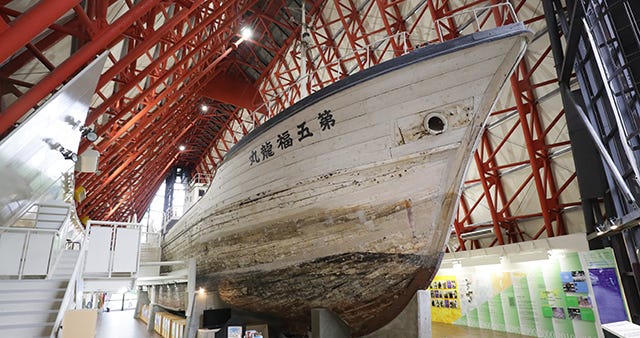
Keeping the tale of ‘Lucky Dragon No. 5’ alive poses new challenges. THE ASAHI SHIMBUN March 2, 2024 at 18:28 JST