

Recently, Ariadne looked at the most controversial of Nobel prizes - Peace, and the convoluted stories of some of those who have won it. For none can the news of the award been so harshly received at home than Pauling. Rejected and ignored by his government and attacked by the mainstream press. This Substack post continues with a broader look at how history and his biographers have viewed his legacy.

One of the most versatile and influential scientists of the 20th century
Linus Pauling had agreed to meet with me for a series of interviews during which we would explore his technique of intuitively discovering the structure of protein molecules - a method he had named stochastic, which is Greek for guessing. I was also hoping to learn of his role in the global campaign to bring about a comprehensive ban on the testing of nuclear weapons, a singular participant within a much larger worldwide group of eminent scientists. In 1963, he was rewarded with the Nobel Peace Prize, which came amid fierce controversy - he and his wife, Ava Helen, were widely viewed as Communist sympathizers, particularly after his public correspondence with Khrushchev, while his White House protest placards pointedly called out only Kennedy and Macmillan to stop testing, conspicuously omitting the Soviet leader. It would take another twenty-two years for the Nobel committee to recognize the work of the International Physicians for the Prevention of Nuclear War (1985), and thirty-two years to honor Joseph Rotblat and the Pugwash group (1995) - both shared their prize with others. The distinction between a shared and unshared Nobel prize is often mentioned in accounts of Pauling’s achievements - he is thus far the only winner of two unshared prizes.1 There are many winners of two science Nobel’s, but Pauling’s distinction of an unshared Peace prize came about because the committee refused to give way to chairman Gunnar Jahn’s insistence that the 1962 prize be awarded to Pauling, though the committee had already selected otherwise. Jahn withheld the prize without a public reason being provided - the Nobel committees never do offer explanations of this kind - thus, in 1963, two individual prizes were awarded, the 1962 prize to Linus Pauling, and the 1963 prize to the International Red Cross.2
I planned to conduct taped interviews to explore topics of mutual interest. At this time, a great deal had already been written about Pauling’s scientific work and his political (mostly anti-nuclear testing) activism. My main interest was Pauling’s remarkable solution to the structure of the protein molecule known as the alpha helix, which became a foundational discovery in molecular biology. This was not only for its ubiquity as a biological molecule but also for the manner in which its structure was discovered.
A few years later, Pauling’s highly intuitive approach—evidence-based guessing widely regarded as a skill exclusively his—was used by James Watson and Francis Crick in resolving the double-helical structure of DNA in 1953. Of the many of Pauling’s ideas that needed significant re-interpretation or that were simply proved wrong, this was the singular scientific failure that irked him the most.
He may not have attempted his now notorious triple helical model at all were it not for communications between his son Peter (acting as an intermediary) and Watson and Crick. During this time, Pauling wrote to Maurice Wilkins asking for the X-ray diffraction pictures being taken at King’s. When Wilkins politely declined, Pauling wrote a letter to Wilkins’s boss, Sir John Randall, but this request was also declined. All would have remained quiet had Watson not written his sensational, bestselling account of the discovery, with a central storyline of a “race” between the then-unknown Watson and Crick and Pauling, the “Pope” of Caltech. When the Nobel prize nominations for the discovery of DNA were circulated to Nobelists, Pauling stood alone in objecting to the award of the prize to Maurice Wilkins, an action other prize winners considered petty.3 The Nobel committee also decided otherwise and awarded the prize shared between Watson, Crick, and Wilkins.
I didn’t prepare differently for this oral history interview, but intimidation and awe loomed as I anticipated our first meeting. I already felt defensive—he had expressed concerns about my draft outline, pointing out grammatical flaws and spelling errors. After flying from London to Los Angeles, staying overnight with friends, then traveling to San Jose and spending a night at a Palo Alto motel, I drove to The Institute for Orthomolecular Medicine on Sand Hill Road the next morning.
My first impression of Linus was his very blue eyes that sparkled with excitement—he seemed genuinely friendly. I apologized for the errors he’d noted, hoping we could clarify details during our meeting. He responded that he viewed those errors as signs of sloppy thinking and insisted even drafts needed to be word-perfect. He picked up a matchbook from the desk, read my motel’s name, and asked if I smoked. When I said no, he flipped it open to check if any matches had been struck. I explained I’d taken it only to remember the address—these were days before mobile phones or the Internet. The room was packed with scrapbooks that he and his wife Ava Helen had maintained througout their lives, as they became more prominent they had it appeared subscribed to clipping services to provide the stories. The room was to be my office for the next couple of weeks.
I recount this because, while I later discovered Linus had a warm and sometimes vulnerable side, he was meticulous about ensuring his standards were met. He had no qualms about being extremely dismissive of other scientists, even Nobel laureates. The fact that he was so alarmingly candid about his opinions so soon after criticizing my preparation was surprising, especially since our conversations were being recorded.
Many years would pass before I realized I had met Linus at the beginning of his career’s closing phase. He was partially interested in reflecting on the past, but his preoccupation was immediately ahead. He was struggling not only to raise funds but also to garner serious scientific attention for his final odyssey: establishing a molecular basis for managing human health primarily through supplements, with vitamin C being most important. I visited with Pauling on several occasions after our first conversations. I would travel from London to California, staying for a few weeks at a time. He never objected to the interviews I was conducting with his detractors at Caltech - yes, there were more than I would have ever imagined. He didn’t care much for their opinion at the time and had not changed his mind since. I noticed he showed little interest in revising his arguments since he first presented them. He had come to them through careful thinking on his part and was not interested in revisiting events and evidence that may have had the benefit of time to reflect over. Once, I visited the Big Sur ranch together with Peter. His relationship with his father had been fraught with challenges from a very early age, stemming mostly from high expectations Peter was super smart from elementary school on. There were also long absences when the Paulings would travel leaving the young children in the care of their housekeeper who it seems was not a strict disciplinarian. It was satisfying to see them discussing and pulling out all sorts of molecular models for me to see this and that. By my last visit, the institute had changed its name to attract more substantial financial support —a direct association with his identity was necessary.4
Pauling never wrote an autobiography, though after reading Freeman Dyson’s “Disturbing the Universe,” he sketched out his own following a similar approach, but abandoned it when W.H. Freeman turned it down. It’s hard to imagine why anyone would reject an autobiography offered from a double Nobel Prize winner, but it’s equally baffling why Pauling didn’t seek another publisher. As it turned out, Linus, who never formally commissioned a biographer, was celebrated in mostly hagiographic compendiums by former students. Pauling himself believed that he was a subject suitable for a multiple volume biography. He told many people so, he also thought it a good idea many different facets of his life should be written about by different biographers. But neither he nor his wife much cared for an assessment that would turn out less than adulatory and while their world was filled with admirers Paulings flaws had hurt many, and his characteristic of frequent refusal to accept viewpoints significantly different from his own made matters worse. During his life-time a doctoral candidate whose thesis topic was based on Pauling’s chemistry theory of bonding Robert J. Paradowski became a close confidente but to date has never published a biography. Another two biographers Thomas Hager and Anthony Serafini published contrasting viewpoints as did Ted Goetzel the son of Victor and Mildred Goetzel whose parents exhausted with wrangling with Pauling had given up on their project. Later, Chris Petersen who is the archivist of the Pauling collection of papers at Oregon State University has written the most comprehensive biographical resource available.5
A Third Prize?
The Peace Prize had been withheld in 1962 by chairman Gunnar Jahn because other committee members wouldn’t agree to award it to Pauling. The Cuban missile crisis that October, close to when Nobel Awards are announced, complicated matters. Jahn, unable to coerce other members in 1962, succeeded in 1963 after the Nuclear Partial Test Ban was signed on August 5. Two months later, both 1962 and 1963 Peace Prizes were announced—the ’62 to Pauling for efforts to end nuclear weapons testing, the ’63 to the International Red Cross.
The ensuing international criticism focused on singling out Pauling for a campaign initiated by Einstein and Russell and supported by numerous eminent scientists and organizations, most prominently the Pugwash Conference and Joseph Rotblat. It took thirty-two years for the Norwegian Nobel Committee to jointly award the peace prize to Pugwash and Rotblat in 1995.
Having won Nobel Prizes for Chemistry and Peace, Linus’s interests moved towards the possibility of a third, for physiology or medicine. While he continued to profess an interest in world peace and an end to all wars6, this was mostly expressed in activism rather than in participation in the development of international security policy or measures articulating arms control, either through organizations or by individual initiative.
Linus, a scientist, held the belief that only scientific thinking and solutions could contribute to the betterment of humanity. At the same time, he was admiring, perhaps even envious of, scientists who could write poetry and recite from philosophy and ancient literature, like Robert Oppenheimer, for example. As children, neither Linus nor Ava Helen had much exposure to the value of the arts and humanities to society. Her family was immersed in issues to alleviate injustice, especially that affecting those most socially vulnerable. For his childhood, Linus was able to scavenge chemicals and apparatus to build himself a lab, learned to speak German with his grandparents, and read some Latin and Greek from a neighbor. His father, who died when Linus was nine, had provided a reading list that included classic literature, history and philosophy. However, by the time he arrived at college, this had done much less towards broadening his mind than hardening his feelings of intellectual superiority. For example, he did not receive a high school diploma because he considered the requirement to complete a civics and government class to be intellectually unchallenging and of no value to him.
His health was a constant concern from 1941, when he was first diagnosed with glomerulonephritis, a kidney disorder. It occurs on its own or with other conditions such as lupus or diabetes. An inflammation of the tiny filters in the kidneys (glomeruli). The condition, depending on its severity, can be fatal. It can come on suddenly or gradually. The condition was considered incurable at the time and treatable mainly by dietary modification, as kidney dialysis had not yet been developed nor transplant surgery. The problem was first noticed after Pauling traveled to attend a scientific meeting on the East Coast. He fell ill with a severe inflammation of the kidneys. The condition only worsened on his return journey to California by train. At that time, a highly regarded specialist for nephritis patients was at Stanford University Medical School, and Pauling was referred to him. Dr. Tom Addis Jr., a Scottish émigré, treated nephritis patients exclusively through a specialized diet derived from the urinalysis of the patient. The diet was comprised of a low-salt, low-protein intake with vitamin supplements. Pauling’s condition began improving immediately. Linus, Ava Helen (who was charged with the administration of the diet), and Tom Addis bonded and remained close until Addis’s death in 1949. Pauling’s nephritis went into remission, and he maintained the diet for a decade and a half.
The nephritis diagnosis came shortly after the publication of Pauling’s seminal textbook, ‘Nature of the Chemical Bond’. At this point he was already a star at Caltech, having been made head of the chemistry division by the time he was thirty-one years old. Both the events of his succumbing to a then frequently fatal condition for which there were no widely accepted treatments and his recovery from it by a dietary plan supplemented with vitamins left a deep impression that shaped the way he would view the management of human health for the rest of his life.
By the time of the award of the Nobel Peace Prize in 1963, Pauling’s activism and the shift in his scientific interest away from chemistry towards biology and health had significantly impacted his management of his division at Caltech. His frequent and extended absences from campus while he traveled both domestically and internationally promoting his petition for scientist signatures supporting a halt to atmospheric nuclear testing and seeming disinterest in the routine management of the Chemistry Division had driven Caltech’s Board and Trustees to exasperation. His peers at Caltech at the time described the situation as “very messy.” Pauling would not accept that the Chemistry Division had fallen into disarray; “no one could tell Linus anything; they were all afraid of him; he was like the Pope of Caltech.” Max Delbrück remarked to me on one of my visits to Pasadena to interview people who had been present at the time. Moreover, there was growing acceptance of the orbital theory over Pauling’s valence bond theory that he had so eloquently articulated in The Nature of the Chemical Bond needed to be adapted to new understanding but Pauling would not yield. It also did not help Paulings troubles with the institution he helped establish a global reputation for, that the president of the board was Robert Millikan, who was one of the major developers of molecular orbital theory. Although Nature of the Chemical Bond was selling widely and new editions were being issued, Pauling steadfastly refused to acknowledge the importance of the emergence of molecular orbital theory in the revisions to his book, relegating it to a note in the appendix of a late edition of Nature of the Chemical Bond.
After he had successfully predicted the structural basis of the uptake of oxygen by hemoglobin, Pauling went on to identify that sickle cell anemia was a structural abnormality of the hemoglobin molecule causing the curved sickle shape of the red blood cells with this anemic disorder. But around the same time he had latched on to the idea that the intake of large amounts of niacin would alleviate schizophrenia. Unfortunately, he was about equally passionate about both. One would massively advance the understanding of a crippling disease, the other had absolutely no scientific basis from which to proceed forward. These areas of investigation occupied a significant portion of the Chemistry Division's lab space, displacing traditional chemistry research. It is undeniable that Pauling played a significant role in propelling the pre and early post WW II Caltech to a level comparable to historically prominent American institutions such as Harvard, MIT, and Cornell. Equally, it should be noted that without Caltech's nurturing, Pauling may have struggled to distinguish himself from the many other high-achieving individuals on those campuses. Also, while Pauling quickly emerged as a remarkably talented member of Caltech’s faculty, he was by no means alone or even in a minority. Over a couple of decades from the 1950s, Caltech’s campus was bursting with Nobel Prize winners. In spite of Pauling’s second Nobel, perhaps even because of it, neither Pauling nor the Caltech Trustees could reach a settlement about Pauling’s future, and they parted ways. Pauling, angry and embittered by his treatment by the Caltech Trustees and Board, and, for their part, Caltech frustrated by Pauling's left leaning political activism, his long absences from campus, and his pursuit of research priorities well outside of and at the expense of what they felt should have been the focus of the chemistry division.
By this time in the mid 1960s, all of Pauling's major scientific accomplishments in chemistry were behind him.7 Most scientists have completed their contributions by their fifties, and Pauling was in his early sixties at the time he took his position at the Center for Democratic Institutions in Santa Barbara, not far from his beautiful and beloved ranch in Big Sur. His time here was short and though highly lucrative intellectually inconsequential; unable to pursue lab work or associate with scientific thinkers, he moved to the chemistry department at the University of California, San Diego.8 He was unable to move UCSD to allow him free rein to develop his ideas for treating diseases with vitamins and supplements in that these ideas lay outside the scope of a chemistry department. Finding a sympathetic ear in Arthur Kornberg at Stanford University, Pauling moved there in 1969. Kornberg had been awarded the Nobel Prize in 1959 for his work on DNA synthesis and was both a biochemist and an MD. Pauling must have been optimistic that his ideas for what by then he had called “orthomolecular medicine” would find a warmer reception at Stanford.
From the very outset, Pauling’s promotion of orthomolecular medicine had a hostile reception from the medical community. Referring to the practice of varying the concentration of substances normally present in the body to prevent and treat disease, “orthomolecular” was strikingly comparable to megadoses of vitamins and other supplements to treat illnesses. A practice identified as having no scientific basis or confirmation of medical benefit to patients. Introduced to vitamin C in the mid-1960s by Irwin Stone Linus and Ava Helen began taking doses in significant excess of the recommended daily allowance. Believing that their personal experience supported the benefits of vitamin C in preventing the Common Cold Pauling published a book on the subject in 1971. The book became a huge success and triggered a deluge in sales for vitamin C. But Pauling cannot have anticipated the consequences of this success.
Unable to establish any research at Stanford, either within the scientific departments or the medical school, Pauling decided to set up his own independent research institute near the Stanford campus. He first named it orthomolecular science and medicine but this put off sponsors so he reverted to using his name. By now he also had to face the reaction of organizations such as the American Psychiatric Association, which launched a full-scale debunking of his ideas for the orthomolecular treatments for schizophrenia particularly criticizing the dangers to patients from taking unproven supplements as an alternative to treatment developed through traditional medical science.
Now in his early seventies, Pauling still believed he was capable of generating another Nobel Prize-worthy discovery. Despite his failures to establish a molecular basis for the treatment of diseases, Pauling shifted his focus to treatments based on manipulating the amounts of naturally occurring substances in the human body, particularly vitamin C. It may be that his near-fatal personal experience with glomerulonephritis was an example he relied on for how dietary plus supplemental treatments could be effective.
In his books on vitamin C and the common cold, which quickly became an outlandishly unlikely international best seller, Pauling had suggested that it might also be beneficial in the treatment of cancer. Studies were started at the Pauling Institute on the efficacy of large doses of vitamin C for the treatment of cancer. These studies were funded not only from private donors but also from the National Cancer Institute and the National Institutes of Health.9
The research institute suffered early on from mismanagement of research and funding issues. By the time Linus Pauling died in 1994, he had fired the first director of research, whom he had hand-picked himself, and the succeeding director had to be forcibly removed by the board of the institute. Both sued Pauling and his institute, resulting in lengthy and expensive litigation. Pauling’s eldest son, Linus Jr., took over management of the institute, settling its liabilities. With Pauling’s papers transferred to the Oregon State University Library archives, the Pauling Institute was closed, and its assets were used to set up an institute named for Pauling at OSU to continue his interests in the benefits of vitamins and supplements in improving human health and well-being.
He had survived his wife Ava Helen by thirteen years. They had fallen in love at college, where he was a sophomore science teacher in her home economics class. Three years younger, she gave up completing her education to marry and join him at Caltech’s newly founded chemistry division in 1922, when he’d been accepted for doctoral work.
Ava Helen died of stomach cancer at seventy-seven on December 7, 1981, at Pauling’s Portola Valley home near Stanford. She too had declined follow-up chemotherapy after surgery to remove the tumor.
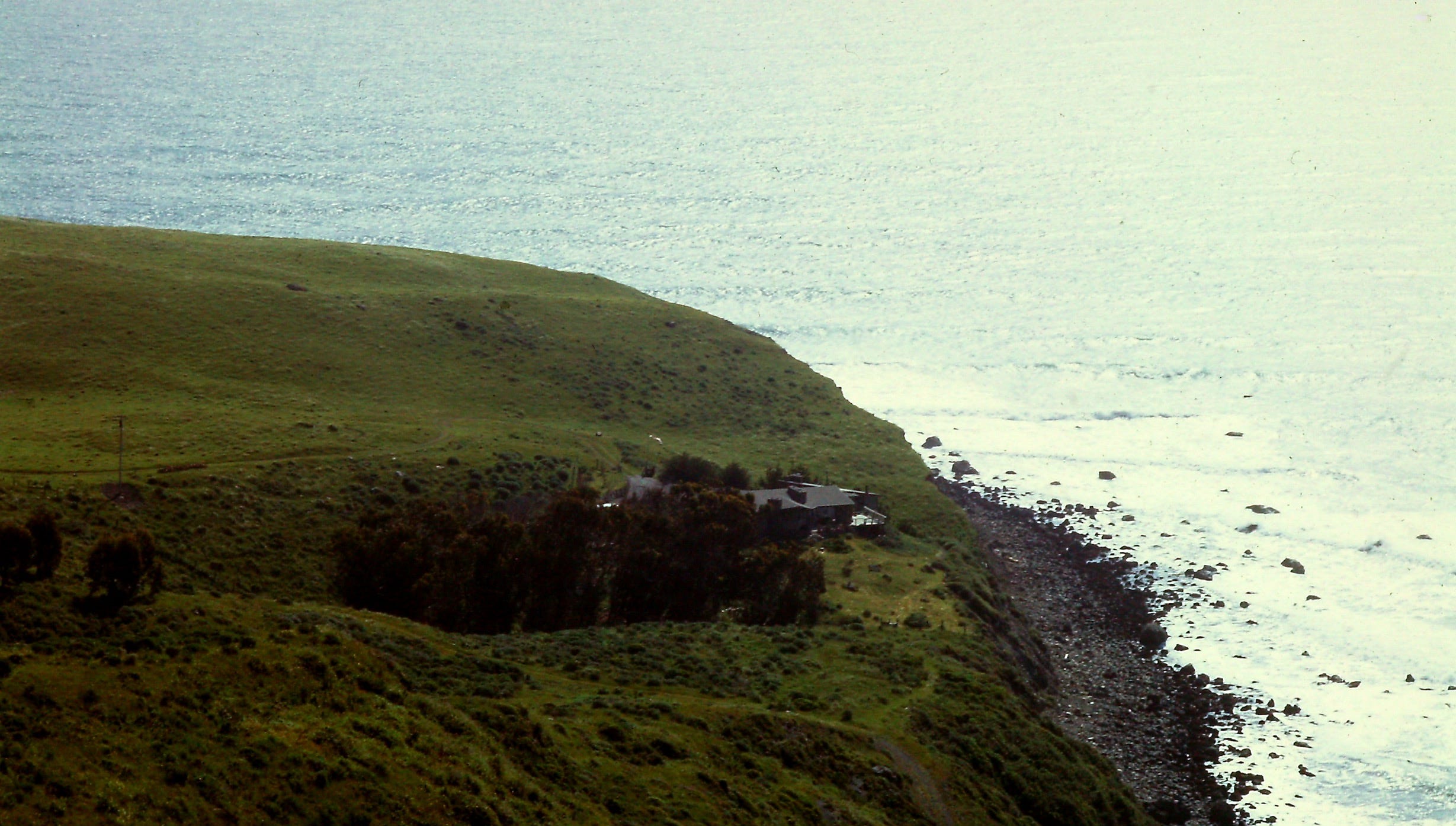
He died at his home on August 19, 1994, at ninety-three. He had built the house overlooking the Pacific Ocean on his picturesque Deer Flat Ranch near San Luis Obispo. His last years saw failing health and extreme weakness. Earlier diagnosed with prostate cancer, he’d received surgery at Stanford Medical School but declined follow-up chemotherapy in favor of intravenous vitamin C supplementation—an unproven experimental procedure he chose for himself.
The Paulings had bought Deer Flat Ranch after Linus won the 1954 Nobel Prize for Chemistry. Ava Helen spotted the for-sale sign while they were driving from Berkeley back to Pasadena along the scenic Pacific Coast Highway route. The ranch sloped steeply from road to ocean. When purchased, it consisted only of a barn and small cabin, but they meticulously designed and constructed a home perched like a nest on the steep ocean drop’s edge—their sanctuary from his scientific reputation’s height in the mid-fifties through its implosion following the controversial 1962 Nobel Peace Prize awarded in 1963.
A Fallible Giant
Linus Pauling’s life demonstrates his extraordinary individuality in bridging disciplines—physics with chemistry, and biology with both. Fortunately, this interdisciplinary approach will remain his outstanding legacy as one of the twentieth century’s most innovative and influential scientists. Though his life also reveals a trail of failures and vulnerabilities, he rarely conceded mistakes in his scientific thinking, even when they only represented a natural fallibility of human nature.
Pauling always displayed a lifelong commitment to the idea that science—and science alone—presented the path to humanity’s salvation. His interest in peace and humanitarian ideas stemmed from the notion that rationality could explain everything. Unlike contemporaries such as Oppenheimer, who was versed in fine arts, wrote poetry, and could read and write Sanskrit (the language of Hindu religious literature), Pauling had not been raised with a broader appreciation of the humanities. He found them interesting only when he could discover rational explanations for them.
After winning the Nobel Peace Prize, Pauling immersed himself almost entirely in determining the molecular basis of human health. Based primarily on intuition, he believed that all diseases could be effectively treated by “correcting” the balance of natural substances in the human body. His arrogance, anchored in no small part by the enormous success of his predictive abilities and his gift for intuitive problem-solving, fueled a craving for tension and conflict. This was especially evident when this rambunctious and occasionally rude man bulldozed his way through fields distant from chemistry, which his critics considered his rightful territory.
Whether in clashes with William Bragg over X-ray crystallography, or with Daniel Shechtman over quasicrystals, and in his battles with medical orthodoxy over vitamin C therapy against the common cold (then cancer, then heart disease and HIV/AIDS), or in his crusades against nuclear testing, Pauling manifested an unnerving certitude and iron-fisted disregard for even the remotest possibility that he might sometimes be wrong.
Linus Pauling’s life demonstrates his extraordinary individuality in bridging disciplines—physics with chemistry, and biology with both. Fortunately, this interdisciplinary approach will remain his outstanding legacy as one of the twentieth century’s most innovative and influential scientists. Though his life also reveals a trail of failures and vulnerabilities, he rarely conceded mistakes in his scientific thinking, even when they only represented a fundamental fallibility, like all human souls.
Pauling always displayed a lifelong commitment to the idea that science—and science alone—presented the path to humanity’s salvation. His interest in peace and humanitarian ideas stemmed from the notion that rationality could explain everything. Unlike contemporaries such as Oppenheimer, who was versed in fine arts, wrote poetry, and could read and write Sanskrit (the language of Hindu religious literature), Pauling had not been raised with a broader appreciation of the humanities. He found them interesting only when he could discover rational explanations for them.
As a child, lying in bed, he was struck by the halo above a drawing of Christ’s head. After investigation, however, he “discovered the after-image effects of the retina and satisfied myself that this was a general natural phenomenon.” Arrogance emerged as another early quality. Pauling did not receive his diploma from Washington High School because he refused to take a required civics course. He told the school administration he could absorb all the necessary civics through reading.
After winning the Nobel Peace Prize, Pauling immersed himself almost entirely in determining the molecular basis of human health. Based primarily on intuition, he believed that all diseases could be effectively treated by “correcting” the balance of natural substances in the human body. His arrogance, anchored in no small part by the enormous success of his predictive abilities and his gift for intuitive problem-solving, fueled a craving for tension and conflict. This was especially evident when this rambunctious and occasionally rude man bulldozed his way through fields distant from chemistry, which his critics considered his rightful territory.
Whether in clashes with William Bragg over X-ray crystallography, with Daniel Shechtman over quasicrystals, in his battles with medical orthodoxy over vitamin C therapy against the common cold (then cancer, then heart disease and HIV/AIDS), or in his crusades against nuclear testing and McCarthyism, Pauling manifested an unnerving certitude and iron-fisted disregard for even the remotest possibility that he might be wrong.
Disappointingly, though mainly in his later years, Pauling was an easy mark for those seeking to exploit and personally benefit from his enormously attractive persona. His legacy was spared through the extraordinary devotion of those most loyal to him toward the end of his life, particularly his eldest son, Linus Jr. Through his efforts, Pauling’s misplaced confidence in Arthur Robinson, followed by Mattias Rath, was addressed through very costly legal action.
I recall speaking with Linus about the range of battles he had over the years with the scientific establishment, some of which were his predictions that the fallout from atmospheric nuclear fallout, which, of course, was not his exclusive domain. In many scientific issues, he often failed to follow his rules of having many ideas and only keeping the good ones. He seemed to be determined, as in the case of molecular orbital theory and with quasicrystals, never to let go of an idea whose time and relevance, once illuminating and even revolutionary, had diminished with age or been superseded by the progress of knowledge. I asked him how he would like to describe himself - as an agent provocateur or anarchist of science, and his answer was Gadfly; he thought that described him best.
In Part II of this reflection, we'll examine how Pauling's biographers have grappled with a profound puzzle: How does the same intellect that revolutionized chemistry and molecular biology through intuitive insights become so stubbornly wrong about vitamin C? Pauling's extraordinary ability to predict molecular structure and solve complex scientific problems seemed to abandon him when he turned to human health, yet he clung to his L-ascorbic acid theories until the end. Most troubling for his biographers: his molecular reductionism—the belief that diseases from schizophrenia to cancer had correctable molecular bases—now seems prescient in our age of genetic engineered medicine, even as his specific vitamin C claims proved transparently wrong. How do you explain the life of a genius whose greatest failure might also be his most prophetic insight?
Future Ariadne Substacks about Pauling will explore why his success in applying quantum mechanics to chemistry and his ideas for the a the study of biology through chemistry floundered when he turned his extraordinary intellect to the most difficult problems of human health.10
Pauling was not only an intellectually unchallenged scientist in his time; he possessed a unique ability to intuitively predict molecular structure and to interpret solutions to scientific problems that would sometimes take years to verify. Yet his determination to extrapolate his personal experience with recovery from illnesses and the idea that this was likely based on correcting imbalances in naturally occurring substances in the body was without success or acceptance by the medical profession.
updated: 1 October, 2025
© 2025 Farooq Hussain
There have been five individuals who have won two Nobel Prizes: Marie Curie (Physics, 1903; Chemistry, 1911), Linus Pauling (Chemistry, 1954; Peace, 1962), John Bardeen (Physics, 1956; Physics, 1972), Frederick Sanger (Chemistry, 1958; Chemistry, 1980), and Karl Barry Sharpless (Chemistry, 2001; Chemistry, 2022). Pauling’s distinction is that he was awarded two unshared prizes though the others all won two science prizes. Pauling’s peace prize in 1963 could easily and less controversially perhaps been shared with later recipients Joseph Rotblat and the Pugwash group and the Physicians Against Nuclear War all of these were working alongside Pauling’s activism but they remained unrecognized for many years.
Pauling Archives contains a letter from Jahn assuring Pauling that he will be awarded the peace prize for 1962. This information is also available from the Nobel Committee archives.
Pauling’s letter objecting to the award of the Nobel Prize to Maurice Wilkins is in the archives of the Nobel Foundation.
There was always a steady stream of small individual contributions from supporters of Linus Pauling to advance his research, but institutional funding was very difficult without the institute being named after him. He was an active fundraiser and kept in touch with Linus Jr.’s first wife, Anita Osner ( a Rockefeller heiress), who on at least two occasions gave the Institute substantial grants.
Pauling biographers: The first complete biography of Linus Pauling was begun by Victor and Mildred Goertzel and completed by their son Ted and grandson Ben. Pauling collaborated extensively with Tom Hager, and with Athony Serafini. He is said to have named Robert Paradowski as his official biographer but none has been published. The Oregon State University Special Collections and Archive Reserach Center’s Chris Petersen has written extensively in Pauling as well as directing the Linus and Ava Helen Pauling papers and the Pauling Blog. He has written two biographies of Pauling, the first Visions, and the second to be published in Spring 2026, Many Worlds.
Pauling’s book No More War! was mostly to explain the destructiveness of then then-fission-based nuclear weapons as had been dropped on Japan. Like Vitamin C and the Common Cold, it was addressed to the general public.
Linus Pauling's identification of the alpha-helix in 1951 (published with Robert Corey and Herman Branson) was a revolutionary breakthrough that established one of the foundational discoveries of molecular biology. The significance of this work extends across multiple dimensions:
Solving a Fundamental Problem: While proteins were known to be essential for life and composed of polypeptide chains (amino acids linked by peptide bonds), how these linear chains folded into specific, functional three-dimensional structures remained a complete mystery. Pauling tackled this central question of structural biology.
Overcoming Incorrect Models: Prevailing theories, such as Dorothy Wrinch's "cyclol" hypothesis, proposed rigid, cage-like protein structures. Pauling recognized that these models were inconsistent with known chemical constraints and available X-ray diffraction data.
Revolutionary Methodology: Instead of relying solely on incomplete X-ray data (which was difficult to interpret for proteins), Pauling developed a radically different approach that became the gold standard for structural determination:
Precise Chemical Foundation: He meticulously determined the exact planar geometry of the peptide bond and the precise bond lengths and angles within amino acids using X-ray crystallography of small peptides and amino acid crystals (in collaboration with Corey). Physical Principles: He insisted that any proposed structure must obey fundamental laws of structural chemistry and quantum mechanics.
Physical Model Building: Using this precise chemical knowledge, he constructed scale models of polypeptide chains, manually manipulating them to identify stable, regular structures that maximized favorable interactions while minimizing molecular strain.
The Discovery: Through this systematic approach (famously while recovering from a cold), Pauling identified the alpha-helix—a tightly coiled, rod-like structure stabilized by hydrogen bonds formed within the same polypeptide chain. Specifically, the carbonyl oxygen (C=O) of each amino acid residue forms a hydrogen bond with the amide hydrogen (N-H) of the residue four positions further along the chain (n to n+4). The structure features a right-handed twist with approximately 3.6 amino acids per turn and amino acid side chains extending outward, perfectly satisfying the constraints of planar peptide bonds and optimal bond angles.
Transformative Impact: This discovery provided the first accurate, atomic-level description of protein secondary structure and demonstrated the critical role of hydrogen bonding in stabilizing biological macromolecules. It established that protein folding follows predictable physical and chemical principles, laying the foundation for structure-function relationships in molecular biology. The alpha-helix explained key X-ray diffraction patterns observed in fibrous proteins like α-keratin and proved to be one of the most ubiquitous structural motifs in proteins, essential for mechanical strength, membrane spanning, enzyme function, and molecular recognition.
Pauling's methodology—combining precise chemistry, physical model building, and fundamental principles—directly inspired Watson and Crick's approach to solving the DNA structure just two years later in 1953. This work, together with Pauling and Corey's identification of the β-sheet, moved biology from descriptive science to quantitative structural understanding, establishing the field of structural molecular biology and revealing universal architectural principles that govern life at the molecular level.
Bernard Dixon’s info about Santa Barbara Center for Democracy
See my New Scientist article
Gadfly of Science and Medicine: Linus Pauling
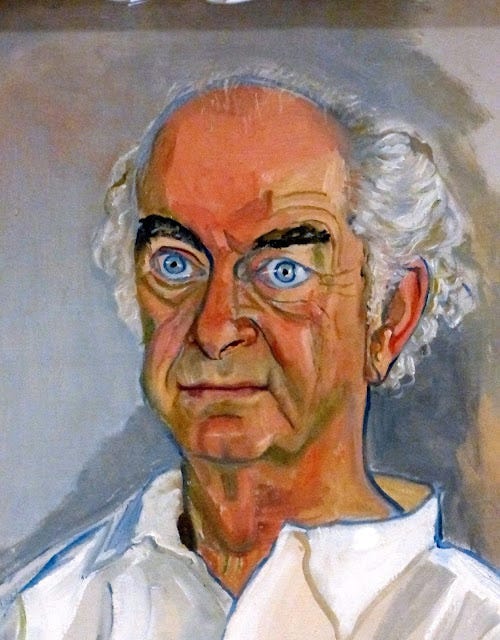
Alice Neel’s portraits of Linus and Ava Helen Pauling were painted in 1969. Neel’s lifelong devotion to liberal causes likely attracted her to Linus, and his wife, a celebrated human rights activist.
During the summer of 1969, when Neel left her home in New York City to visit her son, Hartley, and his future wife, Ginny, in San Francisco, and at the invitation of a mutual friend, Neel travelled to Big Sur and spent several days visiting the Paulings. Evidently fruitful, the trip resulted in several paintings – a portrait of Ava, a portrait of Linus, and portraits of them together. In the collection of the National Portrait Gallery, Washington, DC,
Dixon, Bernard, Review: Feat of Clay Review: Feet of clay / Review of 'Linus Pauling: A Man and his Science' by Anthony Serafini, New Scientist Dec 9, 1989