

Part I: The Predator-Protector Paradox
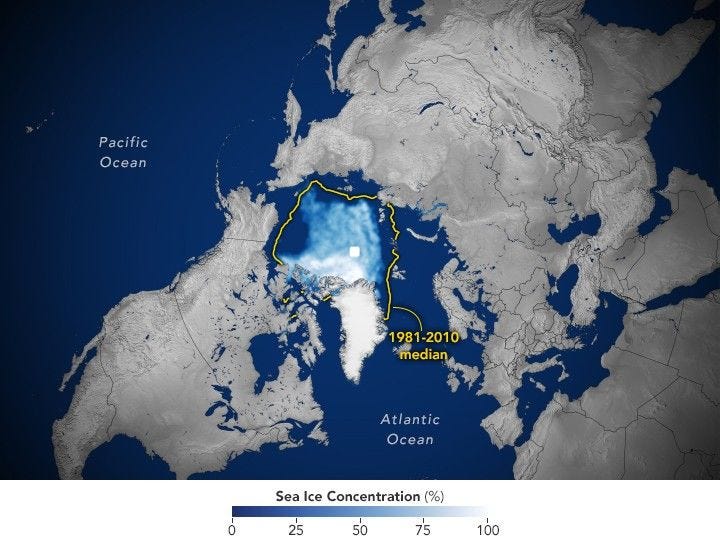
An Ice Curtain has been drawn along the North-West Passage, that body of water separating the Arctic and the island of Greenland from the North American continent. In the last few days, military and naval forces from the European nations of Norway, Sweden, France, Germany, and the Netherlands have deployed to Greenland to defend the island against potential American military intervention. Danish and Norwegian warships now patrol Greenland's coastal waters. A full-throated commitment from the European Union in support of Greenland's right of independent self-determination, together with support for Denmark, of which it is an administered territory, has triggered a flurry of diplomatic activity to manage one of the few but likely most consequential existential crises in the Atlantic alliance's 77-year history.
The End of NATO Begins in Nuuk
It’s a scenario so unlikely and unpredictable that Tom Clancy would have loved it as the opening to a thriller. The author who made his name with The Hunt for Red October—an extraordinarily accurate description of the GIUK Gap at work hunting Russian submarines breaking out into the Atlantic—would immediately recognize the strategic absurdity of the current crisis: the entire security framework of the free world becoming undone over an issue that might otherwise have been entirely uneventful but for the claims of a U.S. President that he planned to take ownership of the island “one way or another.”
The Crisis in the High North
On January 14, 2026, the geopolitical tectonic plates of the North Atlantic shifted violently, not from an earthquake, but from a diplomatic rupture in Washington, D.C. A high-stakes meeting between US Vice President JD Vance, Secretary of State Marco Rubio, and Danish Foreign Minister Lars Løkke Rasmussen ended in what Copenhagen diplomatically termed a “fundamental disagreement.” The subject was not trade tariffs or emissions targets, but the territorial integrity of the Kingdom of Denmark itself.
Following the meeting with the US Vice President and Secretary of State, Rasmussen stated that while he found the discussion “frank but also constructive,” the parties failed to bridge the gap over the US's desire to take control of the Arctic territory. “We didn’t manage to change the American position,” Rasmussen reported, noting that the sides would “agree to disagree” while forming a high-level working group to address U.S. security concerns while respecting Denmark’s “red lines.”
The President has since reiterated a stance that has evolved from a real estate curiosity into what administration officials now call the “Dønrow Doctrine”—a non-negotiable national security imperative stating that the United States intends to “acquire” Greenland, the world’s largest island, “one way or the other.” The President explicitly warned that if the U.S. does not take control, “China or Russia will,” framing the acquisition as an existential necessity for American defense.
This declaration has triggered a crisis unique in NATO's history. For the first time since its founding in 1949, the alliance faces a scenario in which its hegemonic guarantor—the United States—is threatening the sovereignty of a member state not with expulsion but with annexation. As Danish Prime Minister Mette Frederiksen starkly warned, a US move to take Greenland by force would mean “the end of NATO,” dissolving the trust that underpins the entire Western security architecture.

The Predator-Protector Inversion: A Unique Existential Crisis
To understand the gravity of this moment, one must recognize that this crisis has no historical parallel. NATO has weathered severe internal disputes before, but the dynamic has always been fundamentally different.
The Cyprus Crisis (1974): When Greece and Turkey mobilized against one another, it was a conflict between two regional powers over a third territory. The US acted as the mediator, the “adult in the room” holding the alliance together.
The “Cod Wars” (1970s): When Iceland threatened to close the US base at Keflavik over fishing rights, the US negotiated a settlement to keep Iceland in the fold.
The Suez Crisis (1956): When the US forced the UK and France to withdraw from Egypt, it was acting against old-style imperialism.
The Greenland scenario in 2026 represents a “Predator-Protector Inversion.” NATO is built on a specific contract: the US provides a security umbrella to smaller European states in exchange for global influence and basing rights. By threatening to annex the territory of a compliant ally (Denmark) against its will, the US violates Article 5 of its own treaty—the promise that an attack on one is an attack on all. If the US forcibly seizes Nuuk, treaty logic dictates that the UK, Germany, and France would be obligated to defend Denmark against the United States. This creates a logical and military paradox that would dissolve the alliance instantly.
Historical Context: From “Unsinkable Carrier” to Contested Prize
The US claim to Greenland is not entirely without precedent, though the threat of force is a dangerous innovation. The American military presence on the island is an 85-year legacy born of necessity.
1941 Precedent: After Nazi Germany occupied Denmark, the Danish ambassador to Washington, Henrik Kauffmann, signed the Greenland Treaty of 1941 independently of his occupied government. The Ambassador's actions while his country was occupied by an invading foreign power enabled the US to build bases to prevent a German foothold.
The 1946 Offer: Recognizing Greenland’s strategic value against the Soviets, President Harry Truman secretly offered Denmark $100 million in gold to purchase the island. Denmark refused, but the US secured its interests through the 1951 Defense of Greenland Agreement, which allowed for the construction of Thule Air Base (now Pituffik Space Base).
The Nuclear Shadow: The relationship has historically been scarred by incidents like the 1968 Thule crash, where a US B-52 carrying four hydrogen bombs crashed on the ice. This history has left Greenlanders with a lingering sensitivity toward US military stewardship.
However, the current President’s interest did not originate in this strategic history but reportedly in a “real estate” mindset. Influenced by associates like Ronald Lauder around 2018, the President came to view Greenland not as a homeland for its 56,000 Inuit residents, but as a “distressed asset” that Denmark was “losing money” on.
The False Narratives of Annexation
To justify the escalation to military threats in 2026, the administration has propagated several narratives that distort the reality of the situation:
1. The “Burden” Narrative: The claim that Denmark is being financially drained by Greenland. In reality, the block grant provided by Copenhagen is a constitutionally mandated support for an autonomous part of the Kingdom, viewed by both parties as a matter of shared history and identity, not a financial loss.
2. The “Security Vacuum” Narrative: The assertion that Denmark is too weak to stop a Chinese or Russian takeover. While China has shown interest in infrastructure projects, the Danish government—often with quiet US pressure—has successfully blocked these attempts. The existing defense agreements already grant the U.S. 100% of the strategic access it needs (such as at Pituffik) without the need for annexation.
3. The "Manifest Destiny 2.0" Narrative: The idea that Greenland is geographically North American and thus an "American birthright." This rhetoric draws on two related 19th-century doctrines: Manifest Destiny—the belief that justified continental expansion as divinely ordained while displacing indigenous peoples—and the Monroe Doctrine, which asserted U.S. primacy over the Western Hemisphere against European interference. The so-called "Dønrow Doctrine" (a Trumpian portmanteau of "Donald" and "Monroe") resurrects this hemispheric logic for the 21st century, treating geographic proximity as sufficient grounds for annexation. It erases the indigenous Inuit population, who have recognized rights to self-determination under the 2009 Self-Government Act, and treats sovereignty as a function of geography and power rather than the democratic will of a people.
The Strategic Reality: The GIUK Gap and the Necessity of Alliance
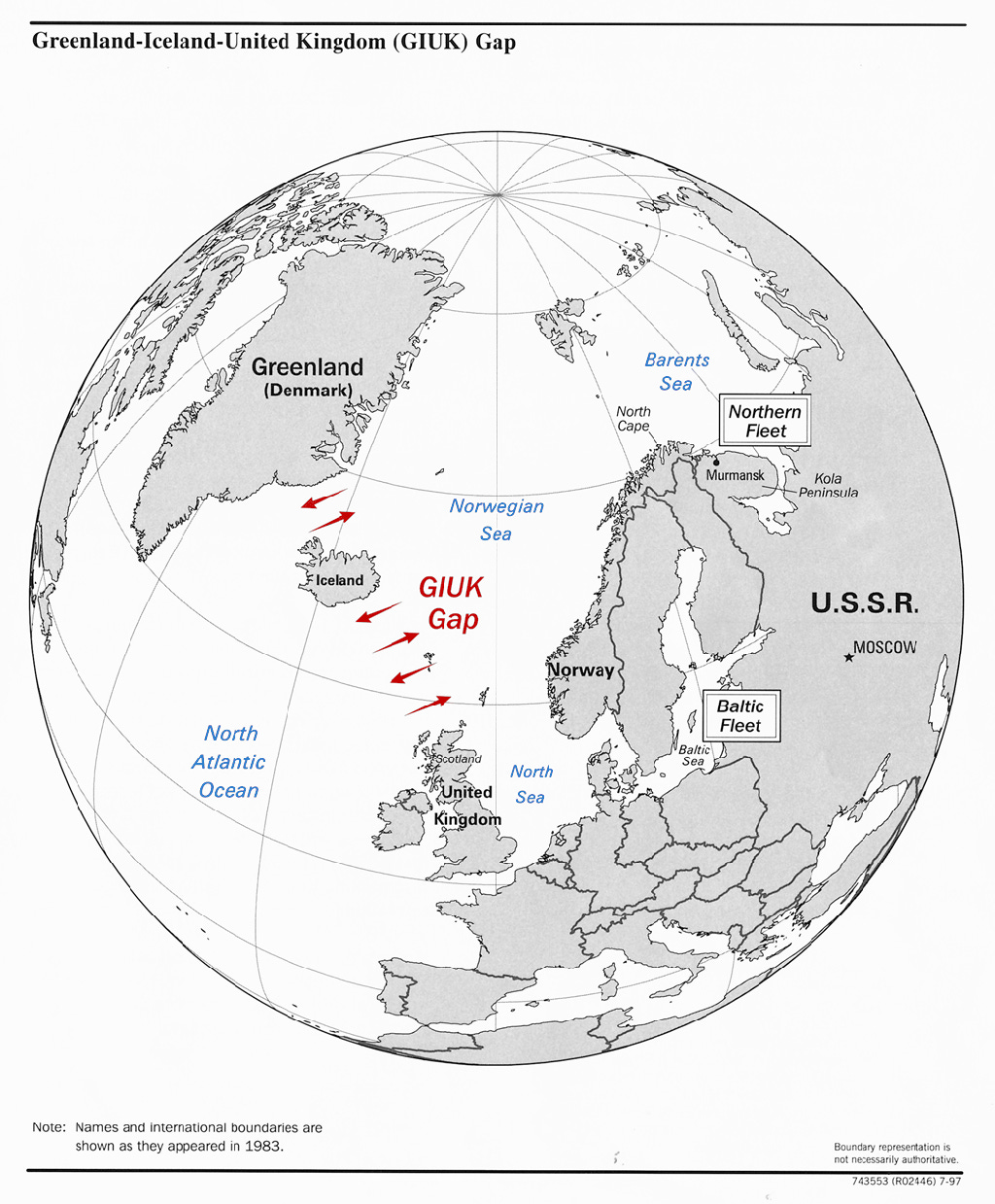
The irony is that annexing Greenland would destroy the strategic architecture that makes it valuable in the first place. This centers on the GIUK Gap (Greenland-Iceland-UK), the naval chokepoint critical for monitoring Russian submarine activity.
To justify the escalation to military threats in 2026, the administration has propagated several narratives that distort the reality of the situation:
1. The “Burden” Narrative: The claim that Denmark is being financially drained by Greenland. In reality, the block grant provided by Copenhagen is a constitutionally mandated support for an autonomous part of the Kingdom, viewed by both parties as a matter of shared history and identity, not a financial loss.
2. The “Security Vacuum” Narrative: The assertion that Denmark is too weak to stop a Chinese or Russian takeover. While China has shown interest in infrastructure projects, the Danish government—often with quiet U.S. pressure—has successfully blocked these attempts. The existing defense agreements already grant the U.S. 100% of the strategic access it needs (such as at Pituffik) without the need for annexation.
3. The “Manifest Destiny 2.0” Narrative: The idea that Greenland is geographically North American and thus an “American birthright.” This rhetoric deliberately echoes 19th-century Manifest Destiny—the doctrine that justified continental expansion across North America as a divinely ordained mission, displacing indigenous peoples in the process. The Dønrow Doctrine, as it’s now being called, resurrects this logic for the 21st century. It erases the indigenous Inuit population, who have recognized rights to self-determination under the 2009 Self-Government Act, and treats sovereignty as a function of geography rather than the democratic will of a people.
Why the GIUK Gap Matters in 2026
With the Russian Northern Fleet revitalized and operating advanced Yasen-class submarines, the GIUK Gap is the only “gate” through which these vessels can enter the Atlantic to threaten the U.S. East Coast with cruise missiles or cut vital undersea data cables. Controlling this gap requires a seamless chain of sonar arrays, maritime patrol aircraft (like the P-8 Poseidon), and surface warships working in concert.
The Alliance Dependency
The U.S. cannot plug this gap alone. It relies on:
Iceland: For the Keflavik Air Station, the central hub for submarine hunting.
The UK: For Royal Navy patrols and intelligence sharing.
Denmark: For sovereignty over the waters and the maintenance of radar stations.
If the U.S. forcibly annexes Greenland, it isolates itself from these partners. Iceland and the UK would be politically challenged to host/base American forces while the US is occupying a fellow NATO member’s territory. Without the cooperation of Iceland and the UK, holding Greenland becomes strategically hollow—the US might own the “G,” but it loses the “I” and the “UK,” leaving the Atlantic wide open to Russian incursion. You cannot defend the Atlantic if you are quarrelling with the nations strategically located to protect it.
The Immediate Fallout: A Standoff in Nuuk
As of mid-January 2026, the reaction to the US ultimatum has been swift and militarized, creating a standoff that resembles the early days of a war.
European powers have moved to signal their resolve. France, Germany, Sweden, and Norway have deployed military personnel to Nuuk, with aircraft and naval vessels—including Danish and Norwegian warships—now operating in Greenland’s coastal waters. In reality, these are tripwire forces. Their presence is designed to make a U.S. military seizure of the island impossible without engaging the troops of key NATO allies—a geopolitical game of chicken with nuclear stakes.
Russia has cynically exploited the chaos, issuing warnings about the “NATO buildup” in the Arctic, while quietly enjoying the spectacle of the Western alliance arguing with itself. Meanwhile, in Nuuk, the Greenlandic government remains defiant. Prime Minister Jens-Frederik Nielsen has stated unequivocally, “Greenland is not for sale. We do not want to be American.”
Conclusion
The US attempt to acquire Greenland by force is not merely a diplomatic row; it is a stress test of the European security architecture, which is less likely to survive the longer the contest for US control of the island goes on. Undoubtedly, at this point, the US may resort to imposing punitive tariffs on Denmark unless it and Greenland relinquish sovereignty to it. It replaces the logic of collective defense with the logic of imperial conquest. As European troops have arrived in Nuuk to deter their American allies from militarily invading it, an “Ice Curtain” has been drawn to protect the world's largest island from a threat within the family, and the North Atlantic Treaty Organization faces its final, and potentially fatal test.
The US attempt to acquire Greenland by force is not merely a diplomatic row; it is a stress test of the European security architecture, which grows less likely to survive the longer the contest for control continues. In the absence of Denmark's and Greenland's submission to its terms, which appears to be the likely outcome of the current discussions, the US may resort to imposing punitive tariffs on Denmark, replacing the logic of collective defense with that of economic coercion and imperial conquest. European troops have arrived in Nuuk to deter their American ally from military invasion, and an "Ice Curtain" has been drawn to protect the world's largest island from invasion by an ally, and NATO faces a potentially fatal test.
© 2026 Farooq Hussain
The tension over the US desire to own Greenland arrives at a moment when nuclear weapons modernization is accelerating amongst the US, Russia, and China in particular. At the same time, the last US-Russian nuclear arms limitation agreement, New START, will expire on February 5th. The lapse of the last arms control treaty and accelerated innovation in nuclear weapons are the subjects of my new book,
The Last Treaty: launches on Amazon Kindle next month.
The book examines how Cold War-era arms control frameworks have failed to keep pace with today’s rapidly modernizing arsenals, diversified warheads, and AI-integrated command systems. More urgently, it explores what comes next: not treaty nostalgia, but pragmatic, interim frameworks for mutual restraint that can be implemented quickly and adjusted dynamically in our technologically unstable nuclear age.