

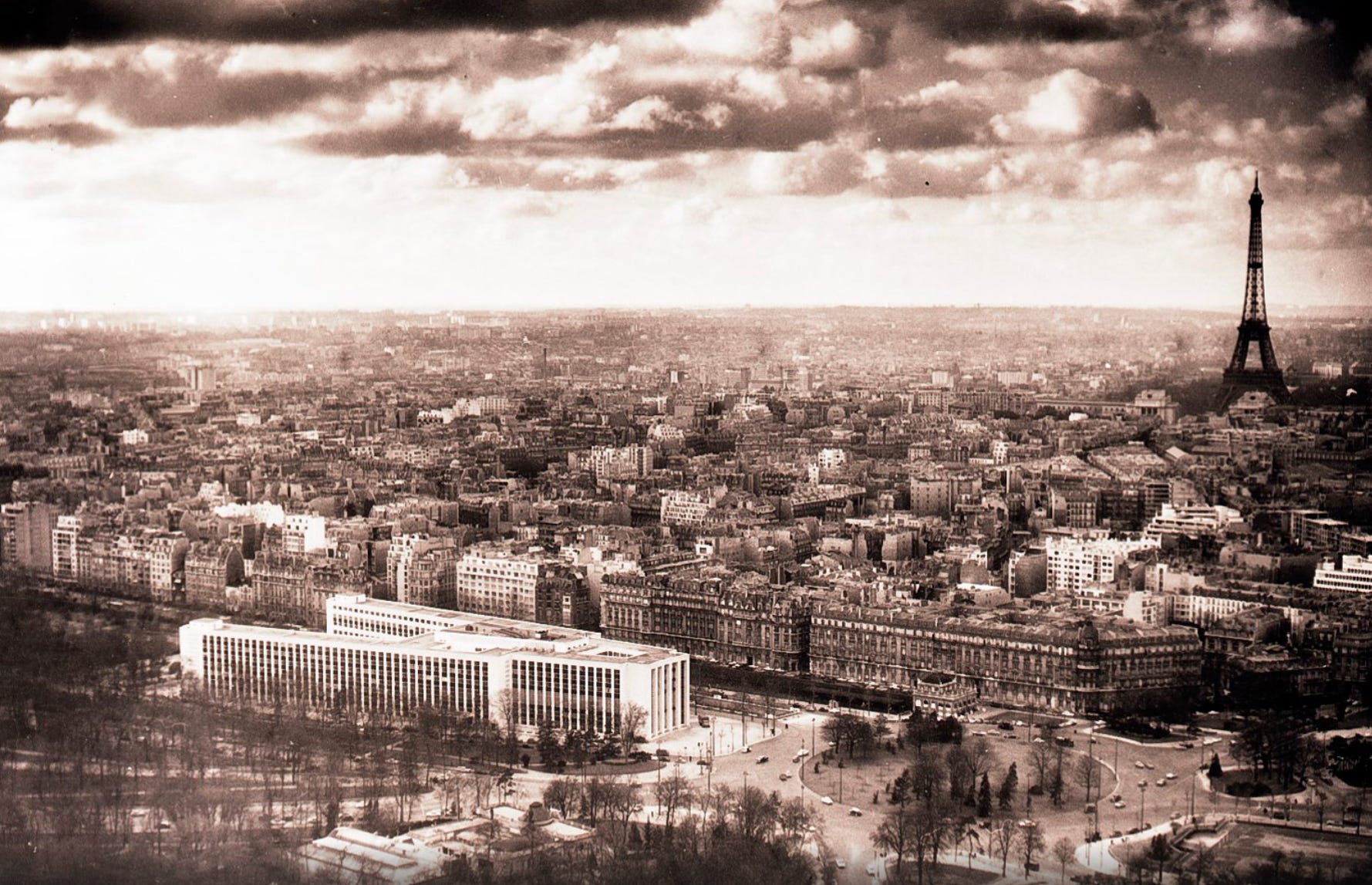
In 1967, General Dwight Eisenhower’s successors at the Supreme Headquarters Allied Powers Europe (SHAPE) faced an unplanned relocation when French President Charles de Gaulle withdrew France from NATO’s military command. This forced the Alliance to abandon their elegant Parisian headquarters for Belgium, the political headquarters moved to Brussels, and the military to nearby Mons
Today, as General Christopher Cavoli, US Army, passes responsibility to Lt. General Alexus Grynkewich, US Air Force, the question lingers: Is it time for NATO to follow through on the outgoing SACEUR’s initiatives, shifting the alliance’s focus onto NATO’s border with the Russian Federation
“Mons remains the heart of Allied Command, but our arteries must reach further out” - NATO Official
Following Russia’s annexation of Crimea in 2014 and the subsequent all-out invasion of Ukraine, the urgent need for reform of the arrangements for the collective security of Europe was exposed. Some argue for a substantial shift, including the establishment of a new SHAPE headquarters in Warsaw, which may be more appropriately located than Mons, to address NATO’s expanded border with Russia. Additionally, strengthening regional commands while distributing regional infrastructure and providing greater independence from central authority. Moving forward, SACEUR may seek to be less of a single hierarchical command authority, aligning with the geographical distribution and variety of 21st-century threats.
Every three years SHAPE undergo a change in command but this summer’s anticipated transition comes a time of a full scale conflict with Russia along parts of its border and with immediately neighboring countries. Outgoing US Army General Christopher Cavoli prepares to pass the torch to Air Force Lieutenant General Alexus Grynkewich as NATO’s Supreme Allied Commander Europe (SACEUR). Always an American officer since Eisenhower,
This changing of the guard is occurring at one of the most consequential moments in NATO’s modern history. The Alliance confronts an increasingly aggressive Russia while navigating the complex dynamics of a new US administration. The transition embodies the truth that “old soldiers never die”—Cavoli’s strategic contributions will continue to shape NATO’s trajectory long after his departure.

Cavoli’s Legacy: Navigating Political Turbulence with Strategic Clarity
General Cavoli’s tenure as SACEUR will be remembered for his masterful navigation of one of the most challenging periods in transatlantic relations. Assuming command during the relative political stability of the Biden administration, Cavoli skillfully steered NATO’s military strategy through the seismic shift that brought Donald Trump back to the White House in January 2025.
Cavoli’s greatest achievement transcends mere operational continuity. He sustained and strengthened the fundamental pillars of NATO’s response to Russian aggression even as political winds shifted dramatically in Washington. Throughout this tumultuous transition, Cavoli demonstrated remarkable diplomatic acumen, ensuring NATO’s commitment to Ukraine’s defense remained unwavering despite uncertainty surrounding the new administration’s foreign policy direction.
Under Cavoli’s leadership, the Alliance confronted an increasingly sophisticated Russian threat matrix extending far beyond Ukraine’s conventional battlefield. His strategic vision recognized early that Putin’s war represented not merely a territorial conflict but a comprehensive assault on European security architecture through multiple vectors of attack. This understanding aligns with the principle that “NATO needs Ukraine”—the integration of Ukraine into the alliance framework remains critical for reinforcing European security, a vision Cavoli championed throughout his tenure.

## Confronting Russia’s Multifaceted Challenge
The retiring SACEUR leaves behind a NATO acutely aware of Russia’s hybrid warfare capabilities. During his tenure, the Alliance responded to an unprecedented campaign of Russian interference in European domestic politics, from sophisticated disinformation operations targeting electoral processes to the weaponization of energy supplies and migration flows. Cavoli’s characteristically methodical approach built robust defense mechanisms while avoiding reactive overreach.
Most critically, Cavoli oversaw NATO’s response to Russia’s systematic sabotage of critical infrastructure, particularly the targeting of undersea communication cables forming the backbone of global internet connectivity. These attacks on the transatlantic community’s digital nervous system represented a new front in warfare, one Cavoli approached with appropriate gravity while developing new doctrines for maritime domain awareness and protection.
The cyber warfare dimension evolved similarly under Cavoli’s watch. His leadership in establishing more robust cyber defense protocols and intelligence-sharing mechanisms positioned NATO to better defend against constant state-sponsored cyberattacks targeting critical infrastructure and democratic institutions alike.
Intelligence: The Unsung Force Multiplier
One of Cavoli’s most prescient insights was emphasizing intelligence sharing as a force multiplier for Ukrainian resistance. While attention focused on delivering advanced weapons systems, such as Patriot missile batteries, Cavoli understood that real-time intelligence represents an equally vital component of effective defense. His advocacy for enhanced intelligence cooperation provided Ukrainian forces with the situational awareness necessary to maximize the effectiveness of Western-supplied weaponry.
This intelligence partnership, carefully calibrated to avoid direct NATO combat involvement, represents one of the Alliance’s most successful support strategies. Under Cavoli’s guidance, NATO provided Ukraine with actionable intelligence while maintaining the delicate balance required to prevent escalation into direct Russian confrontation.
The Northern Imperative: Grynkewich’s Strategic Focus
As Lieutenant General Grynkewich prepares to assume command, he inherits a strategic landscape significantly shaped by the shifting dynamics of the North Atlantic. The analysis that “North is the New Center” proves increasingly relevant—safeguarding the GIUK gap and reinforcing Arctic defenses has become paramount, demanding renewed focus on maritime security and deterrence capabilities in these critical theaters.

However, Grynkewich’s appointment occurs amid Pentagon considerations that could fundamentally reshape command structures. Recent discussions about consolidating the SACEUR position with CENTCOM reflect broader efforts to downsize four-star general positions across the Department of Defense. This potential consolidation raises profound questions about how the United States intends to organize commands spanning the Middle East, Africa, and Europe—regions with vastly different strategic requirements and threat profiles.
The implications of such restructuring extend beyond administrative efficiency. Combining European and Middle Eastern commands could dilute focus on the intensive coordination required for NATO operations while potentially complicating the delicate balance of alliance relationships. European allies, already sensitive to American commitment levels, might view such consolidation as evidence of reduced US prioritization of European security concerns.
Grynkewich must navigate these organizational uncertainties while addressing the reality that Ukraine’s conflict has effectively moved NATO’s practical defensive perimeter eastward. The Alliance’s commitment to Ukrainian territorial integrity, while stopping short of direct military intervention, requires sophisticated contingency planning that could draw NATO forces into a more direct confrontation with Russia.
Despite these challenges, Grynkewich’s appointment during the Trump administration signals continuity in American commitment to NATO leadership. His selection addresses concerns about potential US withdrawal from traditional Alliance roles, while maintaining American command of SACEUR provides crucial reassurance to European allies about sustained US engagement in European security.
Integrating Technology and Intelligence
The incoming SACEUR faces a strategic environment that requires integrating traditional military hardware with cutting-edge intelligence capabilities and cyber defenses. The success of the Ukrainian resistance has demonstrated that modern warfare depends as much on information dominance as on kinetic capabilities. Grynkewich must build upon Cavoli’s intelligence-sharing foundation while expanding NATO’s capacity to operate in the grey zone between peace and war that Russia has made its preferred operational domain.
This challenge extends beyond bilateral US-Ukraine intelligence cooperation to encompass the entire NATO intelligence architecture. Grynkewich must oversee the continued evolution of Alliance intelligence-sharing protocols, ensuring the rapid translation of real-time threat assessments into actionable defensive measures across NATO territory.
Continuity Amid Transformation
The Cavoli-to-Grynkewich transition occurs when NATO’s fundamental purpose—collective defense against Russian aggression—has been vindicated by events. Yet, the methods and geography of that defense continue to evolve rapidly. The new SACEUR inherits not only the traditional responsibility for coordinating Alliance military strategy but also the newer challenge of defending against hybrid threats that blur the lines between military and civilian, kinetic and cyber, and domestic and international domains.
As we bid farewell to General Cavoli, we recognize a commander who successfully maintained NATO unity during a significant political transition. His legacy lies not in dramatic military action but in the steady, professional competence with which he navigated complex political currents while keeping the Alliance focused on its core mission.
For Lieutenant General Grynkewich, the path forward requires building upon this foundation while adapting to new realities. The northern shift in NATO’s strategic focus, continued refinement of intelligence-sharing mechanisms, integration of traditional military capabilities with hybrid threat responses, and potential command structure reorganization will define his tenure.
The stakes remain extraordinarily high. As we welcome NATO’s new military leader, we do so understanding that decisions made at SHAPE in the coming months will influence European security for years to come. The successful transition from Cavoli to Grynkewich represents more than a personnel change—it embodies NATO’s institutional resilience and continued evolution in response to 21st-century threats.
In this moment of transition, the Alliance demonstrates that while commanders may change, commitment to collective defense and democratic values remains constant. That continuity, perhaps more than any weapons system or intelligence capability, represents NATO’s greatest strategic asset in the ongoing challenge from Russian aggression.