

Custody Is Not Control
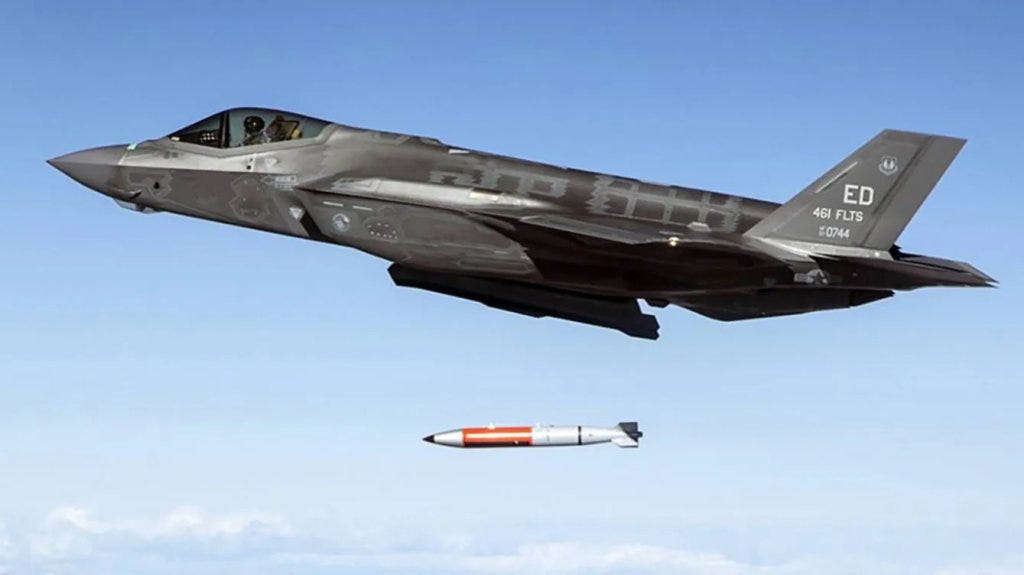
Over the past year The Bulletin of the Atomic Scientists has published articles arguing that the United Kingdom is shifting its nuclear weapons policy from deterrence toward war-fighting. Ian Stewart’s June 2025 analysis worried about the wisdom of reintroducing an air-launched tactical capability. S.M. Amadae and Tom Stevenson’s July 2026 follow-up went further, treating the arrival of American B61-12 bombs at RAF Lakenheath, carried on specially configured stealth-capable F-35As, as evidence of a shift favoring first use of nuclear weapons.1 Both pieces get the facts right; the interpretation is wrong, because both treat a change in geography as a change in sovereignty.
The B61-12, wherever it is stored, remains an American weapon under American authority. RAF Lakenheath has historically been a base where US nuclear weapons are stored — it is, in the relevant sense, an American military installation. Nothing in UK, NATO, or US policy transfers custody or release authority to British military or political leadership, and nothing currently under discussion would. RAF Lakenheath’s modernization changes where the weapons are stored; it does not change who decides when and how they would be used. Treating this as a step toward British “war-fighting” conflates the forward basing of a US asset with an expansion of British agency — a distinction that matters enormously once you start comparing Britain’s position to France’s.
There is a second, related error running through the Amadae and Stevenson piece: the reflexive labeling of the B61-12 as a “tactical” nuclear weapon. It in fact carries a selectable-yield design and precision guidance that make it usable across a spectrum running from sub-kiloton to strategic-scale detonations, depending on mission requirements. It is arguably the most operationally sophisticated nuclear weapon in the American arsenal, and it is likely to remain in service for another two decades. Treating a dial-a-yield, dual-role weapon as inherently escalatory because it is smaller than a Trident warhead mistakes flexibility for aggression. The doctrinal significance of the B61-12’s return to Europe is real, but it belongs to Washington’s calculus, not London’s.
Less is More
That distinction becomes sharper once you look at what Britain actually controls, and how little room it has to expand it. The UK’s nuclear deterrent rests on a single warhead design, the incoming A21/Mk7, replacing the aging Holbrook warhead for the Trident II D5 missile. Unlike the United States, France, or Russia, Britain fields no second design for a different delivery system — there is no British equivalent to the French ASMPA cruise-missile warhead sitting alongside a submarine-launched one. Everything rests on a single production line at the Atomic Weapons Establishment, which is already committed through the 2030s to producing the Trident replacement.
That single-design dependency intersects with a submarine posture that has, for decades, kept usable warhead numbers well below the paper ceiling. Britain’s continuous at-sea deterrent has historically meant one boat on patrol, one in reactor refit or deep maintenance, and one or two cycling through workup and stand-down — not four boats simultaneously available for surge deployment. The 2021 decision to raise the warhead stockpile cap from 180 to 260 made news as a reversal of thirty years of disarmament, but a paper ceiling is not an operational capability. The number of warheads that can actually be flown, loaded, and put to sea at any given moment is bounded by submarine availability, missile compartment capacity, and AWE’s production and maintenance throughput — all of which are budget-constrained, and none of which have expanded in proportion to the stockpile cap. An arsenal whose usable size is set by a maintenance and refit cycle, not by strategic intent, is a poor basis for the “war-fighting” narrative the Bulletin articles have advanced.
The RAF’s own recent statements confirm this reading better than any outside analyst could. Despite the buzz around the June 2025 Strategic Defence Review and the announcement that Britain would purchase F-35As and join NATO’s nuclear mission, the RAF has since confirmed that its first F-35As will not be delivered in a nuclear-capable configuration, and that Britain will not be in a position to participate in NATO’s nuclear air component for several years. Air Vice-Marshal Jim Beck countered speculation that the first dozen F-35As delivered to the RAF would be configured for dual-capable use, noting that while a nuclear role for future aircraft is under consideration, the RAF has not held a nuclear role for more than two decades. The first dozen aircraft, he said, will serve exclusively for operational conversion training. How the UK will pursue the nuclear mission, including the ability to deliver US B61-12 bombs, remains a work in progress: “We’re doing the analysis to understand the size and posture of force that we will need to undertake this.”2
That is the posture of a defense budget under sustained pressure, not one expanding its nuclear role. Defence Secretary John Healey underscored the point himself, resigning in June 2026 over what he judged an inadequate Defence Investment Plan — before returning to government weeks later as Chancellor under new Prime Minister Andy Burnham. A government reshuffled around a dispute over defense funding is not a government quietly building toward nuclear war-fighting. The gap between announcement and delivery is not incidental to this story; it is the story.
Vive la Difference
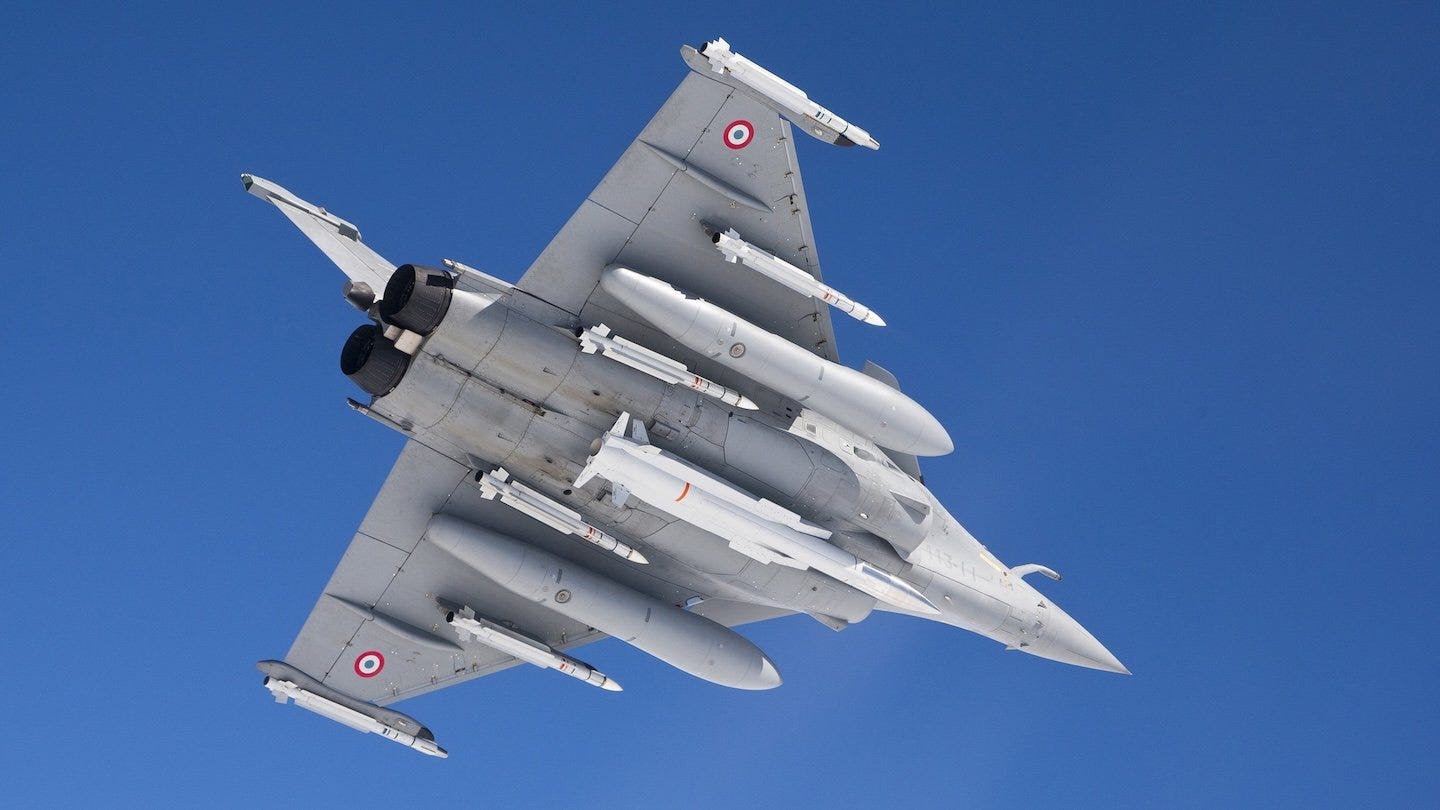
Set this against France, and the contrast becomes the real subject of this series. The French deterrent is not merely rhetorically independent — it is operationally and industrially self-contained, from warhead design through delivery, with no American component anywhere in the chain. When President Macron unveiled France’s doctrine of “forward deterrence” (dissuasion avancée) in March 2026, he was explicit that France would retain sole authority over its own nuclear threshold, even as it invited European partners — now numbering nine, including Germany, Belgium, Poland, and the Nordic and Baltic states — into deeper coordination, exercises, and eventually the temporary deployment of French air assets on partner territory. No treaty guarantee accompanies it, deliberately. France is extending consultation, not extending control, and Macron has been careful to say so.
Britain and France took a parallel but distinct step in July 2025 with the Northwood Declaration, signed by Starmer and Macron at the close of a state visit.3 For the first time since the 1995 Chequers Declaration, the two governments stated publicly that their nuclear deterrents, while remaining fully independent of one another, can be coordinated in response to a shared threat to European security. A new UK-France Nuclear Steering Group, co-chaired out of the Cabinet Office and the Élysée, now oversees that coordination, alongside commitments to joint submarine patrolling and joint research and development.
It is worth noting what Northwood is not: it is not a merger of decision-making, and it does not touch the B61-12 question at all. It is Britain hedging — modestly, and without abandoning the American relationship — toward the one European nuclear guarantee that does not run through Washington.
That hedge is realistic precisely because of the constraints already described. Britain cannot, within any plausible defense budget over the next decade, build a second warhead design, a second delivery system, or achieve independence from American missile technology, maintenance support, and targeting infrastructure — the entanglements the 2025 Strategic Defence Review’s own critics have pointed to. The RAF’s own admission that nuclear-capable F-35s and NATO nuclear air component participation are years away is a budgetary fact, not a strategic choice waiting to be reversed. Britain’s deterrent will remain, for the foreseeable future, “operationally independent” in the narrow sense of requiring no foreign permission to fire its own missiles, while remaining thoroughly dependent on the United States for the hardware, maintenance, and infrastructure that make that firing possible.
France has no such dependency, and that is the fact both Bulletin pieces missed by focusing so tightly on the B61-12. The weapon everyone is watching at Lakenheath is the least autonomous nuclear capability in Europe, not the most consequential one. The real question for the next decade of European deterrence is not whether Britain is drifting toward nuclear war-fighting — its budget will not allow it to drift very far in any direction — but how far Northwood-style coordination between London and Paris can substitute, even partially, for the American guarantee that both countries increasingly have reason to doubt. That is where this series is going next.
© 2026 Farooq Hussain
Notes:
Wall, Robert, UK exploring requirements for nuclear F-35A mission, Aviation Week, July 15, 2026